The Fairy-Faith in Celtic Countries
1911
The Fairy-Faith in Celtic Countries
1911
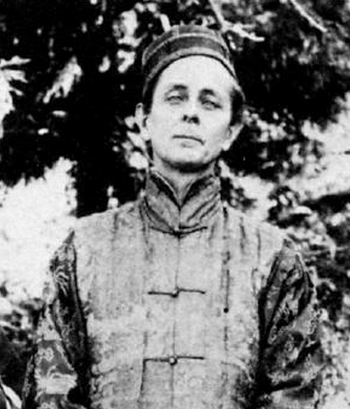
In the early 1900s, a scholar best known for translating The Tibetan Book of the Dead journeyed across the Celtic fringeIreland, Scotland, Wales, Cornwall, Brittany, and the Isle of Manto document beliefs that modernity had nearly erased. W.Y. Evans-Wentz collected firsthand testimony from peasants, fishermen, scholars, and priests: real people who spoke of fairy hills, spectral hunts, and encounters with the Otherworld with the same certainty they spoke of weather or death. This isn't a book of fairy tales. It's a meticulous anthropological record of living faith, captured before the twentieth century swept these old ways into silence. What emerges is a portrait of the Celtic imagination as a living tradition, not a quaint relic. Evans-Wentz argues that fairy-belief was never mere superstition but a profound spiritual framework that survived centuries of Christianization and scientific rationalism. He documents how beliefs once dismissed by the educated as peasant foolishness were, in fact, the residual magic of ancient Pagan thoughttransformed but enduring. The book preserves voices we could never hear otherwise, making it both a time capsule and a meditation on what modernity chooses to forget.
Editions
X-Ray
“To the north and south in the golden glow of a September twilight we saw the long line of the Outer Hebrides like the rocky backbone of some submerged continent. The scenes and colours on the land and ocean and in the sky seemed more like some magic vision, reflected from Faerie by the 'good people' for our delight, than a thing of our own world. Never was air clearer or sea calmer, nor could there be air sweeter than that in the mystic mountain-stillness holding the perfume of millions of tiny blossoms of purple and white heather; and as the last honey-bees were leaving the beautiful blossoms their humming came to our ears like low, strange music from Fairyland.””
— W. Y. Evans-Wentz
“The great majority of men in cities are apt to pride themselves on their own exemption from ‘superstition’, and to smile pityingly at the poor countrymen and countrywomen who believe in fairies. But when they do so they forget that, with all their own admirable progress in material invention, with all the far-reaching data of their acquired science, with all the vast extent of their commercial and economic conquests, they themselves have ceased to be natural. Wherever under modern conditions great multitudes of men and women are herded together there is bound to be an unhealthy psychical atmosphere never found in the country”
— W. Y. Evans-Wentz
Link to this book
Add a free, dofollow link to Lex on your blog, forum, syllabus, or reading list.

<a href="https://lex-books.com/book/the-fairy-faith-in-celtic-countries-58919544-e379-4776-90fe-ece4d7da0d2f"><img src="https://lex-books.com/badges/read-on-lex.svg" alt="Read The Fairy-Faith in Celtic Countries by W. Y. Evans-Wentz free on Lex" width="160" height="40"></a>[](https://lex-books.com/book/the-fairy-faith-in-celtic-countries-58919544-e379-4776-90fe-ece4d7da0d2f)[url=https://lex-books.com/book/the-fairy-faith-in-celtic-countries-58919544-e379-4776-90fe-ece4d7da0d2f][img]https://lex-books.com/badges/read-on-lex.svg[/img][/url]Read The Fairy-Faith in Celtic Countries by W. Y. Evans-Wentz free on Lex: https://lex-books.com/book/the-fairy-faith-in-celtic-countries-58919544-e379-4776-90fe-ece4d7da0d2fCite this book
Reading this edition for a paper or guide? Copy a citation.
Evans-Wentz, W. Y.. The Fairy-Faith in Celtic Countries. Lex, lex-books.com/book/the-fairy-faith-in-celtic-countries-58919544-e379-4776-90fe-ece4d7da0d2f.Evans-Wentz, W. Y. (1911). The Fairy-Faith in Celtic Countries. Lex. https://lex-books.com/book/the-fairy-faith-in-celtic-countries-58919544-e379-4776-90fe-ece4d7da0d2fEvans-Wentz, W. Y.. The Fairy-Faith in Celtic Countries. Lex. https://lex-books.com/book/the-fairy-faith-in-celtic-countries-58919544-e379-4776-90fe-ece4d7da0d2f.