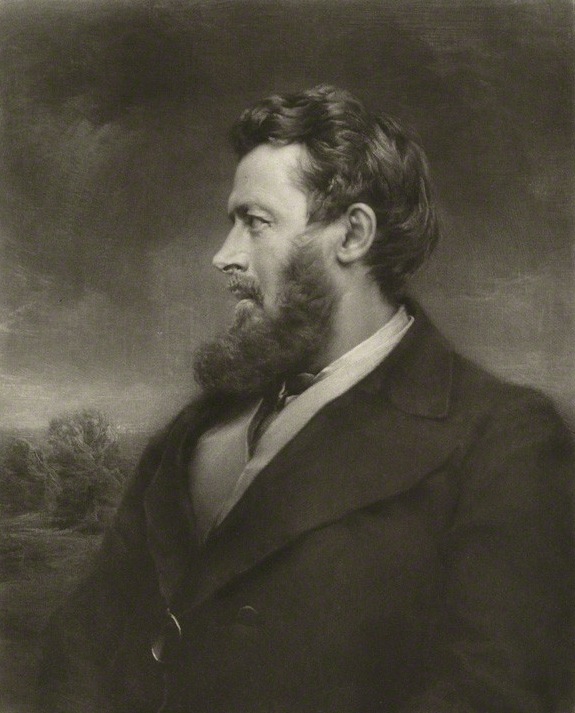
The English Constitution
1867
Written in 1867 as Britain teetered on the edge of democratic expansion, Walter Bagehot's masterpiece dissects a constitutional system at once ancient and shockingly modern. The Great Reform Act of that same year had just tripled the electorate, throwing into sharp relief questions that trouble every democracy: how do you govern a nation changing faster than its institutions? What balance must be struck between the ceremonial weight of tradition and the functional demands of representative government? Bagehot's genius lies in his elegant framework: he divides the constitution into "dignified" elements (monarchy, ceremony, the theatre of power) and "efficient" ones (the cabinet, Parliament, the real machinery of governance). This distinction remains essential for understanding why constitutional monarchies persist, how they adapt, and what they actually do beneath the surface pageantry. His comparisons with the American presidential system, written when the young republic was still reeling from civil war, anticipate debates about executive power that still resonate today. Bagehot brings a journalist's sharpness and a lettered man's wit to what could have been dry constitutional theory. The result crackles. For anyone interested in political philosophy, British history, or the architecture of power, this remains essential. The sections on monarchy and prime ministerial authority are genuinely illuminating.
Editions

X-Ray
“Custom is the first check on tyranny; that fixed routine of social life at which modern innovations chafe, and by which modern improvement is impeded, is the primitive check on base power.””
— Walter Bagehot
“The splitting of sovereignty into many parts amounts to there being no sovereign.””
— Walter Bagehot
“[A]n ancient and ever-altering constitution is like an old man who still wears with attached fondness clothes in the fashion of his youth: what you see of him is the same; what you do not see is wholly altered.””
— Walter Bagehot
“The most hopeless idleness is that most smoothed with excellent plans.””
— Walter Bagehot
“The efficient secret of the English Constitution may be described as the close union, the nearly complete fusion of the executive and legislative powers. According to the traditional theory, as it exists in all the books, the goodness of our constitution consists in the entire separation of the legislative and executive authorities, but in truth its merit consists in their singular approximation. The connecting link is the cabinet.””
— Walter Bagehot
“A people never hears censure of itself.””
— Walter Bagehot
“The English constitution, in a word, is framed on the principle of choosing a single sovereign authority, and making it good: the American, upon the principle of having many sovereign authorities, and hoping that their multitude may atone for their inferiority.””
— Walter Bagehot
“[U]nder a presidential government a nation has, except at the electing moment, no influence; it has not the ballot-box before it; its virtue is gone, and it must wait till its instant of despotism again returns.””
— Walter Bagehot
Link to this book
Add a free, dofollow link to Lex on your blog, forum, syllabus, or reading list.

<a href="https://lex-books.com/book/the-english-constitution-ae61491a-ccf7-4628-ba96-cbac484892f7"><img src="https://lex-books.com/badges/read-on-lex.svg" alt="Read The English Constitution by Walter Bagehot free on Lex" width="160" height="40"></a>[](https://lex-books.com/book/the-english-constitution-ae61491a-ccf7-4628-ba96-cbac484892f7)[url=https://lex-books.com/book/the-english-constitution-ae61491a-ccf7-4628-ba96-cbac484892f7][img]https://lex-books.com/badges/read-on-lex.svg[/img][/url]Read The English Constitution by Walter Bagehot free on Lex: https://lex-books.com/book/the-english-constitution-ae61491a-ccf7-4628-ba96-cbac484892f7Cite this book
Reading this edition for a paper or guide? Copy a citation.
Bagehot, Walter. The English Constitution. Lex, lex-books.com/book/the-english-constitution-ae61491a-ccf7-4628-ba96-cbac484892f7.Bagehot, W. (1867). The English Constitution. Lex. https://lex-books.com/book/the-english-constitution-ae61491a-ccf7-4628-ba96-cbac484892f7Bagehot, Walter. The English Constitution. Lex. https://lex-books.com/book/the-english-constitution-ae61491a-ccf7-4628-ba96-cbac484892f7.