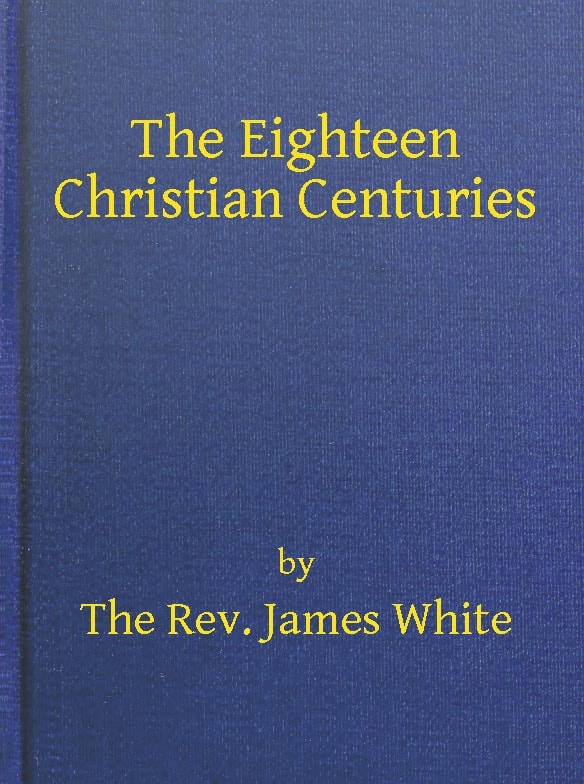
The Eighteen Christian Centuries
1858
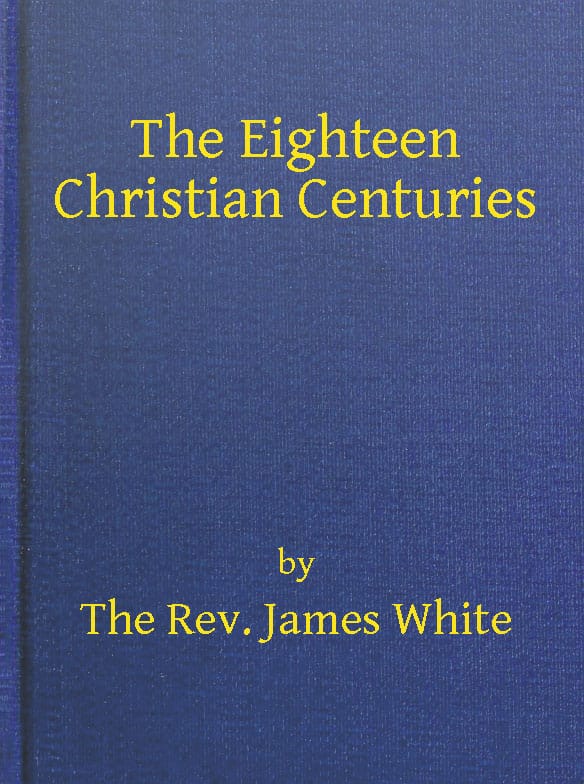
James White's ambitious 1858 survey traces eighteen centuries of Christianity through the lens of what he calls "prevailing Thought", the dominant intellectual force shaping each era. Beginning with the first century's collision between Roman imperial power and the revolutionary teachings of Christ, White constructs a framework for understanding how faith, politics, and culture have endlessly reshaped one another across Western civilization. Rather than offering mere chronology, he argues that each century possesses a distinct character defined by its governing idea, from the age of martyrs to the age of councils to the age of Reformation upheaval. Written with Victorian confidence in sweeping synthesis, the book captures both the grandeur and the limitations of 19th-century historiography: a believer's earnest attempt to read providence into the rise and transformation of the Church. For readers interested in how religious movements intersected with empire, philosophy, and social upheaval, this remains a fascinating time capsule of intellectual history, and a reminder that how we narrate the past reveals as much about our present as about the eras we study.
Editions

X-Ray
The first Roman Emperor, whose reign marked the concentration of state power in one man and the beginning of the imperial era.
Augustus's successor, who established a dreadful tyranny characterized by duplicity and unseen oppression.
A notoriously cruel emperor who persecuted Christians and burned Rome, representing the nadir of imperial depravity.
A 'Good Emperor' of Spanish birth, known for his military conquests and excellent internal administration, who brought rest to the empire.
About The Eighteen Christian Centuries
Chapter Summaries
- 1
- This century details the rise of the Roman Empire under Augustus and the subsequent reigns of tyrannical emperors like Tiberius, Caligula, and Nero, marked by cruelty, debauchery, and the first persecutions of Christians. It also covers the destruction of Jerusalem in 70 AD and the moral degradation of Roman society, contrasting it with the nascent spread of Christianity.
- 2
- This period is characterized by the 'golden age' of the Roman Empire under a succession of 'Good Emperors' like Nerva, Trajan, Adrian, Antoninus Pius, and Marcus Aurelius, who brought justice and stability. However, it also notes the continued persecution of Christians, the suppression of a Jewish revolt, and the growing external threat from barbarian tribes on the empire's borders.
- 3
- The third century is depicted as a period of extreme political instability in Rome, with a rapid succession of short-lived and often brutal emperors, highlighting the breakdown of civilized life. Simultaneously, it chronicles the steady, often unobserved, growth and organization of the Christian Church amidst widespread persecutions and societal chaos.
Key Themes
- Decline and Transformation of Empires
- The book meticulously traces the decay of the Roman Empire, both West and East, highlighting how internal corruption, external pressures from barbarian tribes, and the rise of new political and religious forces led to its eventual fragmentation and transformation into new European states.
- Rise and Evolution of Christian Authority
- A core theme is the growth of the Christian Church from a persecuted sect to a dominant political and spiritual power. It examines the internal struggles (heresies, schisms) and external conflicts (persecutions, Crusades) that shaped its hierarchy and influence over society, often contrasting its professed ideals with its worldly ambitions.
- Impact of Barbarian Migrations
- The narrative emphasizes how successive waves of barbarian invasions (Goths, Huns, Vandals, Lombards, Norsemen, Saracens) were not merely destructive but also transformative, leading to the intermixture of races, the establishment of new kingdoms, and the eventual formation of distinct European nationalities and cultures.
Characters
- Augustus Caesar(protagonist)
- The first Roman Emperor, whose reign marked the concentration of state power in one man and the beginning of the imperial era.
- Tiberius(antagonist)
- Augustus's successor, who established a dreadful tyranny characterized by duplicity and unseen oppression.
- Nero(antagonist)
- A notoriously cruel emperor who persecuted Christians and burned Rome, representing the nadir of imperial depravity.
- Trajan(protagonist)
- A 'Good Emperor' of Spanish birth, known for his military conquests and excellent internal administration, who brought rest to the empire.
- Marcus Aurelius(protagonist)
- The last of the 'Good Emperors,' a philosopher-king whose reign marked the end of Rome's golden age and the beginning of barbarian incursions.
- Diocletian(supporting)
- An emperor who introduced Oriental despotism and divided the empire, setting the stage for future political structures.
Link to this book
Add a free, dofollow link to Lex on your blog, forum, syllabus, or reading list.

<a href="https://lex-books.com/book/the-eighteen-christian-centuries-4e0cb0fe-d3df-482c-9172-ec40098c7a4c"><img src="https://lex-books.com/badges/read-on-lex.svg" alt="Read The Eighteen Christian Centuries by James White free on Lex" width="160" height="40"></a>[](https://lex-books.com/book/the-eighteen-christian-centuries-4e0cb0fe-d3df-482c-9172-ec40098c7a4c)[url=https://lex-books.com/book/the-eighteen-christian-centuries-4e0cb0fe-d3df-482c-9172-ec40098c7a4c][img]https://lex-books.com/badges/read-on-lex.svg[/img][/url]Read The Eighteen Christian Centuries by James White free on Lex: https://lex-books.com/book/the-eighteen-christian-centuries-4e0cb0fe-d3df-482c-9172-ec40098c7a4cCite this book
Reading this edition for a paper or guide? Copy a citation.
White, James. The Eighteen Christian Centuries. Lex, lex-books.com/book/the-eighteen-christian-centuries-4e0cb0fe-d3df-482c-9172-ec40098c7a4c.White, J. (1858). The Eighteen Christian Centuries. Lex. https://lex-books.com/book/the-eighteen-christian-centuries-4e0cb0fe-d3df-482c-9172-ec40098c7a4cWhite, James. The Eighteen Christian Centuries. Lex. https://lex-books.com/book/the-eighteen-christian-centuries-4e0cb0fe-d3df-482c-9172-ec40098c7a4c.