The Declaration of Independence of the United States of America
1776
The Declaration of Independence of the United States of America
1776
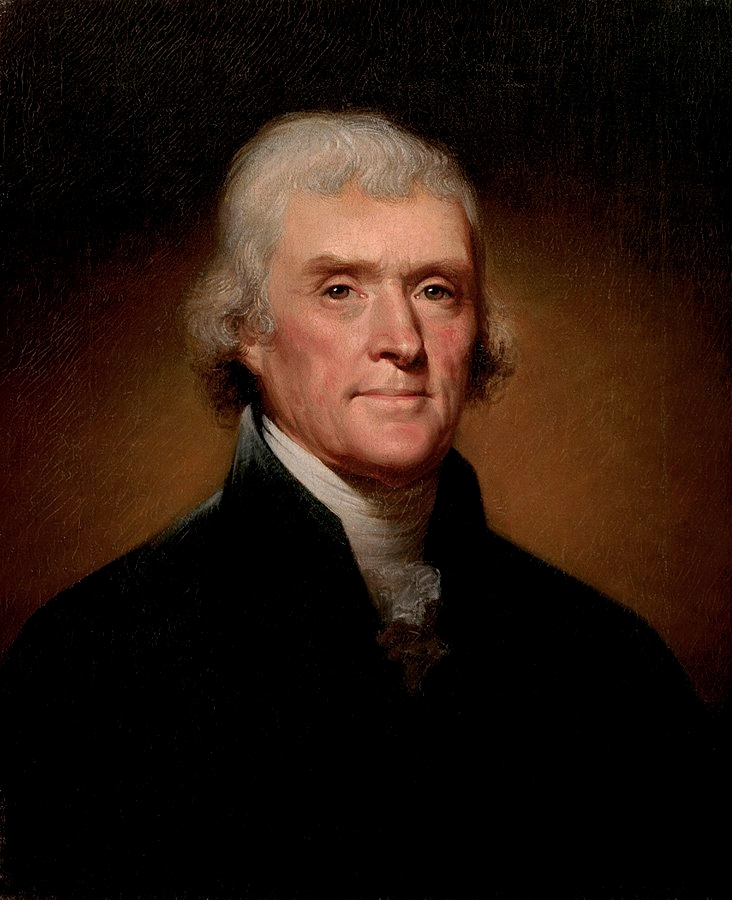
The Declaration of Independence is not merely a historical artifact but a revolutionary act of language. Written by Thomas Jefferson in 1776, it articulated something the world had rarely seen: a formal, philosophical justification for breaking from a king. Jefferson didn't just list grievances against George III, he laid out an entire theory of human rights, arguing that governments exist to protect freedoms inherent to every person, and that any regime which systematically violates those freedoms forfeits its right to rule. The document's power lies in its radical assertion: that sovereignty resides not in crowns or parliaments, but in the people themselves. Its famous phrases, all men are created equal, life, liberty, and the pursuit of happiness, have become the measuring rod against which generations of Americans have judged their own nation. The Declaration was both a legal severance from Britain and a promise, a philosophical commitment to the idea that human dignity cannot be granted by any ruler but must be recognized as inherent. More than two centuries later, those words still echo in courtrooms, protests, and independence movements across the globe. This is for anyone who wants to understand where the modern idea of human rights began.
Editions
X-Ray
“We hold these truths to be self-evident, that all men are created equal, that they are endowed, by their Creator, with certain unalienable Rights, that among these are Life, Liberty, and the pursuit of Happiness.That to secure these rights, Governments are instituted among Men, deriving their just powers from the consent of the governed, That whenever any Form of Government becomes destructive of these ends, it is the Right of the People to alter or abolish it, and to institute new Government, laying its foundation on such principles, and organizing its powers in such form, as to them shall seem most likely to effect their Safety and Happiness.Prudence, indeed, will dictate that Governments long established should not be changed for light and transient causes; and accordingly all experience hath shewn, that mankind are more disposed to suffer, while evils are sufferable, than to right themselves by abolishing the forms to which they are accustomed. But when a long train of abuses and usurpations, pursuing invariably the same Object, evinces a design to reduce them under absolute Despotism, it is their right, it is their duty, to throw off such Government, and to provide new Guards for their future security.””
— Thomas Jefferson
“not to find out new principles, or new arguments, never before thought of . . . but to place before mankind the common sense of the subject, in terms so plain and firm as to command their assent, and to justify ourselves in the independent stand we are compelled to take.””
— Thomas Jefferson
“Prudence, indeed, will dictate that Governments long established should not be changed for light and transient causes;””
— Thomas Jefferson
“When a long train of abuses and usurpations, pursuing invariably the same Object evinces a design to reduce them under absolute Despotism, it is their right, it is their duty, to throw off such Government””
— Thomas Jefferson
“all experience hath shewn, that mankind are more disposed to suffer, while evils are sufferable, than to right themselves by abolishing the forms to which they are accustomed.””
— Thomas Jefferson
“A Prince, whose character is thus marked by every act which may define a Tyrant, is unfit to be the ruler of a free people.””
— Thomas Jefferson
“He has endeavoured to prevent the population of these States; for that purpose obstructing the Laws of Naturalization of Foreigners; refusing to pass others to encourage their migration hither, and raising the conditions of new Appropriations of Lands. He has obstructed the Administration of Justice, by refusing his Assent to Laws for establishing Judiciary Powers. He has made judges dependent on his Will alone, for the tenure of their offices, and the amount and payment of their salaries. He has erected a multitude of New Offices, and sent hither swarms of Officers to harass our People, and eat out their substance. He has kept among us, in times of peace, Standing Armies without the Consent of our legislatures. He has affected to render the Military independent of and superior to the Civil Power.””
— Thomas Jefferson
Link to this book
Add a free, dofollow link to Lex on your blog, forum, syllabus, or reading list.

<a href="https://lex-books.com/book/the-declaration-of-independence-of-the-united-states-of-america-221ef8ca-3544-4c5a-b244-2bd9325a432f"><img src="https://lex-books.com/badges/read-on-lex.svg" alt="Read The Declaration of Independence of the United States of America by Thomas Jefferson free on Lex" width="160" height="40"></a>[](https://lex-books.com/book/the-declaration-of-independence-of-the-united-states-of-america-221ef8ca-3544-4c5a-b244-2bd9325a432f)[url=https://lex-books.com/book/the-declaration-of-independence-of-the-united-states-of-america-221ef8ca-3544-4c5a-b244-2bd9325a432f][img]https://lex-books.com/badges/read-on-lex.svg[/img][/url]Read The Declaration of Independence of the United States of America by Thomas Jefferson free on Lex: https://lex-books.com/book/the-declaration-of-independence-of-the-united-states-of-america-221ef8ca-3544-4c5a-b244-2bd9325a432fCite this book
Reading this edition for a paper or guide? Copy a citation.
Jefferson, Thomas. The Declaration of Independence of the United States of America. Lex, lex-books.com/book/the-declaration-of-independence-of-the-united-states-of-america-221ef8ca-3544-4c5a-b244-2bd9325a432f.Jefferson, T. (1776). The Declaration of Independence of the United States of America. Lex. https://lex-books.com/book/the-declaration-of-independence-of-the-united-states-of-america-221ef8ca-3544-4c5a-b244-2bd9325a432fJefferson, Thomas. The Declaration of Independence of the United States of America. Lex. https://lex-books.com/book/the-declaration-of-independence-of-the-united-states-of-america-221ef8ca-3544-4c5a-b244-2bd9325a432f.