The Court of Philip IV.: Spain in Decadence
1907

The Court of Philip IV.: Spain in Decadence
1907
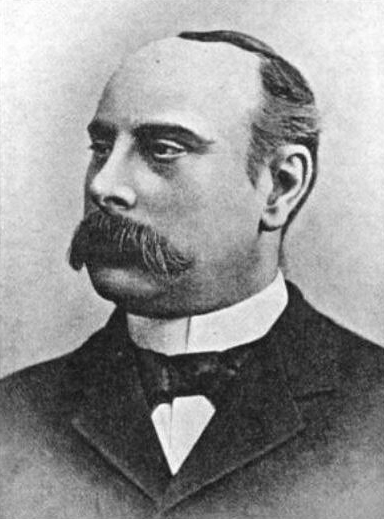
In the early seventeenth century, Spain stood at a precipice. The mighty empire that had once dominated Europe was fracturing, its treasury depleted, its territories fragmenting, and its once-feared military becoming a shadow of its former self. Martin A. S. Hume, the eminent British Hispanist who spent his childhood in Madrid, turns his meticulous scholarship to the reign of Philip IV (1621-1665), examining how the last great Habsburg king navigated an empire in terminal decline. The book opens with the ceremonial spectacle surrounding Philip's baptism, a dazzling display of royal magnificence that Hume uses as a lens through which to reveal the profound contradictions at the heart of Spanish power: glittering courts juxtaposed against a starving populace, grand diplomatic ambitions undermined by corruption and institutional decay. Hume draws on primary sources including the Spanish State Papers to reconstruct not merely the political maneuvering at court but the human cost of imperial collapse. His account interrogates how a nation that once defined European power could unravel so completely, and what responsibility the monarchy bears for the catastrophe. For readers seeking to understand the mechanics of imperial decline, the psychology of rulers who inherit rather than build, or the intimate connections between personal morality and national catastrophe, this volume remains a compelling and unflinching portrait of an empire consuming itself.
Editions

Link to this book
Add a free, dofollow link to Lex on your blog, forum, syllabus, or reading list.

<a href="https://lex-books.com/book/the-court-of-philip-iv-spain-in-decadence-8ff87109-6af3-486d-bda6-f7bd7f56560d"><img src="https://lex-books.com/badges/read-on-lex.svg" alt="Read The Court of Philip IV.: Spain in Decadence by Martin A. S. Hume free on Lex" width="160" height="40"></a>[](https://lex-books.com/book/the-court-of-philip-iv-spain-in-decadence-8ff87109-6af3-486d-bda6-f7bd7f56560d)[url=https://lex-books.com/book/the-court-of-philip-iv-spain-in-decadence-8ff87109-6af3-486d-bda6-f7bd7f56560d][img]https://lex-books.com/badges/read-on-lex.svg[/img][/url]Read The Court of Philip IV.: Spain in Decadence by Martin A. S. Hume free on Lex: https://lex-books.com/book/the-court-of-philip-iv-spain-in-decadence-8ff87109-6af3-486d-bda6-f7bd7f56560dCite this book
Reading this edition for a paper or guide? Copy a citation.
Hume, Martin A. S.. The Court of Philip IV.: Spain in Decadence. Lex, lex-books.com/book/the-court-of-philip-iv-spain-in-decadence-8ff87109-6af3-486d-bda6-f7bd7f56560d.Hume, M. A. S. (1907). The Court of Philip IV.: Spain in Decadence. Lex. https://lex-books.com/book/the-court-of-philip-iv-spain-in-decadence-8ff87109-6af3-486d-bda6-f7bd7f56560dHume, Martin A. S.. The Court of Philip IV.: Spain in Decadence. Lex. https://lex-books.com/book/the-court-of-philip-iv-spain-in-decadence-8ff87109-6af3-486d-bda6-f7bd7f56560d.