The Civilisation of the Renaissance in Italy
1860
The Civilisation of the Renaissance in Italy
1860
Translated by S. G. C. (Samuel George Chetwynd) Middlemore
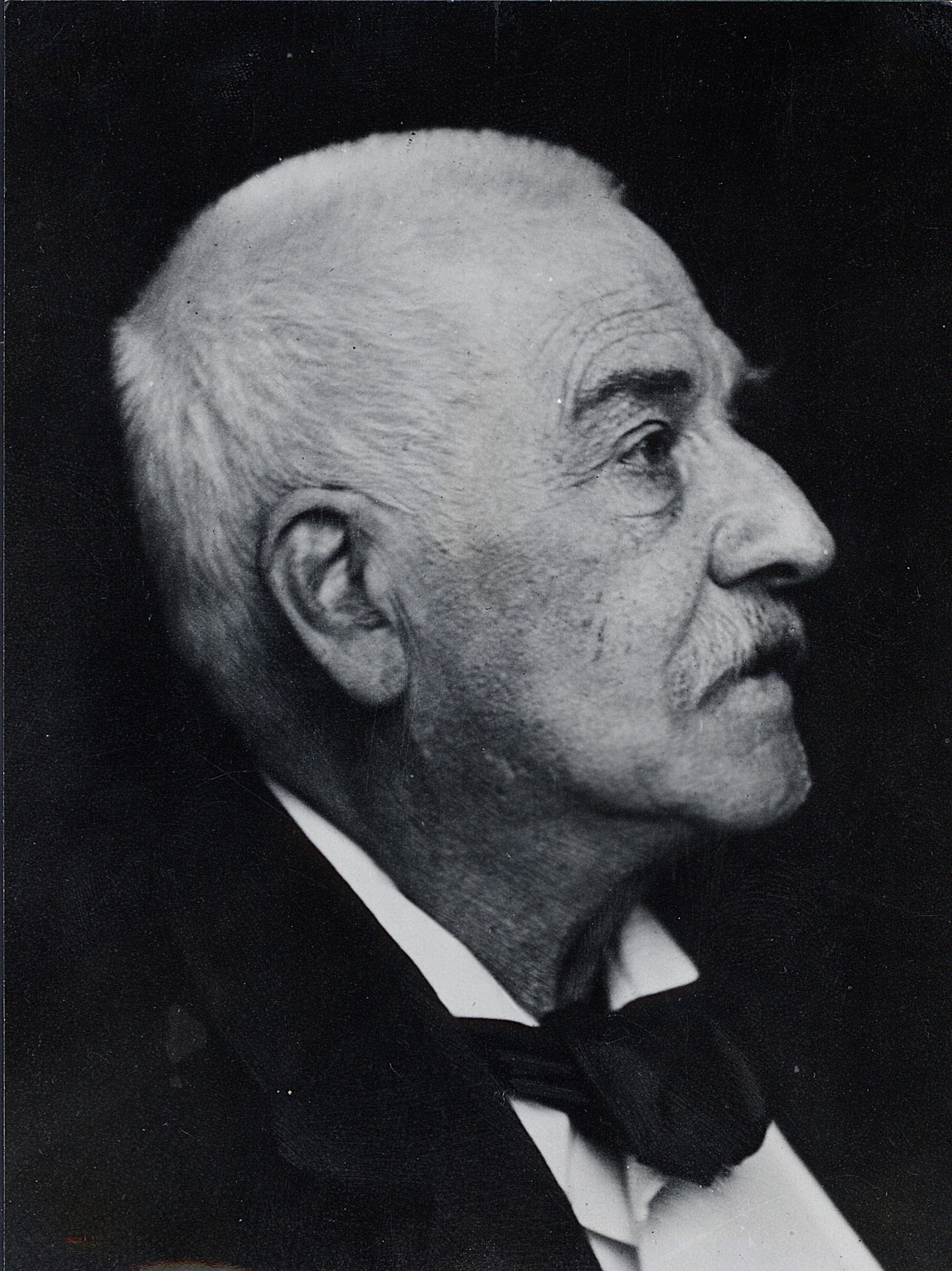
In 1860, Swiss historian Jacob Burckhardt made a radical claim: the Italian Renaissance was not merely an artistic flourishing but the birth of the modern world itself. He argued that in the city-states of Florence, Venice, and Rome, a new form of society emerged from the ashes of medieval order, one built on competition, fame, and the unprecedented elevation of the individual. Burckhardt traces this transformation through the rise of the "creative individual" as a social force, showing how figures like Dante, Leonardo, and Michelangelo became possible only because their world had learned to reward personal ambition and artistic rivalry. The book depicts the Italian states as laboratories of modernity, where political fragmentation and constant competition catalyzed cultural revolution. Originally published in German, this work became the most influential interpretation of the Renaissance in the English-speaking world, shaping how we understand the origins of Western individualism. Burckhardt's portrait of an age of genius anticipated Nietzsche's concept of the Übermensch and remains essential reading for anyone seeking to understand where our modern sensibility toward the self first took shape.
Editions
X-Ray
“Thus what the word Renaissance really means is new birth to liberty”
— Jacob Burckhardt
“Between the two lay a multitude of political units”
— Jacob Burckhardt
“هر دوره ی فرهنگی که به صورت واحدی کامل نمایان می شود تنها از طریق زندگی سیاسی و دین و هنر و علم به زبان نمی آید بلکه مهر خود را بر زندگی اجتماعی نیز می زند.””
— Jacob Burckhardt
“El auténtico descubridor. No obstante, no es el hombre que, tiene la suerte de tropezarse con alguna cosa, sino el hombre que encuentra lo que iba buscando.””
— Jacob Burckhardt
“most honourable alliance which he could form was with intellectual merit, without regard to its origin. The liberality of the northern princes of the thirteenth century was confined to the knights, to the nobility which served and sang. It was otherwise with the Italian despot. With his thirst for fame and his passion for monumental works, it was talent, not birth, which he needed. In the company of the poet and the scholar he felt himself in a new position, almost, indeed, in possession of a new legitimacy.””
— Jacob Burckhardt
“a multitude destitute of will and of the means of resistance, but profitable in the utmost degree to the exchequer.””
— Jacob Burckhardt
Link to this book
Add a free, dofollow link to Lex on your blog, forum, syllabus, or reading list.

<a href="https://lex-books.com/book/the-civilisation-of-the-renaissance-in-italy-5cfbd4ac-2d1c-4e9e-90d0-dd3d96770248"><img src="https://lex-books.com/badges/read-on-lex.svg" alt="Read The Civilisation of the Renaissance in Italy by Jacob Burckhardt free on Lex" width="160" height="40"></a>[](https://lex-books.com/book/the-civilisation-of-the-renaissance-in-italy-5cfbd4ac-2d1c-4e9e-90d0-dd3d96770248)[url=https://lex-books.com/book/the-civilisation-of-the-renaissance-in-italy-5cfbd4ac-2d1c-4e9e-90d0-dd3d96770248][img]https://lex-books.com/badges/read-on-lex.svg[/img][/url]Read The Civilisation of the Renaissance in Italy by Jacob Burckhardt free on Lex: https://lex-books.com/book/the-civilisation-of-the-renaissance-in-italy-5cfbd4ac-2d1c-4e9e-90d0-dd3d96770248Cite this book
Reading this edition for a paper or guide? Copy a citation.
Burckhardt, Jacob. The Civilisation of the Renaissance in Italy. Lex, lex-books.com/book/the-civilisation-of-the-renaissance-in-italy-5cfbd4ac-2d1c-4e9e-90d0-dd3d96770248.Burckhardt, J. (1860). The Civilisation of the Renaissance in Italy. Lex. https://lex-books.com/book/the-civilisation-of-the-renaissance-in-italy-5cfbd4ac-2d1c-4e9e-90d0-dd3d96770248Burckhardt, Jacob. The Civilisation of the Renaissance in Italy. Lex. https://lex-books.com/book/the-civilisation-of-the-renaissance-in-italy-5cfbd4ac-2d1c-4e9e-90d0-dd3d96770248.