The Boss, and How He Came to Rule New York
1903
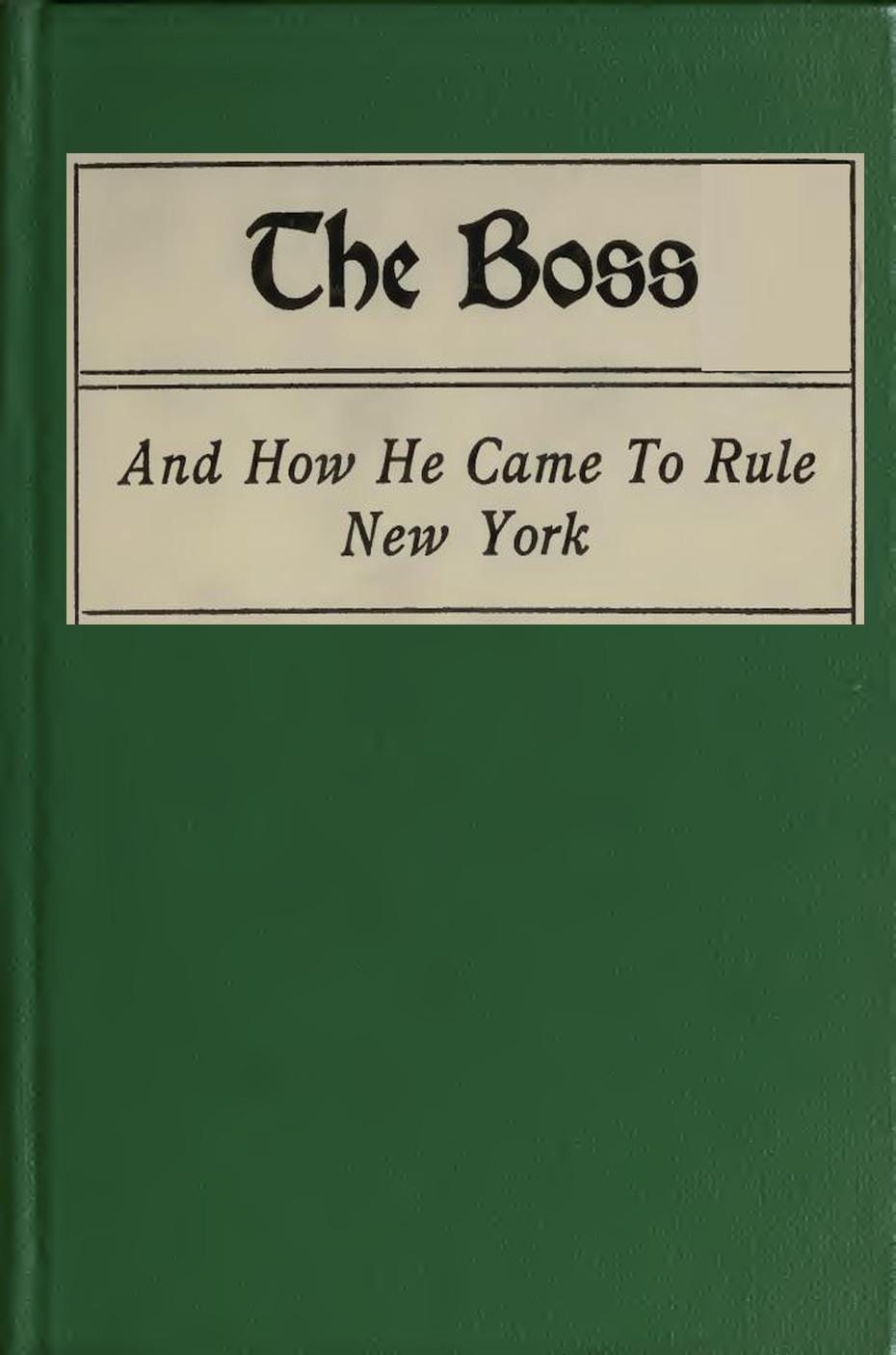
The Boss, and How He Came to Rule New York
1903
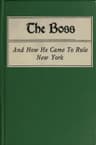
The Boss, and How He Came to Rule New York is a muscular, unsentimental portrait of political power at its rawest: how it's gained, how it's wielded, how it corrupts. Alfred Henry Lewis wrote this 1903 novel as a roman à clef about Tammany Hall, the legendary Democratic political machine that ruled New York City for decades. The narrator is Big John Kennedy, the son of an Irish immigrant blacksmith, who rises from the desperate Five Points slums to become one of the most powerful men in the city. Lewis, a journalist who knew the city's underworld as well as its elite, builds Kennedy's ascent through favors, threats, loyalty, and betrayal. This is not a moralistic expose but a clear-eyed reckoning with how machine politics actually worked, told in a prose style that crackles with period authenticity. The novel matters because it was the first major American fiction to take urban political corruption seriously as subject matter, predating later explorations of power by decades. For readers who love political history, Gilded Age New York, or stories of ruthless ambition, this remains a bracing, eye-opening artifact.
Editions
Link to this book
Add a free, dofollow link to Lex on your blog, forum, syllabus, or reading list.

<a href="https://lex-books.com/book/the-boss-and-how-he-came-to-rule-new-york-14e412d5-061c-4792-a858-2c841ece8bb9"><img src="https://lex-books.com/badges/read-on-lex.svg" alt="Read The Boss, and How He Came to Rule New York by Alfred Henry Lewis free on Lex" width="160" height="40"></a>[](https://lex-books.com/book/the-boss-and-how-he-came-to-rule-new-york-14e412d5-061c-4792-a858-2c841ece8bb9)[url=https://lex-books.com/book/the-boss-and-how-he-came-to-rule-new-york-14e412d5-061c-4792-a858-2c841ece8bb9][img]https://lex-books.com/badges/read-on-lex.svg[/img][/url]Read The Boss, and How He Came to Rule New York by Alfred Henry Lewis free on Lex: https://lex-books.com/book/the-boss-and-how-he-came-to-rule-new-york-14e412d5-061c-4792-a858-2c841ece8bb9Cite this book
Reading this edition for a paper or guide? Copy a citation.
Lewis, Alfred Henry. The Boss, and How He Came to Rule New York. Lex, lex-books.com/book/the-boss-and-how-he-came-to-rule-new-york-14e412d5-061c-4792-a858-2c841ece8bb9.Lewis, A. H. (1903). The Boss, and How He Came to Rule New York. Lex. https://lex-books.com/book/the-boss-and-how-he-came-to-rule-new-york-14e412d5-061c-4792-a858-2c841ece8bb9Lewis, Alfred Henry. The Boss, and How He Came to Rule New York. Lex. https://lex-books.com/book/the-boss-and-how-he-came-to-rule-new-york-14e412d5-061c-4792-a858-2c841ece8bb9.