The Book of Tea
1906
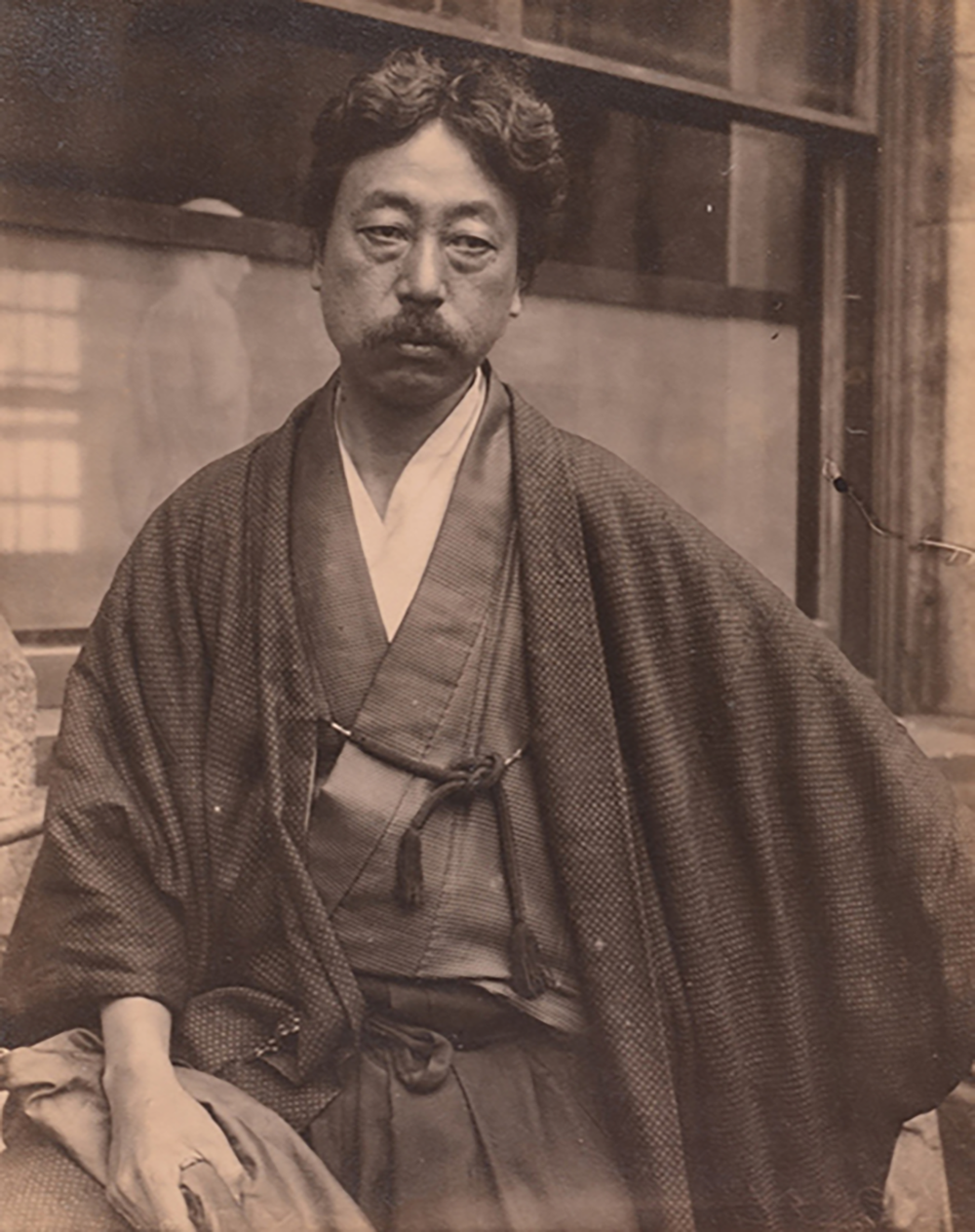
Okakura wrote this slender volume in 1906 Boston, intended for the salon of Isabella Gardner, but it reads like a private meditation delivered across centuries. The Book of Tea is not really about tea. It is about how a single ritual, repeated daily across centuries, became a philosophy of living: one that finds transcendence in simplicity, harmony in imperfection, and presence in the present moment. Okakura traces tea's journey from Chinese medicinal draft to Japanese art form, but his true subject is what Teaism reveals about Eastern aesthetics, about the communion between host and guest, about the sacred hidden in the secular. Yet the book carries an urgent subtext. Written by a Japanese philosopher for Western readers prone to dismissing "Oriental" customs as mere exoticism, it is also a passionate brief for cross-cultural understanding. Okakura argues that tea is not a curiosity but a lens through which to comprehend an entire worldview. A century later, The Book of Tea remains what it always was: a quiet, profound invitation to presence. Read it in one sitting, then brew a cup and read it again.
Editions
X-Ray
“In joy or sadness, flowers are our constant friends.””
— Kakuzo Okakura
“Tea ... is a religion of the art of life.””
— Kakuzo Okakura
“Teaism is a cult founded on the adoration of the beautiful among the sordid facts of everyday existence. It inculcates purity and harmony, the mystery of mutual charity, the romanticism of the social order. It is essentially a worship of the Imperfect, as it is a tender attempt to accomplish something possible in this impossible thing we know as life.””
— Kakuzo Okakura
“True beauty could be discovered only by one who mentally complete the incomplete.””
— Kakuzo Okakura
“Meanwhile, let us have a sip of tea. The afternoon glow is brightening the bamboos, the fountains are bubbling with delight, the soughing of the pines is heard in our kettle. Let us dream of evanescence and linger in the beautiful foolishness of things.””
— Kakuzo Okakura
“The art of life lies in a constant readjustment to our surroundings.””
— Kakuzo Okakura
“Let us dream of evanescence, and linger in the beautiful foolishness of things.””
— Kakuzo Okakura
“Our mind is the canvas on which the artists lay their colour; their pigments are our emotions; their chiaroscuro the light of joy, the shadow of sadness. The masterpiece is of ourselves, as we are of the masterpiece.””
— Kakuzo Okakura
“Translation is always a treason, and as a Ming author observes, can at its best be only the reverse side of a brocade- all the threads are there, but not the subtlety of colour or design.””
— Kakuzo Okakura
Link to this book
Add a free, dofollow link to Lex on your blog, forum, syllabus, or reading list.

<a href="https://lex-books.com/book/the-book-of-tea-81920ac8-0ddc-432e-9d15-c0dc79388d00"><img src="https://lex-books.com/badges/read-on-lex.svg" alt="Read The Book of Tea by Kakuzo Okakura free on Lex" width="160" height="40"></a>[](https://lex-books.com/book/the-book-of-tea-81920ac8-0ddc-432e-9d15-c0dc79388d00)[url=https://lex-books.com/book/the-book-of-tea-81920ac8-0ddc-432e-9d15-c0dc79388d00][img]https://lex-books.com/badges/read-on-lex.svg[/img][/url]Read The Book of Tea by Kakuzo Okakura free on Lex: https://lex-books.com/book/the-book-of-tea-81920ac8-0ddc-432e-9d15-c0dc79388d00Cite this book
Reading this edition for a paper or guide? Copy a citation.
Okakura, Kakuzo. The Book of Tea. Lex, lex-books.com/book/the-book-of-tea-81920ac8-0ddc-432e-9d15-c0dc79388d00.Okakura, K. (1906). The Book of Tea. Lex. https://lex-books.com/book/the-book-of-tea-81920ac8-0ddc-432e-9d15-c0dc79388d00Okakura, Kakuzo. The Book of Tea. Lex. https://lex-books.com/book/the-book-of-tea-81920ac8-0ddc-432e-9d15-c0dc79388d00.