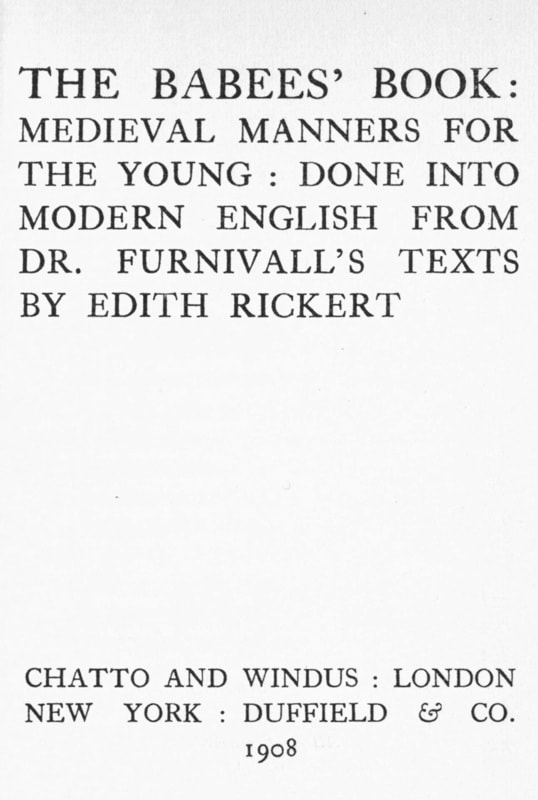
The Babees' Book: Medieval Manners for the Young: Done into Modern English
1868
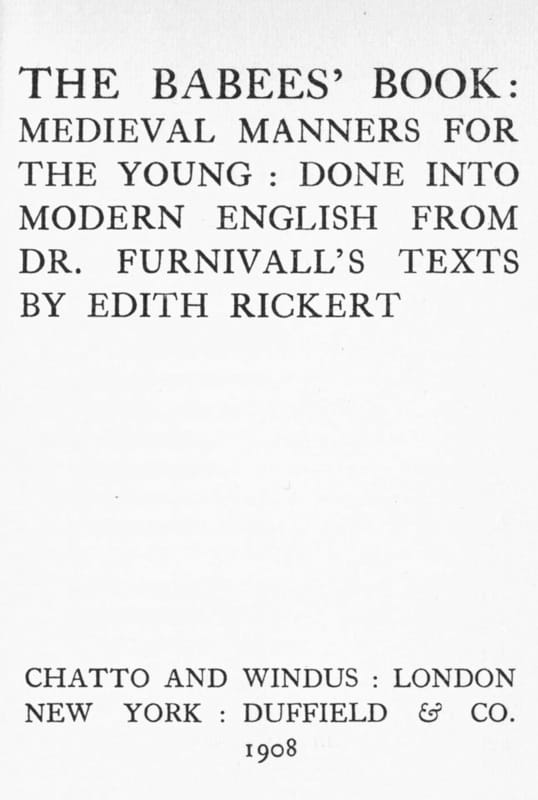
The Babees' Book: Medieval Manners for the Young: Done into Modern English
1868
Translated by Naylor L. J.
Dating from the fifteenth century and translated into modern English in 1868, The Babees' Book offers a remarkable window into how medieval English parents prepared their children for polite society. Written as a father's counsel to his son, it systematically instructs young readers on everything from how to greet a lord without offending him to the precise art of medieval table manners - which fork to use, how to wipe your fingers, and certainly not to pick your teeth at dinner. The text breathes life into a world where a child's courtesy was a direct reflection of their family's honor, where proper comportment meant the difference between social advancement and disgrace. What makes this treatise endlessly fascinating is its mix of the timeless and the alien: the earnest advice on respecting one's elders feels familiar across centuries, yet the specific scenarios - navigating the hierarchies of a medieval household, the elaborate protocols of serving food to one's betters - transport readers to an entirely different moral universe. The humor, too, surprises; the author recognizes that children are children, and tempers his moral gravity with gentle wit about the consequences of bad behavior. This is essential reading for anyone curious about how the past raised its young.
Editions
X-Ray
A mother instructing her daughter in proper conduct for women. She represents practical wisdom and traditional values of medieval domestic life.
A young woman receiving instruction from her mother about marriage, household management, and proper behavior. She represents the target audience for female conduct literature.
A father figure providing moral and practical guidance to his son about life, marriage, and virtue. He embodies paternal authority and worldly wisdom.
A young man receiving counsel from his father about avoiding vice, choosing a wife, and living virtuously. He represents young men seeking guidance.
About The Babees' Book: Medieval Manners for the Young: Done into Modern English
Chapter Summaries
- Introduction
- Explains the historical context of medieval courtesy literature, tracing its origins from French sources and describing the educational system that produced these texts. Discusses the social conditions that made such instruction necessary.
- 1
- Basic instruction for young nobles on proper behavior in a lord's household, covering entrance etiquette, table manners, and service duties. Emphasizes humility, cleanliness, and attentiveness to superiors.
- 2
- An alphabetical guide to avoiding excessive behavior, counseling moderation in all things from being too amorous to too wrathful. Presents the 'measurable mean' as the ideal.
Key Themes
- Social Hierarchy and Deference
- The texts emphasize proper respect for social superiors, with detailed instructions on how to behave toward lords, masters, parents, and elders. This reflects the rigid class structure of medieval society.
- Education and Self-Improvement
- Learning proper manners is presented as essential for social advancement and personal worth. The texts suggest that good breeding can elevate one's station in life.
- Religious Devotion and Moral Conduct
- Christian piety underlies all instruction, with prayers, church behavior, and moral virtue presented as fundamental to proper living. Courtesy is seen as divinely ordained.
Characters
- The Good Wife(major)
- A mother instructing her daughter in proper conduct for women. She represents practical wisdom and traditional values of medieval domestic life.
- The Daughter(major)
- A young woman receiving instruction from her mother about marriage, household management, and proper behavior. She represents the target audience for female conduct literature.
- The Wise Man(major)
- A father figure providing moral and practical guidance to his son about life, marriage, and virtue. He embodies paternal authority and worldly wisdom.
- The Son(major)
- A young man receiving counsel from his father about avoiding vice, choosing a wife, and living virtuously. He represents young men seeking guidance.
- John Russell(major)
- An experienced usher to Duke Humphrey of Gloucester who teaches comprehensive household service skills. He represents professional expertise in court service.
- The Young Man (Russell's student)(major)
- An eager but inexperienced youth seeking to learn the arts of service in a noble household. He transforms from despair to competence through instruction.
Link to this book
Add a free, dofollow link to Lex on your blog, forum, syllabus, or reading list.

<a href="https://lex-books.com/book/the-babees-book-medieval-manners-for-the-young-done-into-modern-english-b90b5b88-9e7e-422c-a085-3accde9b04e1"><img src="https://lex-books.com/badges/read-on-lex.svg" alt="Read The Babees' Book: Medieval Manners for the Young: Done into Modern English by Unknown free on Lex" width="160" height="40"></a>[](https://lex-books.com/book/the-babees-book-medieval-manners-for-the-young-done-into-modern-english-b90b5b88-9e7e-422c-a085-3accde9b04e1)[url=https://lex-books.com/book/the-babees-book-medieval-manners-for-the-young-done-into-modern-english-b90b5b88-9e7e-422c-a085-3accde9b04e1][img]https://lex-books.com/badges/read-on-lex.svg[/img][/url]Read The Babees' Book: Medieval Manners for the Young: Done into Modern English by Unknown free on Lex: https://lex-books.com/book/the-babees-book-medieval-manners-for-the-young-done-into-modern-english-b90b5b88-9e7e-422c-a085-3accde9b04e1Cite this book
Reading this edition for a paper or guide? Copy a citation.
Unknown. The Babees' Book: Medieval Manners for the Young: Done into Modern English. Lex, lex-books.com/book/the-babees-book-medieval-manners-for-the-young-done-into-modern-english-b90b5b88-9e7e-422c-a085-3accde9b04e1.Unknown (1868). The Babees' Book: Medieval Manners for the Young: Done into Modern English. Lex. https://lex-books.com/book/the-babees-book-medieval-manners-for-the-young-done-into-modern-english-b90b5b88-9e7e-422c-a085-3accde9b04e1Unknown. The Babees' Book: Medieval Manners for the Young: Done into Modern English. Lex. https://lex-books.com/book/the-babees-book-medieval-manners-for-the-young-done-into-modern-english-b90b5b88-9e7e-422c-a085-3accde9b04e1.