The Awakening

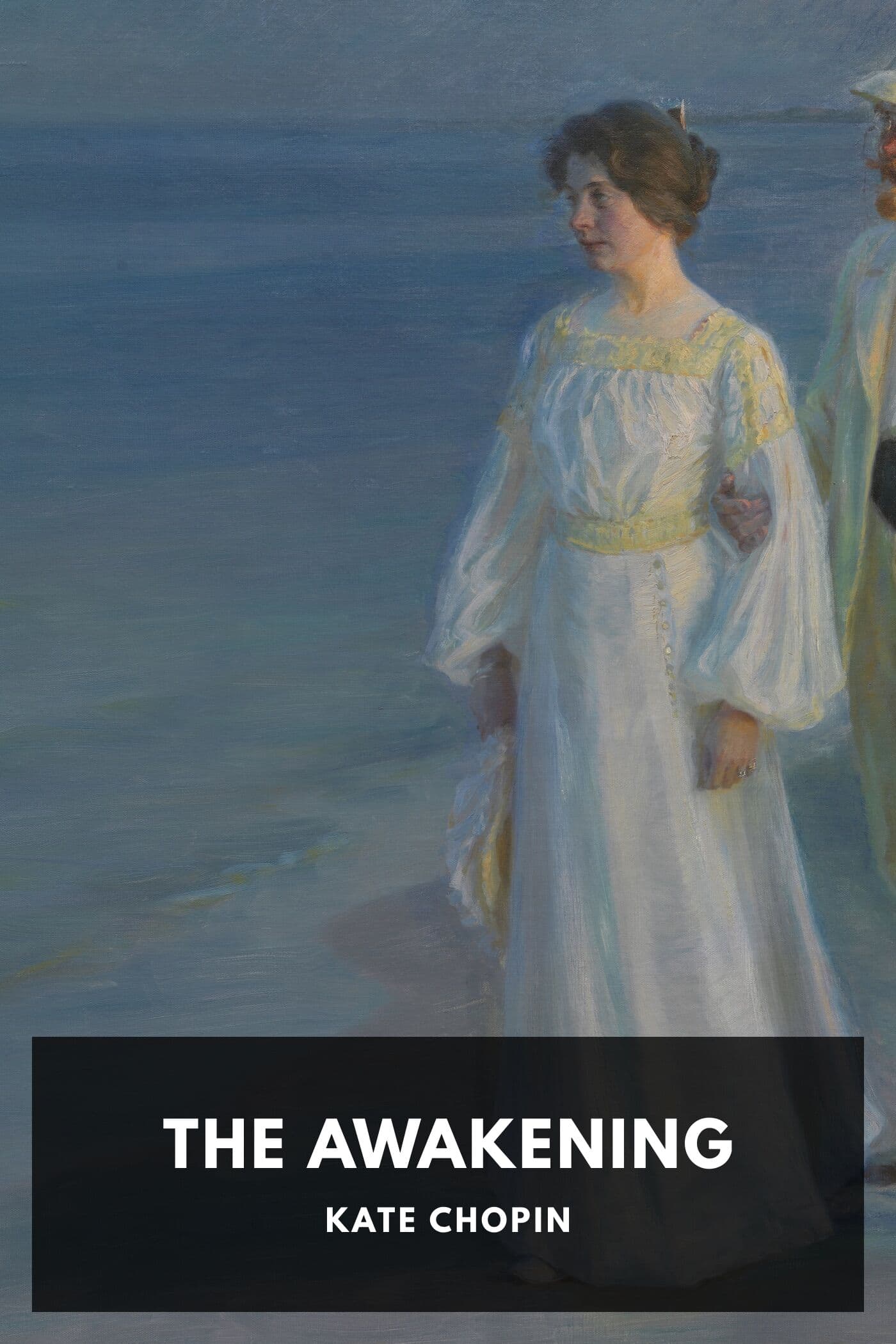
In 1890s New Orleans, a wife and mother begins to ask what she actually wants from her own life. Edna Pontellier has the trappings of a successful woman's existence, a kind husband, children, a beautiful home, but something unnamed is stirring beneath the surface. As she forms a forbidden friendship, discovers a passion for painting, and allows herself to feel desires that have no place in her society, she moves toward a choice that the world will not forgive. Kate Chopin wrote this novel in 1899 and it was nearly lost to history, dismissed as immoral upon publication. A century later, it stands as one of the earliest American novels to take a woman's inner life seriously, to suggest that marriage and motherhood might not be enough, that a woman might be more than the roles she's assigned. Chopin's prose is precise and unsentimental, revealing the quiet violence of a world that asks women to disappear. This is a book about the cost of conformity and the terrible freedom of refusing to pay it.
Editions

X-Ray
“The voice of the sea speaks to the soul.””
— Kate Chopin
“The voice of the sea is seductive, never ceasing, whispering, clamoring, murmuring, inviting the soul to wander in abysses of solitude.””
— Kate Chopin
“but whatever came, she had resolved never again to belong to another than herself.””
— Kate Chopin
“She was becoming herself and daily casting aside that fictitious self which we assume like a garment with which to appear before the world.””
— Kate Chopin
“The bird that would soar above the level plain of tradition and prejudice must have strong wings. It is a sad spectacle to see the weaklings bruised, exhausted, fluttering back to earth.””
— Kate Chopin
“I would give up the unessential; I would give up my money, I would give up my life for my children; but I wouldn't give myself. I can't make it more clear; it's only something I am beginning to comprehend, which is revealing itself to me.””
— Kate Chopin
“There were days when she was very happy without knowing why. She was happy to be alive and breathing, when her whole being seemed to be one with the sunlight, the color, the odors, the luxuriant warmth of some perfect Southern day. She liked then to wander alone into strange and unfamiliar places. She discovered many a sunny, sleepy corner, fashioned to dream in. And she found it good to dream and to be alone and unmolested.There were days when she was unhappy, she did not know why”
— Kate Chopin
“Even as a child she had lived her own small life within herself. At a very early period she had apprehended instinctively the dual life - that outward existence which conforms, the inward life which questions.””
— Kate Chopin
“He could see plainly that she was not herself. That is, he could not see that she was becoming herself and daily casting aside that fictitious self which we assume like a garment with which to appear before the world.””
— Kate Chopin
Link to this book
Add a free, dofollow link to Lex on your blog, forum, syllabus, or reading list.

<a href="https://lex-books.com/book/the-awakening-c0587914-5977-48e0-8530-c104b8e99d0c"><img src="https://lex-books.com/badges/read-on-lex.svg" alt="Read The Awakening by Kate Chopin free on Lex" width="160" height="40"></a>[](https://lex-books.com/book/the-awakening-c0587914-5977-48e0-8530-c104b8e99d0c)[url=https://lex-books.com/book/the-awakening-c0587914-5977-48e0-8530-c104b8e99d0c][img]https://lex-books.com/badges/read-on-lex.svg[/img][/url]Read The Awakening by Kate Chopin free on Lex: https://lex-books.com/book/the-awakening-c0587914-5977-48e0-8530-c104b8e99d0cCite this book
Reading this edition for a paper or guide? Copy a citation.
Chopin, Kate. The Awakening. Lex, lex-books.com/book/the-awakening-c0587914-5977-48e0-8530-c104b8e99d0c.Chopin, K. (n.d.). The Awakening. Lex. https://lex-books.com/book/the-awakening-c0587914-5977-48e0-8530-c104b8e99d0cChopin, Kate. The Awakening. Lex. https://lex-books.com/book/the-awakening-c0587914-5977-48e0-8530-c104b8e99d0c.