The Apparatus Used by the Greeks and Romans in the Setting of Fractures and the Reduction of Dislocations
1909
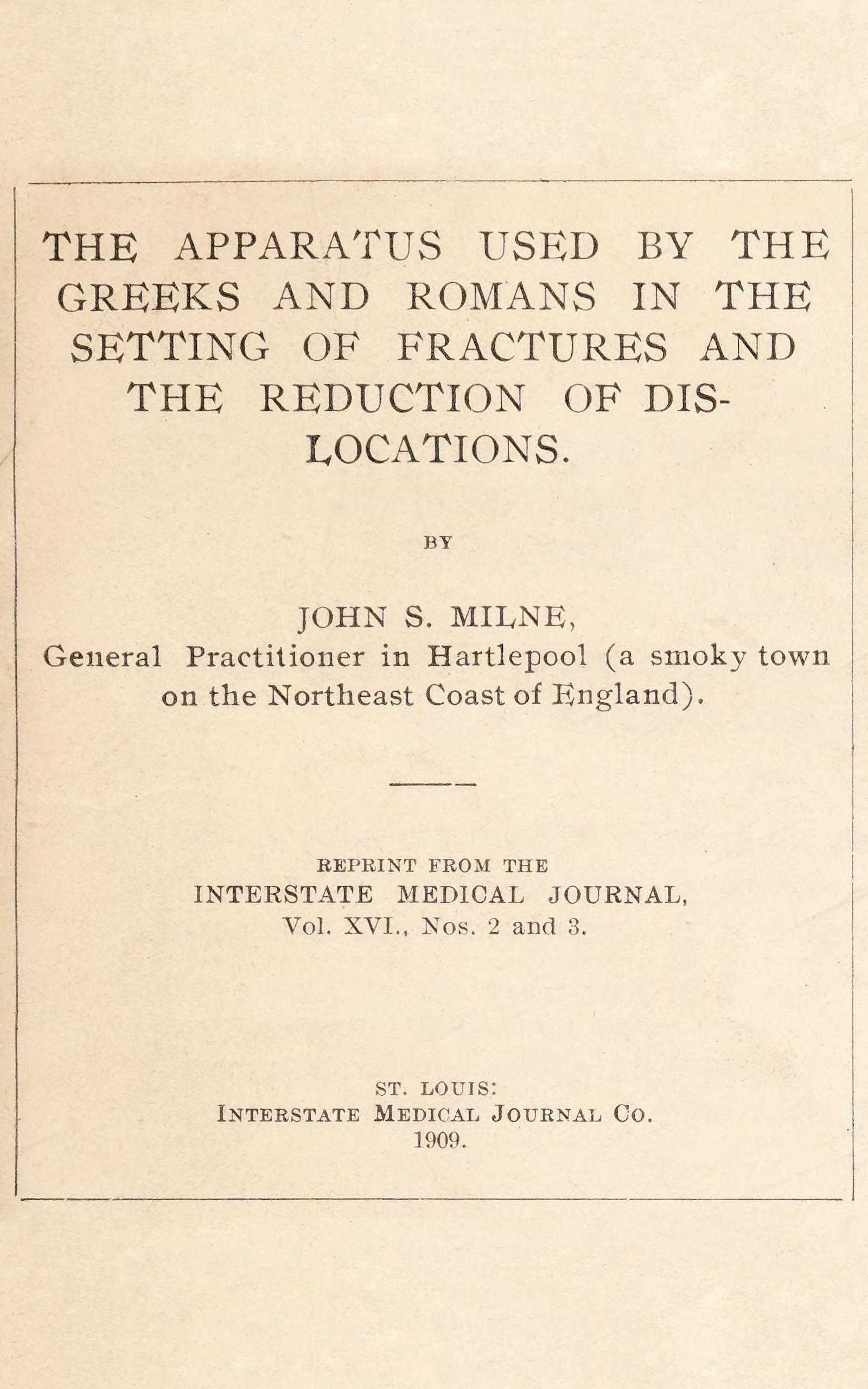
The Apparatus Used by the Greeks and Romans in the Setting of Fractures and the Reduction of Dislocations
1909
A scientific publication written in the early 20th century. This book provides an exploration of ancient surgical apparatus and techniques used by the Greeks and Romans for treating fractures and dislocations. It offers insights into the medical practices and advancements of these civilizations, highlighting their understanding of human anatomy and methods of treatment. The book primarily focuses on the tools and methods detailed in historical texts by notable figures such as Hippocrates and Galen. It elaborates on various devices like splints, bandages, and other materials employed to treat injuries, emphasizing techniques for effective application. Milne discusses the practices of ancient practitioners, including the use of roller bandages, waxed compresses, and intricate wooden machines known as the scamnum designed for reducing dislocations. The text serves as a historical account of early surgical practices and provides a glimpse into the medical knowledge of ancient cultures, illustrating the evolution of treatment methods over time.
Editions

X-Ray
A general practitioner from Hartlepool, England, who serves as the author and narrator of this medical historical study. He systematically examines and documents ancient Greek and Roman medical apparatus and techniques.
The ancient Greek physician (460 B.C.) known as the father of medicine. His works on Fractures and Articulations form the primary source for ancient medical techniques described in the study.
Roman physician (130-200 A.D.) who provided extensive commentaries on Hippocrates' works. He invented the Glossocomium splint and had high regard for the scamnum apparatus.
Roman medical writer (about 20 A.D.) who contributed descriptions of medical apparatus and techniques. He provided detailed accounts of the ambè and box splints.
About The Apparatus Used by the Greeks and Romans in the Setting of Fractures and the Reduction of Dislocations
Chapter Summaries
- 1
- Milne establishes the scope of his study, focusing specifically on apparatus rather than comprehensive ancient medical knowledge. He identifies his primary sources: Hippocrates, Galen, Celsus, Heliodorus, Paulus Ægineta, and Scultetus.
- 2
- Details the fundamental materials used by ancients: roller bandages, pads (compresses), and splints. Describes the application process using waxed bandages and the timing of treatment phases.
- 3
- Examines special splinting devices including the elastic rod system for leg fractures and various box splint designs. Discusses the glossocomium of Galen, an ingenious traction device.
Key Themes
- Historical Medical Knowledge
- The work demonstrates the sophisticated understanding of fracture and dislocation treatment possessed by ancient physicians. It reveals that many fundamental principles of orthopedic medicine were established thousands of years ago.
- Technological Innovation in Medicine
- The study showcases the ingenious mechanical devices created by ancient practitioners, from simple splints to complex machines like the scamnum and glossocomium. These innovations demonstrate human ingenuity in solving medical problems.
- Continuity of Medical Practice
- The work illustrates how ancient medical techniques influenced later practice, with some apparatus remaining in use well into the 19th century. It shows the enduring value of well-designed medical solutions.
Characters
- John Stewart Milne(protagonist)
- A general practitioner from Hartlepool, England, who serves as the author and narrator of this medical historical study. He systematically examines and documents ancient Greek and Roman medical apparatus and techniques.
- Hippocrates(major)
- The ancient Greek physician (460 B.C.) known as the father of medicine. His works on Fractures and Articulations form the primary source for ancient medical techniques described in the study.
- Galen(major)
- Roman physician (130-200 A.D.) who provided extensive commentaries on Hippocrates' works. He invented the Glossocomium splint and had high regard for the scamnum apparatus.
- Celsus(major)
- Roman medical writer (about 20 A.D.) who contributed descriptions of medical apparatus and techniques. He provided detailed accounts of the ambè and box splints.
- Paulus Ægineta(major)
- Byzantine physician (6th Century A.D.) who compiled medical knowledge in his encyclopedia. He described various splinting techniques and apparatus modifications.
- Heliodorus(minor)
- Ancient physician whose chapter on medical apparatus was preserved in the works of Oribasius. He described the machine of Fabrus and various reduction techniques.
Link to this book
Add a free, dofollow link to Lex on your blog, forum, syllabus, or reading list.

<a href="https://lex-books.com/book/the-apparatus-used-by-the-greeks-and-romans-in-the-setting-of-fractures-and-the--63eedd3b-9cff-4d5f-a66b-deef3e5af571"><img src="https://lex-books.com/badges/read-on-lex.svg" alt="Read The Apparatus Used by the Greeks and Romans in the Setting of Fractures and the Reduction of Dislocations by John Stewart Milne free on Lex" width="160" height="40"></a>[](https://lex-books.com/book/the-apparatus-used-by-the-greeks-and-romans-in-the-setting-of-fractures-and-the--63eedd3b-9cff-4d5f-a66b-deef3e5af571)[url=https://lex-books.com/book/the-apparatus-used-by-the-greeks-and-romans-in-the-setting-of-fractures-and-the--63eedd3b-9cff-4d5f-a66b-deef3e5af571][img]https://lex-books.com/badges/read-on-lex.svg[/img][/url]Read The Apparatus Used by the Greeks and Romans in the Setting of Fractures and the Reduction of Dislocations by John Stewart Milne free on Lex: https://lex-books.com/book/the-apparatus-used-by-the-greeks-and-romans-in-the-setting-of-fractures-and-the--63eedd3b-9cff-4d5f-a66b-deef3e5af571Cite this book
Reading this edition for a paper or guide? Copy a citation.
Milne, John Stewart. The Apparatus Used by the Greeks and Romans in the Setting of Fractures and the Reduction of Dislocations. Lex, lex-books.com/book/the-apparatus-used-by-the-greeks-and-romans-in-the-setting-of-fractures-and-the--63eedd3b-9cff-4d5f-a66b-deef3e5af571.Milne, J. S. (1909). The Apparatus Used by the Greeks and Romans in the Setting of Fractures and the Reduction of Dislocations. Lex. https://lex-books.com/book/the-apparatus-used-by-the-greeks-and-romans-in-the-setting-of-fractures-and-the--63eedd3b-9cff-4d5f-a66b-deef3e5af571Milne, John Stewart. The Apparatus Used by the Greeks and Romans in the Setting of Fractures and the Reduction of Dislocations. Lex. https://lex-books.com/book/the-apparatus-used-by-the-greeks-and-romans-in-the-setting-of-fractures-and-the--63eedd3b-9cff-4d5f-a66b-deef3e5af571.