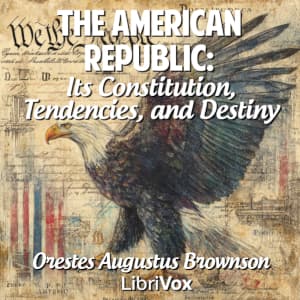
The American Republic: Its Constitution, Tendencies, and Destiny
1865
The American Republic: Its Constitution, Tendencies, and Destiny
1865
Written in the blood-soaked aftermath of the Civil War, this is not a dry constitutional treatise but a fevered meditation on what America is and what it must become. Orestes Brownson, the era's most contradictions thinker, brings a pro-Union but anti-abolitionist lens to the nation's existential crisis: if the United States nearly died, what, exactly, was it that nearly died? And what should rise in its place? Brownson dismantles prevailing theories of state sovereignty and federalism with relentless logic, arguing that America has never truly understood its own constitution, that the Civil War was less a tragedy than a painful awakening. His vision is neither nostalgic nor triumphant but bracingly realistic: the Republic must reckon with its founding contradictions or dissolve into something unrecognizable. This is political philosophy as survival manual, dense with insight about the nature of republican government, the tensions between liberty and authority, and the fragile art of national self-creation. It remains essential reading for anyone who wants to understand the intellectual foundations of the Civil War's long aftermath and the enduring questions of American identity.
Editions
X-Ray
“But American statesmen have studied the constitutions of other states more than that of their own, and have succeeded in obscuring the American system in the minds of the people, and giving them in its place pure and simple democracy, which is its false development or corruption. Under the influence of this false development, the people were fast losing sight of the political truth that, though the people are sovereign, it is the organic, not the inorganic people, the territorial people, not the people as simple population, and were beginning to assert the absolute God-given right of the majority to govern. All the changes made in the bosom of the States themselves have consisted in removing all obstacles to the irresponsible will of the majority, leaving minorities and individuals at their mercy. This tendency to a centralized democracy had more to do with provoking secession and rebellion than the anti-slavery sentiments of the Northern, Central, and Western States.””
— Orestes Augustus Brownson
Link to this book
Add a free, dofollow link to Lex on your blog, forum, syllabus, or reading list.

<a href="https://lex-books.com/book/the-american-republic-its-constitution-tendencies-and-destiny-f9ef0743-a319-4dc5-9834-d4362ae8655e"><img src="https://lex-books.com/badges/read-on-lex.svg" alt="Read The American Republic: Its Constitution, Tendencies, and Destiny by Orestes Augustus Brownson free on Lex" width="160" height="40"></a>[](https://lex-books.com/book/the-american-republic-its-constitution-tendencies-and-destiny-f9ef0743-a319-4dc5-9834-d4362ae8655e)[url=https://lex-books.com/book/the-american-republic-its-constitution-tendencies-and-destiny-f9ef0743-a319-4dc5-9834-d4362ae8655e][img]https://lex-books.com/badges/read-on-lex.svg[/img][/url]Read The American Republic: Its Constitution, Tendencies, and Destiny by Orestes Augustus Brownson free on Lex: https://lex-books.com/book/the-american-republic-its-constitution-tendencies-and-destiny-f9ef0743-a319-4dc5-9834-d4362ae8655eCite this book
Reading this edition for a paper or guide? Copy a citation.
Brownson, Orestes Augustus. The American Republic: Its Constitution, Tendencies, and Destiny. Lex, lex-books.com/book/the-american-republic-its-constitution-tendencies-and-destiny-f9ef0743-a319-4dc5-9834-d4362ae8655e.Brownson, O. A. (1865). The American Republic: Its Constitution, Tendencies, and Destiny. Lex. https://lex-books.com/book/the-american-republic-its-constitution-tendencies-and-destiny-f9ef0743-a319-4dc5-9834-d4362ae8655eBrownson, Orestes Augustus. The American Republic: Its Constitution, Tendencies, and Destiny. Lex. https://lex-books.com/book/the-american-republic-its-constitution-tendencies-and-destiny-f9ef0743-a319-4dc5-9834-d4362ae8655e.