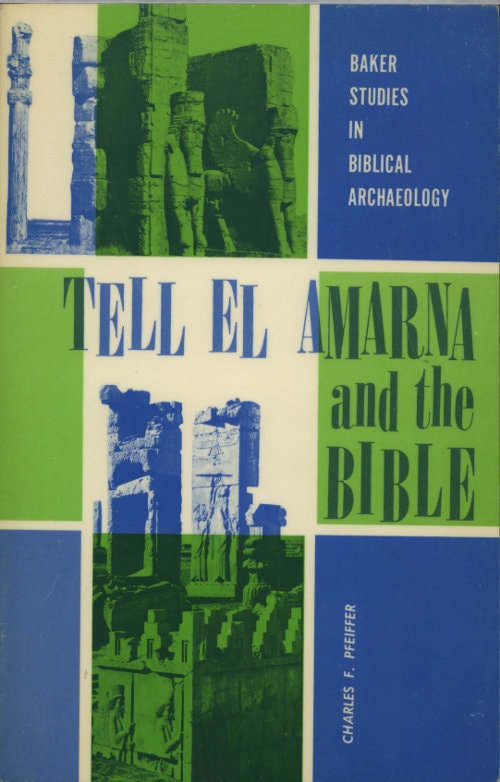
Tell El Amarna and the Bible
1963
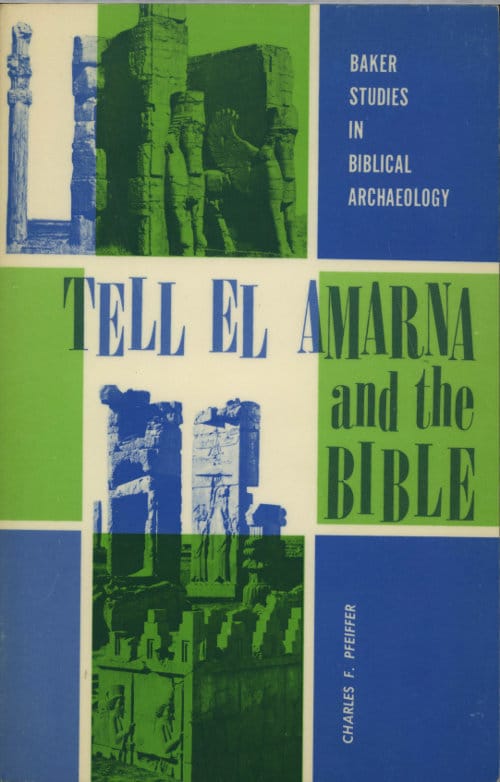
Tell El Amarna and the Bible
1963
The Amarna tablets changed everything. Discovered in the late 19th century at the ruins of Akhenaten's abandoned capital, these 382 clay letters from the 14th century BCE cracked open a world previously lost to time: Canaanite princes pleading for Egyptian military aid, diplomatic correspondence with Babylon and Mitanni, a Bronze Age power structure in vivid detail. Charles F. Pfeiffer traces how these archaeological finds revolutionized scholarly understanding of the biblical world, examining Akhenaten's radical monotheistic experiment and its possible connections to Mosaic tradition. The correspondence reveals the political landscape during the supposed age of the patriarchs, lending historical grounding to narratives that once seemed purely mythological. Pfeiffer situates the Amarna discoveries within the broader story of Egyptology, showing how earlier expeditions paved the way for these game-changing finds. This remains essential reading for anyone seeking to understand how archaeology illuminates the historical contexts of Scripture.
Editions

X-Ray
The Pharaoh who initiated radical religious reforms, promoting the worship of Aton as the sole god and moving the capital to Akhetaton.
Akhenaton's devoted wife and queen, a favored subject in Amarna art and constant companion in his religious reforms.
Akhenaton's father and predecessor, whose later reign saw the beginning of Egyptian imperial decline and a growing preference for Aton.
Amenhotep III's wife and Akhenaton's mother, who exercised considerable power and served as regent for her young son.
About Tell El Amarna and the Bible
Chapter Summaries
- I
- This chapter details the accidental discovery of the Amarna Tablets by a peasant woman in 1887 and the subsequent systematic archaeological excavations of Akhetaton. It highlights the initial skepticism about the cuneiform tablets found in Egypt and their eventual recognition as invaluable diplomatic correspondence and school texts.
- II
- This chapter introduces Amenhotep IV (Akhenaton), describing his physical appearance, his education, and the political landscape of the New Kingdom. It details his growing devotion to the god Aton, his initial tolerance, and his eventual radical break with the powerful Amon priesthood, culminating in his name change to Akhenaton and the closure of Amon temples.
- III
- This chapter focuses on the founding and layout of Akhetaton, Akhenaton's new capital city dedicated to Aton, chosen for its unique geographical features. It describes the city's rapid construction, its main thoroughfares, key buildings like the palace and Great Temple, and the rock tombs, as well as the city's eventual abandonment.
Key Themes
- Religious Reform and Monotheism
- The book extensively details Akhenaton's attempt to establish Atonism as the sole religion of Egypt, contrasting it with traditional polytheism and exploring its relationship (or lack thereof) to Biblical monotheism. This theme highlights the revolutionary nature of Akhenaton's faith and its profound impact on Egyptian society, albeit for a short period.
- Political Power and Imperial Decline
- This theme illustrates how Akhenaton's intense focus on religious matters led to the neglect of Egypt's Asiatic empire, resulting in power struggles among vassal states and the rise of rival empires like the Hittites. The Amarna letters serve as primary evidence for this weakening central authority and the subsequent chaos in the provinces.
- Archaeology as Historical Source
- The entire book is structured around archaeological discoveries, particularly the Amarna Tablets, demonstrating how these artifacts reconstruct ancient history and daily life. It emphasizes the crucial role of material evidence in understanding periods for which written records are scarce or biased.
Characters
- Akhenaton (Amenhotep IV)(protagonist)
- The Pharaoh who initiated radical religious reforms, promoting the worship of Aton as the sole god and moving the capital to Akhetaton.
- Nofretete(supporting)
- Akhenaton's devoted wife and queen, a favored subject in Amarna art and constant companion in his religious reforms.
- Amenhotep III(supporting)
- Akhenaton's father and predecessor, whose later reign saw the beginning of Egyptian imperial decline and a growing preference for Aton.
- Queen Tiy(supporting)
- Amenhotep III's wife and Akhenaton's mother, who exercised considerable power and served as regent for her young son.
- Aton(central_figure)
- The sun disk, elevated by Akhenaton to be the sole god of Egypt, representing a radical shift towards monotheistic tendencies.
- Amon (Amon-Re)(antagonist)
- The chief god of the Egyptian pantheon before Akhenaton's reforms, whose powerful priesthood fiercely opposed Atonism.
Link to this book
Add a free, dofollow link to Lex on your blog, forum, syllabus, or reading list.

<a href="https://lex-books.com/book/tell-el-amarna-and-the-bible-12e0802c-123f-4d12-8366-927cb5eff60f"><img src="https://lex-books.com/badges/read-on-lex.svg" alt="Read Tell El Amarna and the Bible by Charles F. Pfeiffer free on Lex" width="160" height="40"></a>[](https://lex-books.com/book/tell-el-amarna-and-the-bible-12e0802c-123f-4d12-8366-927cb5eff60f)[url=https://lex-books.com/book/tell-el-amarna-and-the-bible-12e0802c-123f-4d12-8366-927cb5eff60f][img]https://lex-books.com/badges/read-on-lex.svg[/img][/url]Read Tell El Amarna and the Bible by Charles F. Pfeiffer free on Lex: https://lex-books.com/book/tell-el-amarna-and-the-bible-12e0802c-123f-4d12-8366-927cb5eff60fCite this book
Reading this edition for a paper or guide? Copy a citation.
Pfeiffer, Charles F.. Tell El Amarna and the Bible. Lex, lex-books.com/book/tell-el-amarna-and-the-bible-12e0802c-123f-4d12-8366-927cb5eff60f.Pfeiffer, C. F. (1963). Tell El Amarna and the Bible. Lex. https://lex-books.com/book/tell-el-amarna-and-the-bible-12e0802c-123f-4d12-8366-927cb5eff60fPfeiffer, Charles F.. Tell El Amarna and the Bible. Lex. https://lex-books.com/book/tell-el-amarna-and-the-bible-12e0802c-123f-4d12-8366-927cb5eff60f.