Spettri: Dramma in Tre Atti
1881
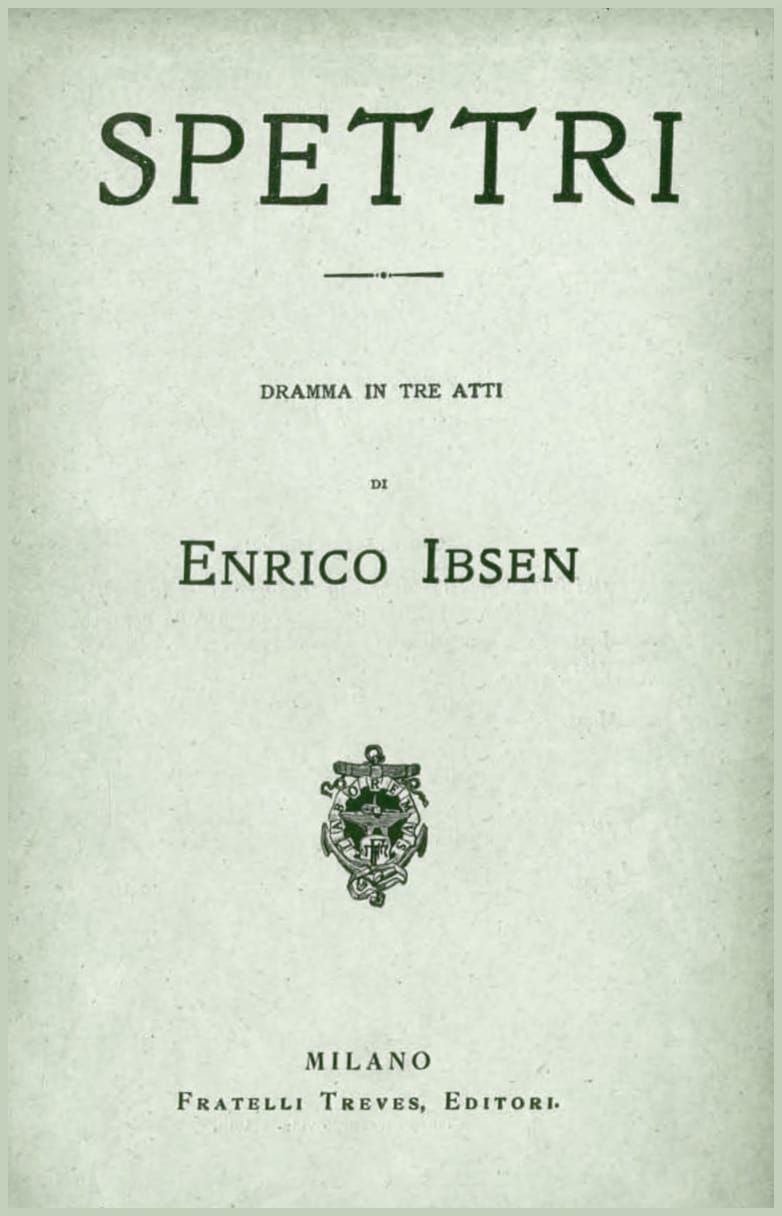
Spettri è il dramma che ha scosso la borghesia vittoriana fino alle fondamenta. Helene Alving vive intrappolata in una casa dove tutto deve apparire perfetto: il marito defunto viene commemorato con un opificio per orfani, e lei stessa si presenta come la vedova virtuosa. Ma la verità è un cadavere che non riesce a restare sepolto. Il figlio Osvaldo è malato, forse segnato dalla syphilis ereditata dal padre che tutti fingono di non conoscere. E quando il pastore Manders arriva per la cerimonia, il confronto tra ipocrisia e verità diventa inevitabile. Ibsen costruisce un meccanismo di rivelazioni implacabile: ogni personaggio porta il peso di bugie ereditate, di doveri falsi, di passioni represse. Il finale non offre redenzione ma solo la consapevolezza devastante che le colpe dei padri ricadono sui figli. È teatro che brucia, ancora oggi, per la sua audacia nel dire ciò che nessuno osava ammettere.
Editions
X-Ray
“It is the very mark of the spirit of rebellion to crave for happiness in this life””
— Henrik Ibsen
“It's not only what we have inherited from our father and mother that walks in us. It's all sorts of dead ideas, and lifeless old beliefs, and so forth. They have no vitality, but they cling to us all the same, and we can't get rid of them.””
— Henrik Ibsen
“I am half inclined to think we are all ghosts…it is not only what we have inherited from our fathers and mothers that exists again in us, but all sorts of old dead ideas and all kinds of old dead beliefs and things of that kind. They are not actually alive in us; but there they are dormant all the same, and we can never be rid of them. Whenever I take up a newspaper and read it, I fancy I see ghosts creeping between the lines. There must be ghosts all over the world. They must be as countless as the grains of the sands, it seems to me. And we are so miserably afraid of the light, all of us.””
— Henrik Ibsen
“I thought you understood where I'd lost what you call my heart at the time.””
— Henrik Ibsen
“People so easily forget their past selves.””
— Henrik Ibsen
“OSWALD: [Repeats, in a dull, toneless voice.] The sun. The sun.””
— Henrik Ibsen
“Ja, De tvang meg inn under det som De kalte plikt og skyldighet; da De lovpriste som rett og riktig hva hele mitt sinn opprørte seg imot noe vederstyggelig. Da var det jeg begynte å se Deres lærdomme efter i sømmene. Jeg ville bare pille ved en eneste knute; men da jeg hadde fått den løst, så raknet det opp alt sammen. Og så skjønte jeg at det var maskinsøm.””
— Henrik Ibsen
“What right have we human beings to happiness?””
— Henrik Ibsen
“io credo che anche noi, tutti noi non siamonient'altro che degli spettri... in noi continua a circolare e a scorrere e a vivere non soltanto ciò che abbiamo ereditatodai nostri genitori, dico il sangue paterno e materno, ma anche tutti i pensieri immaginabili che sono già stati pensati, levecchie credenze morte e sepolte, ogni specie di cose antiche e defunte a cui un tempo si è prestato fede e così via, inuna catena senza fine. Fantasmi senza vita che però si annidano nel nostro sangue, e che noi non possiamo scacciare.Basta che io prenda un giornale, e mi metta a leggere, e mi sembra di vedere degli spettri che scivolano e sgusciano frale righe... ah, devono essere tanti, innumerevoli come i granelli di sabbia nel mare... e noi tutti viviamo nell'ombra,timorosi della luce, della chiarezza, della verità..””
— Henrik Ibsen
Link to this book
Add a free, dofollow link to Lex on your blog, forum, syllabus, or reading list.

<a href="https://lex-books.com/book/spettri-dramma-in-tre-atti-0f0e1772-748d-479a-8b71-7958a07fef58"><img src="https://lex-books.com/badges/read-on-lex.svg" alt="Read Spettri: Dramma in Tre Atti by Henrik Ibsen free on Lex" width="160" height="40"></a>[](https://lex-books.com/book/spettri-dramma-in-tre-atti-0f0e1772-748d-479a-8b71-7958a07fef58)[url=https://lex-books.com/book/spettri-dramma-in-tre-atti-0f0e1772-748d-479a-8b71-7958a07fef58][img]https://lex-books.com/badges/read-on-lex.svg[/img][/url]Read Spettri: Dramma in Tre Atti by Henrik Ibsen free on Lex: https://lex-books.com/book/spettri-dramma-in-tre-atti-0f0e1772-748d-479a-8b71-7958a07fef58Cite this book
Reading this edition for a paper or guide? Copy a citation.
Ibsen, Henrik. Spettri: Dramma in Tre Atti. Lex, lex-books.com/book/spettri-dramma-in-tre-atti-0f0e1772-748d-479a-8b71-7958a07fef58.Ibsen, H. (1881). Spettri: Dramma in Tre Atti. Lex. https://lex-books.com/book/spettri-dramma-in-tre-atti-0f0e1772-748d-479a-8b71-7958a07fef58Ibsen, Henrik. Spettri: Dramma in Tre Atti. Lex. https://lex-books.com/book/spettri-dramma-in-tre-atti-0f0e1772-748d-479a-8b71-7958a07fef58.