Science for the School and Family, Part I. Natural Philosophy
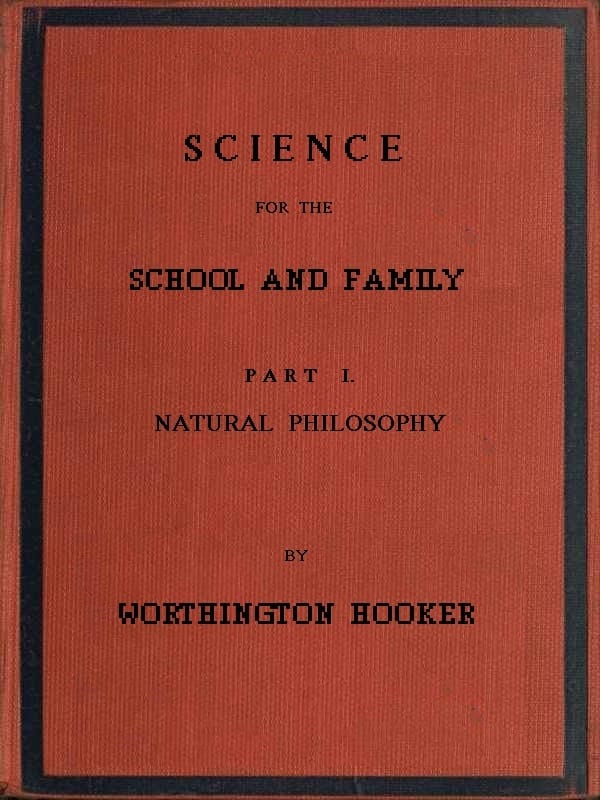
Science for the School and Family, Part I. Natural Philosophy
In 1884, physician and educator Worthington Hooker made a bold argument: children deserve to understand science, not merely memorize it. This volume represents his attempt to rewrite how young minds encounter the physical world. Rather than overwhelming students with complex abstractions, Hooker builds from observation and simple explanation, letting curiosity do the heavy lifting. Nearly 300 engravings bring matter, motion, and physical law to vivid life on the page. The book critiques the dry, memorization-heavy approach that dominated Victorian classrooms and proposes something radical for its time: science education that actually respects a child's capacity for wonder. Though the language is period-specific, the underlying philosophy feels strikingly modern. For educators, historians of education, or anyone curious about how we first learned to teach science to the young, this is a fascinating artifact of pedagogical ambition.
Editions
Link to this book
Add a free, dofollow link to Lex on your blog, forum, syllabus, or reading list.

<a href="https://lex-books.com/book/science-for-the-school-and-family-part-i-natural-philosophy-23fd47ee-9801-4dc6-be35-a56e569789fa"><img src="https://lex-books.com/badges/read-on-lex.svg" alt="Read Science for the School and Family, Part I. Natural Philosophy by Worthington Hooker free on Lex" width="160" height="40"></a>[](https://lex-books.com/book/science-for-the-school-and-family-part-i-natural-philosophy-23fd47ee-9801-4dc6-be35-a56e569789fa)[url=https://lex-books.com/book/science-for-the-school-and-family-part-i-natural-philosophy-23fd47ee-9801-4dc6-be35-a56e569789fa][img]https://lex-books.com/badges/read-on-lex.svg[/img][/url]Read Science for the School and Family, Part I. Natural Philosophy by Worthington Hooker free on Lex: https://lex-books.com/book/science-for-the-school-and-family-part-i-natural-philosophy-23fd47ee-9801-4dc6-be35-a56e569789faCite this book
Reading this edition for a paper or guide? Copy a citation.
Hooker, Worthington. Science for the School and Family, Part I. Natural Philosophy. Lex, lex-books.com/book/science-for-the-school-and-family-part-i-natural-philosophy-23fd47ee-9801-4dc6-be35-a56e569789fa.Hooker, W. (n.d.). Science for the School and Family, Part I. Natural Philosophy. Lex. https://lex-books.com/book/science-for-the-school-and-family-part-i-natural-philosophy-23fd47ee-9801-4dc6-be35-a56e569789faHooker, Worthington. Science for the School and Family, Part I. Natural Philosophy. Lex. https://lex-books.com/book/science-for-the-school-and-family-part-i-natural-philosophy-23fd47ee-9801-4dc6-be35-a56e569789fa.