Saint Distaffs day, or the morrow after Twelfth day
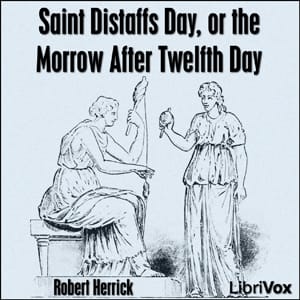
It was the one day each year when Christmas finally ended and women returned to their spinning wheels. Saint Distaff's Day, falling on January 7th, marked the practical close of the twelve days of celebration, and Robert Herrick's 17th-century verse captures the peculiar energy of that return to labor: part necessity, part excuse for chaos. In this playful poem, roguish men descend upon the spinsters not for romance, but to tease, distract, and inject mischief into the mundane. The women must balance their work with the男性的胡闹 - caught between their wheels and the revelry. It's a small domestic comedy that reveals something larger about gender, labor, and the rhythms of pre-industrial life. Herrick wrote in the Cavalier tradition: polished, witty, observant of ordinary pleasures and pressures. This poem survives as a window into a world where the return to routine was met with wit and resistance, where the first day back to work was also the last excuse for chaos. For readers who enjoy glimpses of forgotten customs rendered in crystalline verse.
Editions

Read by
Group Narration
14 readers
Caitlin Teresa, Betsie Bush, Sarah Jennings, Kristin LeMoine +10 more
Link to this book
Add a free, dofollow link to Lex on your blog, forum, syllabus, or reading list.

<a href="https://lex-books.com/book/saint-distaffs-day-or-the-morrow-after-twelfth-day-3fa9ee66-4935-4519-8990-0e1ee3f6ca47"><img src="https://lex-books.com/badges/read-on-lex.svg" alt="Read Saint Distaffs day, or the morrow after Twelfth day by Robert Herrick free on Lex" width="160" height="40"></a>[](https://lex-books.com/book/saint-distaffs-day-or-the-morrow-after-twelfth-day-3fa9ee66-4935-4519-8990-0e1ee3f6ca47)[url=https://lex-books.com/book/saint-distaffs-day-or-the-morrow-after-twelfth-day-3fa9ee66-4935-4519-8990-0e1ee3f6ca47][img]https://lex-books.com/badges/read-on-lex.svg[/img][/url]Read Saint Distaffs day, or the morrow after Twelfth day by Robert Herrick free on Lex: https://lex-books.com/book/saint-distaffs-day-or-the-morrow-after-twelfth-day-3fa9ee66-4935-4519-8990-0e1ee3f6ca47Cite this book
Reading this edition for a paper or guide? Copy a citation.
Herrick, Robert. Saint Distaffs day, or the morrow after Twelfth day. Lex, lex-books.com/book/saint-distaffs-day-or-the-morrow-after-twelfth-day-3fa9ee66-4935-4519-8990-0e1ee3f6ca47.Herrick, R. (n.d.). Saint Distaffs day, or the morrow after Twelfth day. Lex. https://lex-books.com/book/saint-distaffs-day-or-the-morrow-after-twelfth-day-3fa9ee66-4935-4519-8990-0e1ee3f6ca47Herrick, Robert. Saint Distaffs day, or the morrow after Twelfth day. Lex. https://lex-books.com/book/saint-distaffs-day-or-the-morrow-after-twelfth-day-3fa9ee66-4935-4519-8990-0e1ee3f6ca47.





![Birds and Nature, Vol. 12 No. 1 [June 1902]illustrated by Color Photography](/_next/image?url=https%3A%2F%2Fd3b2n8gj62qnwr.cloudfront.net%2FCOVERS%2Fgutenberg_covers75k%2Febook-47881.png&w=3840&q=75)