Round About a Pound a Week
1913
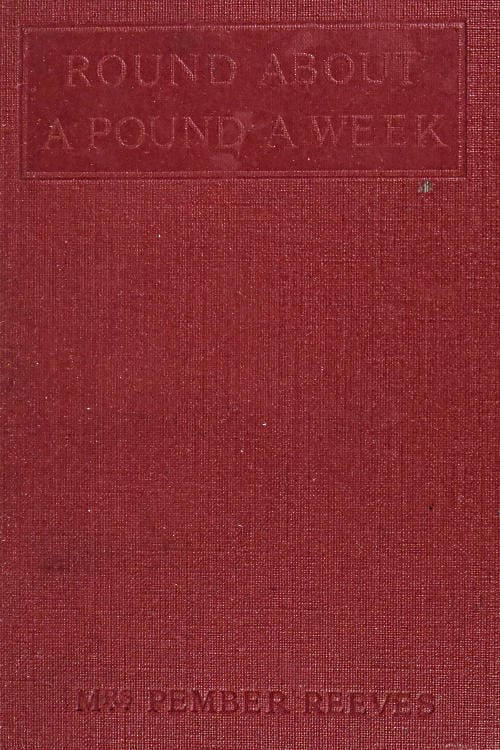
Round About a Pound a Week
1913
In 1913, a group of Fabian feminists descended on the streets of Lambeth with a revolutionary question: how do working-class families actually survive? The answer they found reshaped British social policy. Maud Pember Reeves and her collaborators embedded themselves in the homes of mothers stretching one pound across an entire week, documenting the impossible arithmetic of rent, food, and fuel. What emerges is neither dry sociology nor sentimental charity literature, but something rarer: a precise, passionate account of ordinary people performing extraordinary feats of management just to keep their children fed and housed. The调查 examines not just budgets but the texture of daily life: which shops offered credit, which landlords deducted for broken windows, how mothers conjured meals from remnants. Written to argue for specific reforms but alive with human specificity, this is a vital document of Edwardian poverty that refuses to reduce its subjects to statistics. A century later, its granular attention to how money (or its absence) shapes domestic life feels urgently relevant.
Editions
Link to this book
Add a free, dofollow link to Lex on your blog, forum, syllabus, or reading list.

<a href="https://lex-books.com/book/round-about-a-pound-a-week-569281c2-87a2-4053-9386-4dcee74af741"><img src="https://lex-books.com/badges/read-on-lex.svg" alt="Read Round About a Pound a Week by Mrs. Pember Reeves free on Lex" width="160" height="40"></a>[](https://lex-books.com/book/round-about-a-pound-a-week-569281c2-87a2-4053-9386-4dcee74af741)[url=https://lex-books.com/book/round-about-a-pound-a-week-569281c2-87a2-4053-9386-4dcee74af741][img]https://lex-books.com/badges/read-on-lex.svg[/img][/url]Read Round About a Pound a Week by Mrs. Pember Reeves free on Lex: https://lex-books.com/book/round-about-a-pound-a-week-569281c2-87a2-4053-9386-4dcee74af741Cite this book
Reading this edition for a paper or guide? Copy a citation.
Reeves, Mrs. Pember. Round About a Pound a Week. Lex, lex-books.com/book/round-about-a-pound-a-week-569281c2-87a2-4053-9386-4dcee74af741.Reeves, M. P. (1913). Round About a Pound a Week. Lex. https://lex-books.com/book/round-about-a-pound-a-week-569281c2-87a2-4053-9386-4dcee74af741Reeves, Mrs. Pember. Round About a Pound a Week. Lex. https://lex-books.com/book/round-about-a-pound-a-week-569281c2-87a2-4053-9386-4dcee74af741.