Rome
1905
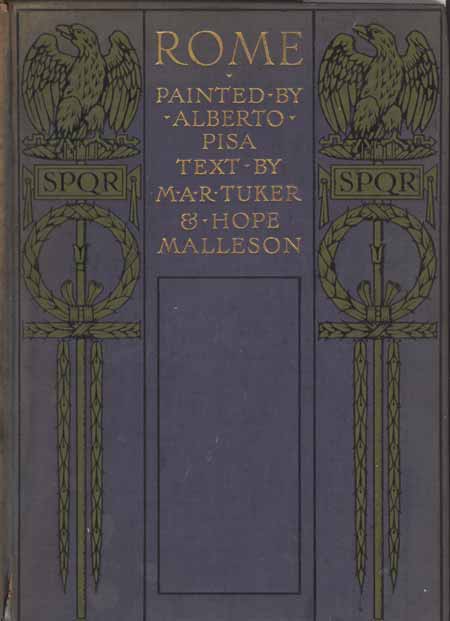
Rome
1905
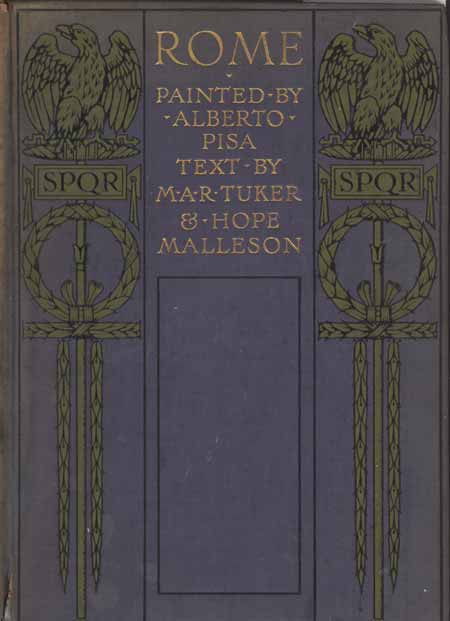
Rome, in this early twentieth-century account, is not merely a city but an idea that has haunted human imagination for three millennia. Tuker approaches the Eternal City as both chronicler and admirer, weaving together the legendary foundations with Romulus and Remus alongside the archaeological realities that shaped a civilization which would become the backbone of Western civilization. The narrative traces Rome's transformation from a cluster of Latin and Etruscan settlements clustered around the Tiber into the capital of an empire that stretched from Britain to Mesopotamia. What distinguishes this work is its willingness to dwell in the mythic origins without dismissing them, understanding that how a people tell their own story is as important as the facts themselves. The book moves through the Republic's rise, the Empire's glory, the Christian transformation, and into the medieval period, showing how each era built upon and sometimes dismantled what came before. Architecture serves as a recurring character here: the Forum, the temples, the early churches, each structure bearing the fingerprints of the civilization that erected it. This is a book for readers who want to understand Rome not as a museum but as a living argument between past and present, where every stone asks to be read.
Editions
X-Ray
The legendary founder of Rome, who symbolizes the Roman people's struggle for existence as a nation.
The spiritual and, for centuries, temporal rulers of Rome, central to the city's history and the 'Roman Question'.
The Pope's administrative council and electors, holding significant ecclesiastical rank and historical influence in Rome.
The inhabitants of Rome, characterized by a unique blend of pride, realism, lawlessness, and indifference, deeply connected to their ancient heritage.
About Rome
Chapter Summaries
- 1
- This chapter explores the legendary origins of Rome, from its founding by Latian settlers and the myths of Romulus and Remus, to the early influences of Etruscans and Sabines. It highlights the Forum as the symbolic heart of Roman civilization and details the city's seven hills and the Tiber River's crucial role in its development.
- 2
- This chapter details the evolution of Roman architecture and building techniques, from early Etruscan-influenced structures to the grand imperial buildings inspired by Greek models. It describes the materials used, such as tufa, peperino, travertine, and pozzolana, and the construction of iconic monuments like the Colosseum, aqueducts, basilicas, and public baths.
- 3
- This chapter explores the Roman catacombs as the subterranean burial places of early Christians, emphasizing their significance as sites of apostolic preaching and martyr shrines. It discusses their rediscovery and the insights they offer into early Christian beliefs, art, and the blend of classical and Judaic influences that shaped the nascent Catholic Church.
Key Themes
- Continuity and Transformation of Rome
- The book repeatedly emphasizes Rome's 'eternal' nature, not as unchanging, but as a city that constantly absorbs, reuses, and transforms its past. From the re-purposing of ancient buildings into churches to the persistence of pagan customs under Christian names, Rome's history is presented as a continuous drama of survival and adaptation amidst destruction and renewal.
- The Roman Character and Identity
- A significant portion of the book is dedicated to dissecting the unique traits of the Roman people, contrasting them with other Italians and Northerners. Key characteristics include a profound realism, pride, lawlessness, indifference, and a blend of skepticism and superstition, all deeply rooted in their historical legacy and environment.
- The Papacy and Temporal Power
- This theme explores the historical evolution of the Pope's temporal sovereignty, its complex relationship with civil authority, and its eventual loss in 1870. The author critically examines the 'Roman Question' and the impact of the temporal power on both the Church and the Roman people, arguing that its loss ultimately freed the Papacy for its spiritual mission.
Characters
- Romulus(protagonist)
- The legendary founder of Rome, who symbolizes the Roman people's struggle for existence as a nation.
- Popes (as an institution)(protagonist)
- The spiritual and, for centuries, temporal rulers of Rome, central to the city's history and the 'Roman Question'.
- Cardinals (as a body)(supporting)
- The Pope's administrative council and electors, holding significant ecclesiastical rank and historical influence in Rome.
- Roman People (general)(protagonist)
- The inhabitants of Rome, characterized by a unique blend of pride, realism, lawlessness, and indifference, deeply connected to their ancient heritage.
- Italian People (general)(supporting)
- The broader nation, whose characteristics are contrasted with those of the Romans, especially in the context of national unity and regional animosities.
- Augustus(historical figure)
- The first Roman Emperor, credited with transforming Rome from a city of brick to a city of marble through extensive building programs.
Link to this book
Add a free, dofollow link to Lex on your blog, forum, syllabus, or reading list.

<a href="https://lex-books.com/book/rome-14f22aeb-794b-4281-92d3-13abb134359d"><img src="https://lex-books.com/badges/read-on-lex.svg" alt="Read Rome by M. A. R. Tuker free on Lex" width="160" height="40"></a>[](https://lex-books.com/book/rome-14f22aeb-794b-4281-92d3-13abb134359d)[url=https://lex-books.com/book/rome-14f22aeb-794b-4281-92d3-13abb134359d][img]https://lex-books.com/badges/read-on-lex.svg[/img][/url]Read Rome by M. A. R. Tuker free on Lex: https://lex-books.com/book/rome-14f22aeb-794b-4281-92d3-13abb134359dCite this book
Reading this edition for a paper or guide? Copy a citation.
Tuker, M. A. R.. Rome. Lex, lex-books.com/book/rome-14f22aeb-794b-4281-92d3-13abb134359d.Tuker, M. A. R. (1905). Rome. Lex. https://lex-books.com/book/rome-14f22aeb-794b-4281-92d3-13abb134359dTuker, M. A. R.. Rome. Lex. https://lex-books.com/book/rome-14f22aeb-794b-4281-92d3-13abb134359d.