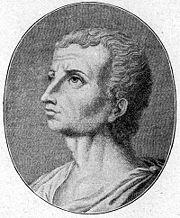
Roman History, Books I-III
1919
Livy's monumental history begins where all Rome begins: with a god's flight from burning Troy and a wolf's strange mercy. Books I-III trace the arc from Aeneas's arrival in Italy through the founding of Rome by Romulus and his brother, to the reigns of the first four kings. This is not history as we know it. It is a civilization composing itself, embedding its deepest values in legend. Here are the Sabine women seized into marriage, the fratricide that gives Rome its walls, the piety that earns divine favor, the wars that forge a people from scattered tribes into an empire's seed. Livy writes with the awareness that Rome's best days may already be behind him, and that the past is medicine for the present. His prose has a sculptural quality, each sentence deliberate and weighted. These are the myths Romans told their children, the foundation stones of an imperial identity that would last a thousand years. For anyone who wants to understand how Rome understood itself, how it learned to rule, and what it believed it owed to the gods and to virtue, there is no better place to begin.
Editions
X-Ray
The legendary founder and first king of Rome, known for his military prowess and establishment of early Roman institutions.
The second king of Rome, a Sabine known for establishing religious rites and promoting peace and law.
The third king of Rome, a warlike ruler who expanded Roman territory and destroyed Alba Longa.
The fourth king of Rome, grandson of Numa, who balanced military expansion with religious observance and public works.
About Roman History, Books I-III
Chapter Summaries
- Book I: Introduction and Early History
- Livy introduces his monumental work, expressing doubt about the authenticity of ancient traditions but acknowledging their role in making Rome's origin venerable. He outlines the scope of his history, from Aeneas to Drusus, and laments the loss of many of his books.
- Book I: Life of Livy and Historical Criticism
- This section provides a biographical sketch of Livy, noting his birth in Patavium and his patronage by Augustus. It then delves into a critical analysis of Livy's historical methodology, acknowledging his narrative charm while addressing charges of 'fiction' and 'Patavinity,' especially concerning the early centuries of Rome where contemporary evidence was scarce.
- Book I: Arrival of Aeneas and Founding of Lavinium
- Aeneas, after the fall of Troy, arrives in Italy and forms an alliance with King Latinus, marrying his daughter Lavinia. They found the city of Lavinium, which becomes a new home for the Trojans.
Key Themes
- Foundation Myths and Divine Intervention
- Livy frequently recounts the legendary origins of Rome, emphasizing the role of divine will and omens in shaping its destiny. Figures like Romulus and Numa are guided by gods, and prodigies often precede or explain significant events, lending a sacred aura to Roman history.
- Military Valor and Roman Identity
- The narrative consistently highlights the bravery and martial spirit of Roman soldiers and generals, such as Horatius Cocles, Mucius Scaevola, and the Fabii. This valor is presented as a core component of Roman identity and a key factor in the republic's survival and expansion.
- Political Evolution and Constitutional Struggle
- The book meticulously details the transition from monarchy to republic, and the subsequent internal struggles between the patrician and plebeian orders. The development of institutions like the consulship, tribuneship, and the decemvirate reflects Rome's ongoing search for a stable and equitable governance structure.
Characters
- Romulus(protagonist)
- The legendary founder and first king of Rome, known for his military prowess and establishment of early Roman institutions.
- Numa Pompilius(supporting)
- The second king of Rome, a Sabine known for establishing religious rites and promoting peace and law.
- Tullus Hostilius(supporting)
- The third king of Rome, a warlike ruler who expanded Roman territory and destroyed Alba Longa.
- Ancus Marcius(supporting)
- The fourth king of Rome, grandson of Numa, who balanced military expansion with religious observance and public works.
- Lucius Tarquinius Priscus(supporting)
- The fifth king of Rome, an Etruscan immigrant who gained power through wealth and political skill, expanding the senate and initiating major public works.
- Servius Tullius(protagonist)
- The sixth king of Rome, of humble origins but raised by Tarquinius Priscus, known for his census and social reforms.
Link to this book
Add a free, dofollow link to Lex on your blog, forum, syllabus, or reading list.

<a href="https://lex-books.com/book/roman-history-books-i-iii-13fb284b-2fda-41c1-9c46-98f9b9770bd2"><img src="https://lex-books.com/badges/read-on-lex.svg" alt="Read Roman History, Books I-III by Livy free on Lex" width="160" height="40"></a>[](https://lex-books.com/book/roman-history-books-i-iii-13fb284b-2fda-41c1-9c46-98f9b9770bd2)[url=https://lex-books.com/book/roman-history-books-i-iii-13fb284b-2fda-41c1-9c46-98f9b9770bd2][img]https://lex-books.com/badges/read-on-lex.svg[/img][/url]Read Roman History, Books I-III by Livy free on Lex: https://lex-books.com/book/roman-history-books-i-iii-13fb284b-2fda-41c1-9c46-98f9b9770bd2Cite this book
Reading this edition for a paper or guide? Copy a citation.
Livy. Roman History, Books I-III. Lex, lex-books.com/book/roman-history-books-i-iii-13fb284b-2fda-41c1-9c46-98f9b9770bd2.Livy (1919). Roman History, Books I-III. Lex. https://lex-books.com/book/roman-history-books-i-iii-13fb284b-2fda-41c1-9c46-98f9b9770bd2Livy. Roman History, Books I-III. Lex. https://lex-books.com/book/roman-history-books-i-iii-13fb284b-2fda-41c1-9c46-98f9b9770bd2.