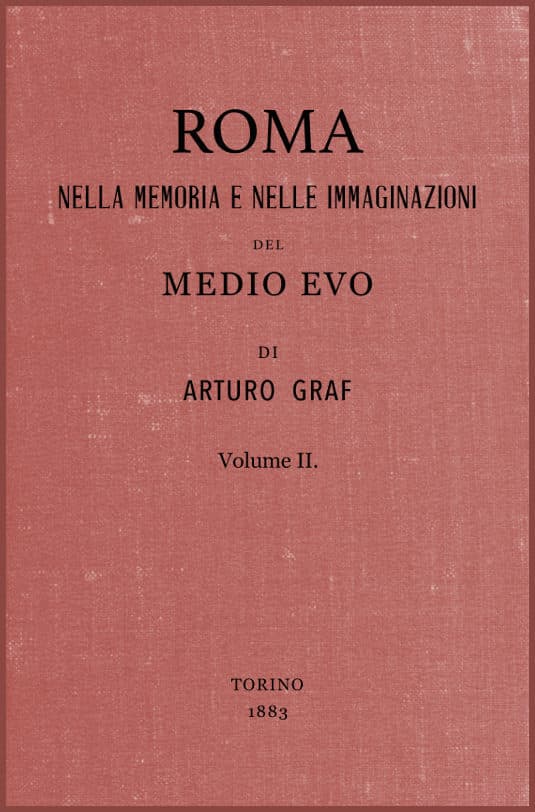
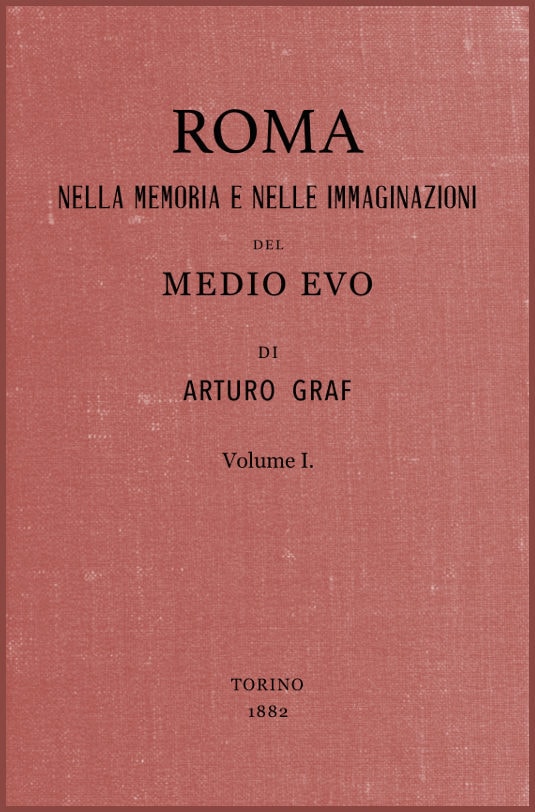
Roma nella memoria e nelle immaginazioni del Medio Evo vol. I
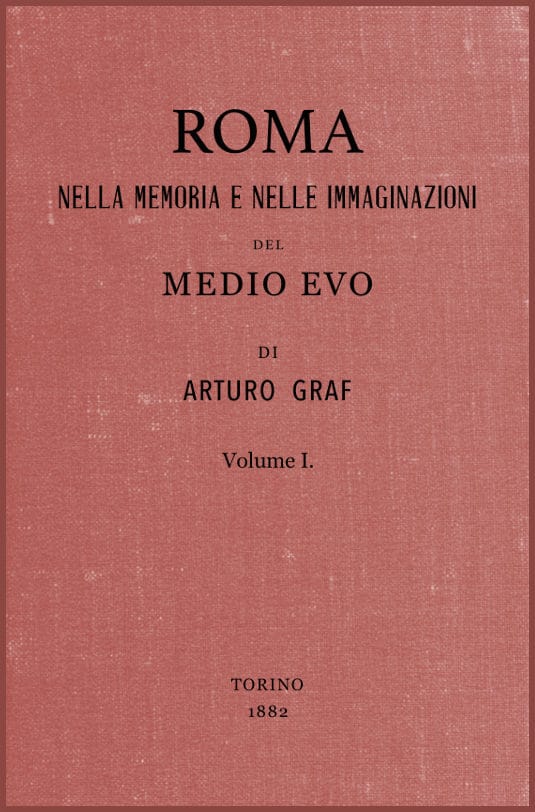
A scholarly work written in the late 19th century. The book explores the representation and significance of ancient Rome throughout the medieval period, particularly focusing on legends and imaginative narratives that reflect the cultural and historical memory of the city. It addresses how the memory of Rome influenced various aspects of medieval life, showcasing the city’s enduring
Editions
X-Ray
The city of Rome, often personified as a queen, mother, or a symbol of enduring glory and tragic ruin, is the central focus of medieval memory and imagination.
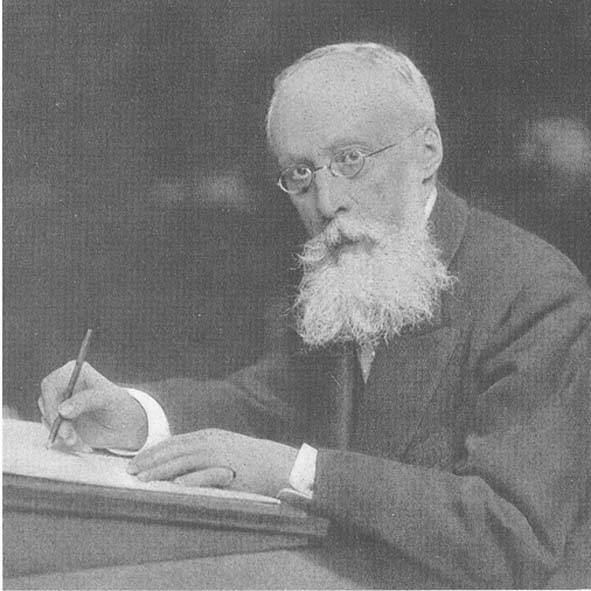
The author of the book, who analyzes and presents the medieval legends and perceptions of Rome.
Widely considered the first Roman emperor in the Middle Ages, celebrated for his conquests and power, but also remembered for his violent death.
Celebrated for bringing peace and prosperity to Rome, and significantly linked to the birth of Christ and the legend of Ara Coeli.
About Roma nella memoria e nelle immaginazioni del Medio Evo vol. I
Chapter Summaries
- Prefazione
- The preface outlines the author's methodology, emphasizing the importance of studying legends and popular imagination to understand the Middle Ages. It argues that legends, though not strictly factual, reveal deeper truths about the intellectual and moral life of an era, and that they become historical facts in themselves through their influence.
- I
- This chapter explores the enduring image of ancient Rome's glory and its unparalleled status in the medieval imagination. It details how Rome was perceived as the 'caput mundi,' a source of all power, and a common patria, influencing various European peoples and cities to claim Roman or Trojan origins. It also touches on the tension between the idealized ancient Rome and the often-criticized papal Rome.
- II
- This chapter details the physical decay of Rome and the medieval fascination with its ruins, which inspired the 'Mirabilia Urbis Romae' guides. It describes the city's decline, the use of ancient monuments as quarries, and the role of pilgrims in popularizing fantastical explanations for the ruins. The chapter also discusses the authorship and evolution of the Mirabilia texts.
Key Themes
- The Enduring Glory of Ancient Rome
- Despite its physical decay, the memory of Rome's past power, wisdom, and architectural grandeur remained a potent ideal throughout the Middle Ages. This ideal influenced political aspirations, cultural identity, and the self-perception of various European peoples who sought to link their origins to Rome.
- Transformation and Reinterpretation of History
- Medieval chroniclers and storytellers frequently altered historical facts, attributing new origins, deeds, and fates to Roman figures and monuments to fit contemporary moral, religious, or nationalistic narratives. This process highlights how history was not merely recorded but actively reshaped to serve the needs and beliefs of the time.
- Paganism vs. Christianity
- A central theme is the medieval Christian perspective on Rome's pagan past, often reinterpreting pagan figures and events through a Christian lens, or explicitly condemning paganism while celebrating the triumph of the Church. Legends like the Vision of Augustus and the destruction of pagan temples by popes exemplify this ideological struggle.
Characters
- Roma (personified)(central subject)
- The city of Rome, often personified as a queen, mother, or a symbol of enduring glory and tragic ruin, is the central focus of medieval memory and imagination.
- Arturo Graf(author)
- The author of the book, who analyzes and presents the medieval legends and perceptions of Rome.
- Giulio Cesare(major historical figure)
- Widely considered the first Roman emperor in the Middle Ages, celebrated for his conquests and power, but also remembered for his violent death.
- Ottaviano Augusto(major historical figure)
- Celebrated for bringing peace and prosperity to Rome, and significantly linked to the birth of Christ and the legend of Ara Coeli.
- Nerone(major historical figure)
- Portrayed as the most impious and cruel emperor, infamous for persecuting Christians, burning Rome, and committing monstrous acts, including a bizarre legendary pregnancy.
- Tiberio(major historical figure)
- An emperor whose illness and miraculous healing (often through the Veronica image) are central to the 'Vengeance of Christ' legend, leading him to punish those responsible for Christ's death.
Link to this book
Add a free, dofollow link to Lex on your blog, forum, syllabus, or reading list.

<a href="https://lex-books.com/book/roma-nella-memoria-e-nelle-immaginazioni-del-medio-evo-vol-i-7dafed59-209f-4b25-83b2-ed069dfaf96e"><img src="https://lex-books.com/badges/read-on-lex.svg" alt="Read Roma nella memoria e nelle immaginazioni del Medio Evo vol. I by Arturo Graf free on Lex" width="160" height="40"></a>[](https://lex-books.com/book/roma-nella-memoria-e-nelle-immaginazioni-del-medio-evo-vol-i-7dafed59-209f-4b25-83b2-ed069dfaf96e)[url=https://lex-books.com/book/roma-nella-memoria-e-nelle-immaginazioni-del-medio-evo-vol-i-7dafed59-209f-4b25-83b2-ed069dfaf96e][img]https://lex-books.com/badges/read-on-lex.svg[/img][/url]Read Roma nella memoria e nelle immaginazioni del Medio Evo vol. I by Arturo Graf free on Lex: https://lex-books.com/book/roma-nella-memoria-e-nelle-immaginazioni-del-medio-evo-vol-i-7dafed59-209f-4b25-83b2-ed069dfaf96eCite this book
Reading this edition for a paper or guide? Copy a citation.
Graf, Arturo. Roma nella memoria e nelle immaginazioni del Medio Evo vol. I. Lex, lex-books.com/book/roma-nella-memoria-e-nelle-immaginazioni-del-medio-evo-vol-i-7dafed59-209f-4b25-83b2-ed069dfaf96e.Graf, A. (n.d.). Roma nella memoria e nelle immaginazioni del Medio Evo vol. I. Lex. https://lex-books.com/book/roma-nella-memoria-e-nelle-immaginazioni-del-medio-evo-vol-i-7dafed59-209f-4b25-83b2-ed069dfaf96eGraf, Arturo. Roma nella memoria e nelle immaginazioni del Medio Evo vol. I. Lex. https://lex-books.com/book/roma-nella-memoria-e-nelle-immaginazioni-del-medio-evo-vol-i-7dafed59-209f-4b25-83b2-ed069dfaf96e.