Recherches Sur Les Substances Radioactives
1903
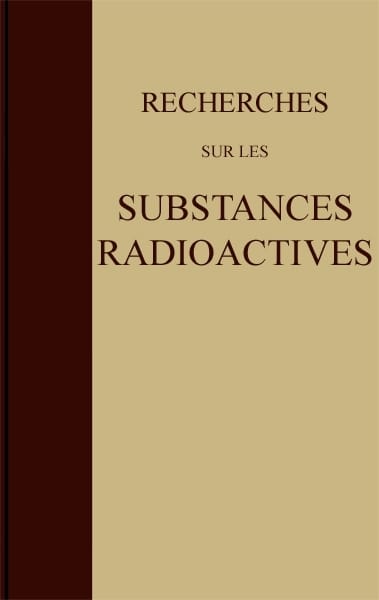
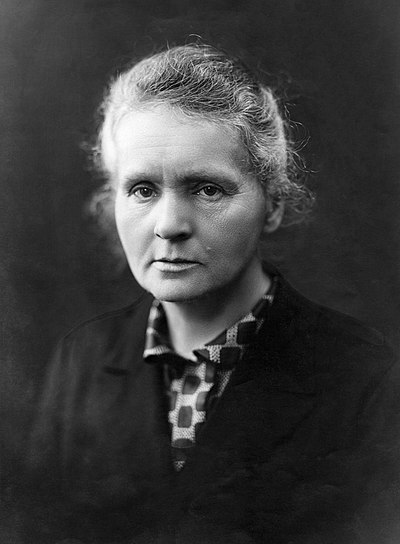
In 1903, a young Polish-born scientist published the definitive account of research that would reshape our understanding of matter itself. Marie Curie's "Recherches sur les Substances Radioactives" documents the painstaking work that led to the discovery of two new elements, polonium and radium, each emerging from years of obsessive investigation into the mysterious radiation emitted by certain substances. This is no dry laboratory log. It reads as intellectual autobiography: the moment Curie realized her measurements of uranium ore revealed the presence of something far more powerful than uranium itself, the feverish experiments to isolate the unknown, and the bold assertion that here was an element more radioactive than anything previously known. The book captures the birth of a new science in real time, before the Nobel prizes, before the fame, when radioactivity was still a word being invented. Reading it now feels like standing in her laboratory as history unfolds.
Editions
Link to this book
Add a free, dofollow link to Lex on your blog, forum, syllabus, or reading list.

<a href="https://lex-books.com/book/recherches-sur-les-substances-radioactives-660d49eb-81a3-4110-adc5-926274861005"><img src="https://lex-books.com/badges/read-on-lex.svg" alt="Read Recherches Sur Les Substances Radioactives by Marie Curie free on Lex" width="160" height="40"></a>[](https://lex-books.com/book/recherches-sur-les-substances-radioactives-660d49eb-81a3-4110-adc5-926274861005)[url=https://lex-books.com/book/recherches-sur-les-substances-radioactives-660d49eb-81a3-4110-adc5-926274861005][img]https://lex-books.com/badges/read-on-lex.svg[/img][/url]Read Recherches Sur Les Substances Radioactives by Marie Curie free on Lex: https://lex-books.com/book/recherches-sur-les-substances-radioactives-660d49eb-81a3-4110-adc5-926274861005Cite this book
Reading this edition for a paper or guide? Copy a citation.
Curie, Marie. Recherches Sur Les Substances Radioactives. Lex, lex-books.com/book/recherches-sur-les-substances-radioactives-660d49eb-81a3-4110-adc5-926274861005.Curie, M. (1903). Recherches Sur Les Substances Radioactives. Lex. https://lex-books.com/book/recherches-sur-les-substances-radioactives-660d49eb-81a3-4110-adc5-926274861005Curie, Marie. Recherches Sur Les Substances Radioactives. Lex. https://lex-books.com/book/recherches-sur-les-substances-radioactives-660d49eb-81a3-4110-adc5-926274861005.