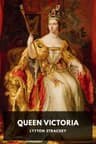
Queen Victoria
1921
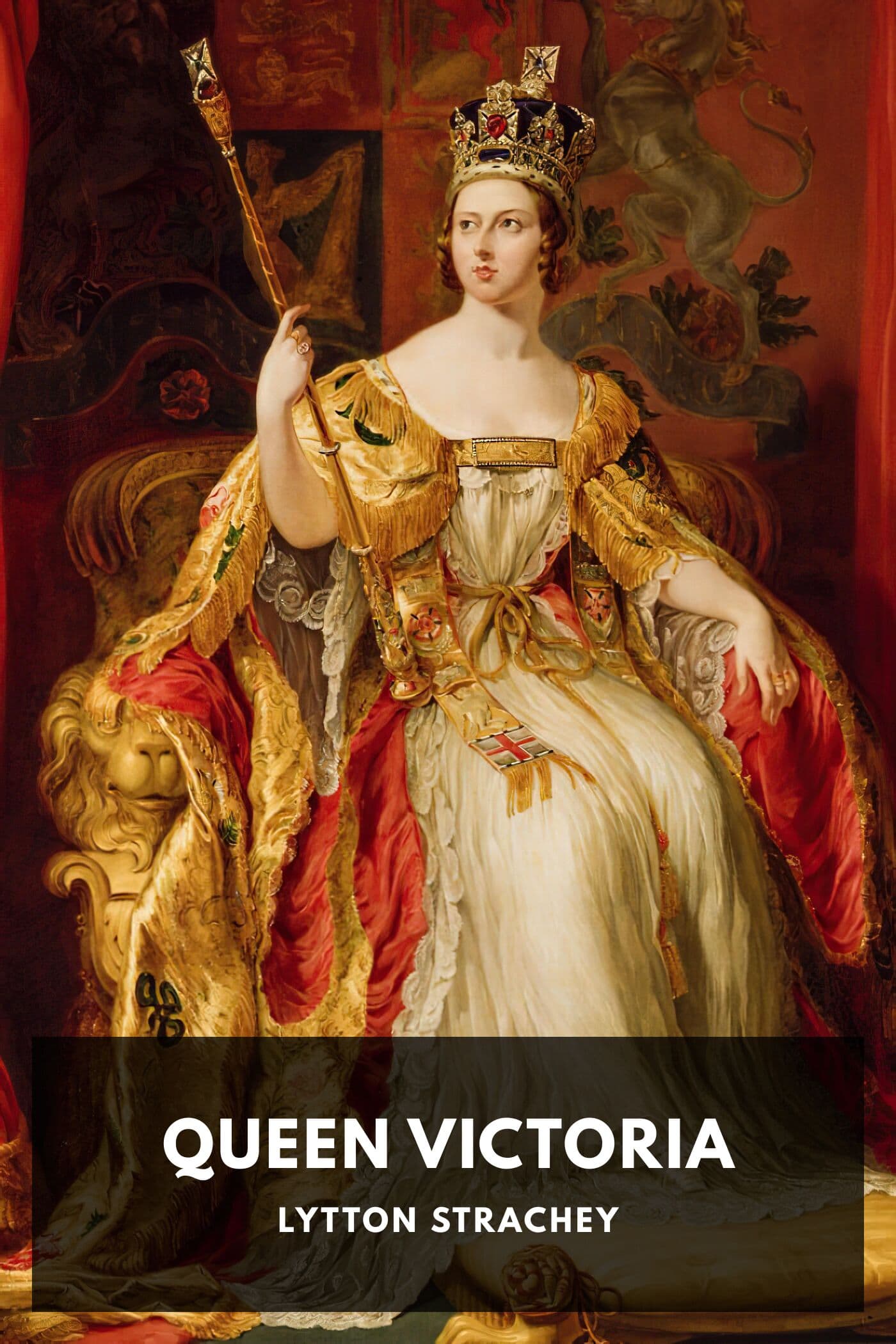
When Lytton Strachey turned his gaze upon Queen Victoria in 1921, he did something radical: he made her human. Rather than the marble matriarch of imperial mythology, Strachey gives us a frightened girl cloistered in Kensington, a young queen navigating court intrigue with more instinct than experience, and a widow whose grief reshaped a nation. The biography traces her journey from a sheltered and constrained childhood dominated by her ambitious mother and the sinister John Conroy, through her startling ascension to the throne at eighteen, to her fiery marriage with Albert that transformed her from a puppet sovereign into a defining force, and finally to her devastating widowhood and subsequent reemergence as the grandmother of Europe. Strachey's genius lies in revealing the woman beneath the crown: the petty quarrels, the consuming passions, the iron will concealed behind bourgeois domesticity. This is biography as psychological portrait, witty and waspish and occasionally devastating in its tenderness. It redefined what the form could achieve, and nearly a century later, it remains the benchmark against which all Victorian biographies are measured.
Editions
X-Ray
“year. That sum was afterwards raised to L400 and finally to L1000; but when my debts made it necessary for me to sacrifice a great part of my income, Madame St. Laurent insisted upon again returning to her income of L400 a year. If Madame St. Laurent is to return to live amongst her friends, it must be in such a state of independence as to command their respect. I shall not require very much, but a certain number of servants and a carriage are essentials." As to his own settlement, the Duke observed that he would expect the Duke of York's marriage to be considered the precedent. "That," he said, "was a marriage for the succession, and L25,000 for income was settled, in addition to all his other income, purely on that account. I shall be contented with the same arrangement, without making any demands grounded on the difference of the value of money in 1792 and at present. As for the payment of my debts," the Duke concluded””
— Lytton Strachey
“punctual discharge of his irksome duties.””
— Lytton Strachey
Link to this book
Add a free, dofollow link to Lex on your blog, forum, syllabus, or reading list.

<a href="https://lex-books.com/book/queen-victoria-3bd842df-d2e9-49b2-85f9-998ddaf7addf"><img src="https://lex-books.com/badges/read-on-lex.svg" alt="Read Queen Victoria by Lytton Strachey free on Lex" width="160" height="40"></a>[](https://lex-books.com/book/queen-victoria-3bd842df-d2e9-49b2-85f9-998ddaf7addf)[url=https://lex-books.com/book/queen-victoria-3bd842df-d2e9-49b2-85f9-998ddaf7addf][img]https://lex-books.com/badges/read-on-lex.svg[/img][/url]Read Queen Victoria by Lytton Strachey free on Lex: https://lex-books.com/book/queen-victoria-3bd842df-d2e9-49b2-85f9-998ddaf7addfCite this book
Reading this edition for a paper or guide? Copy a citation.
Strachey, Lytton. Queen Victoria. Lex, lex-books.com/book/queen-victoria-3bd842df-d2e9-49b2-85f9-998ddaf7addf.Strachey, L. (1921). Queen Victoria. Lex. https://lex-books.com/book/queen-victoria-3bd842df-d2e9-49b2-85f9-998ddaf7addfStrachey, Lytton. Queen Victoria. Lex. https://lex-books.com/book/queen-victoria-3bd842df-d2e9-49b2-85f9-998ddaf7addf.