Principles of Political Economy
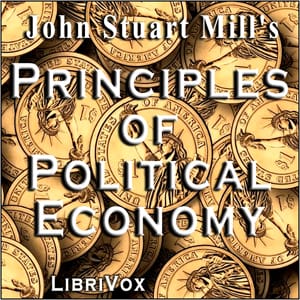
This is John Stuart Mill's landmark treatise on political economy, abridged for college instruction by J. Laurence Laughlin. First published in 1848, it represents the pinnacle of classical economic thought and shaped how generations understood the relationship between markets, society, and governance. Mill's work examines the production and distribution of wealth through five systematic books: the nature of production, the laws governing distribution, the mechanics of exchange, how social progress influences economic conditions, and the proper role of government in economic life. What distinguishes Mill from purely technical economists is his insistence that economic systems are not natural phenomena but human institutions shaped by values, laws, and social arrangements. He grapples with fundamental questions about whether market outcomes are just, what obligations the wealthy owe the poor, and how societies balance individual liberty with collective welfare. The text argues that while economic laws have scientific dimensions, economic policy ultimately reflects moral choices. For students of economics, philosophy, and political science, this volume offers essential grounding in the intellectual framework that dominated Western economic thought for a century.
Editions

Read by
Group Narration
20 readers
Aaron Rivera, Nathan Rosquist, realisticspeakers, Jim Nyenhuis +16 more
Link to this book
Add a free, dofollow link to Lex on your blog, forum, syllabus, or reading list.

<a href="https://lex-books.com/book/principles-of-political-economy-1a165a64-f5bd-4be4-819d-9cea3a4ac4d1"><img src="https://lex-books.com/badges/read-on-lex.svg" alt="Read Principles of Political Economy by J. Laurence Laughlin free on Lex" width="160" height="40"></a>[](https://lex-books.com/book/principles-of-political-economy-1a165a64-f5bd-4be4-819d-9cea3a4ac4d1)[url=https://lex-books.com/book/principles-of-political-economy-1a165a64-f5bd-4be4-819d-9cea3a4ac4d1][img]https://lex-books.com/badges/read-on-lex.svg[/img][/url]Read Principles of Political Economy by J. Laurence Laughlin free on Lex: https://lex-books.com/book/principles-of-political-economy-1a165a64-f5bd-4be4-819d-9cea3a4ac4d1Cite this book
Reading this edition for a paper or guide? Copy a citation.
Laughlin, J. Laurence. Principles of Political Economy. Lex, lex-books.com/book/principles-of-political-economy-1a165a64-f5bd-4be4-819d-9cea3a4ac4d1.Laughlin, J. L. (n.d.). Principles of Political Economy. Lex. https://lex-books.com/book/principles-of-political-economy-1a165a64-f5bd-4be4-819d-9cea3a4ac4d1Laughlin, J. Laurence. Principles of Political Economy. Lex. https://lex-books.com/book/principles-of-political-economy-1a165a64-f5bd-4be4-819d-9cea3a4ac4d1.