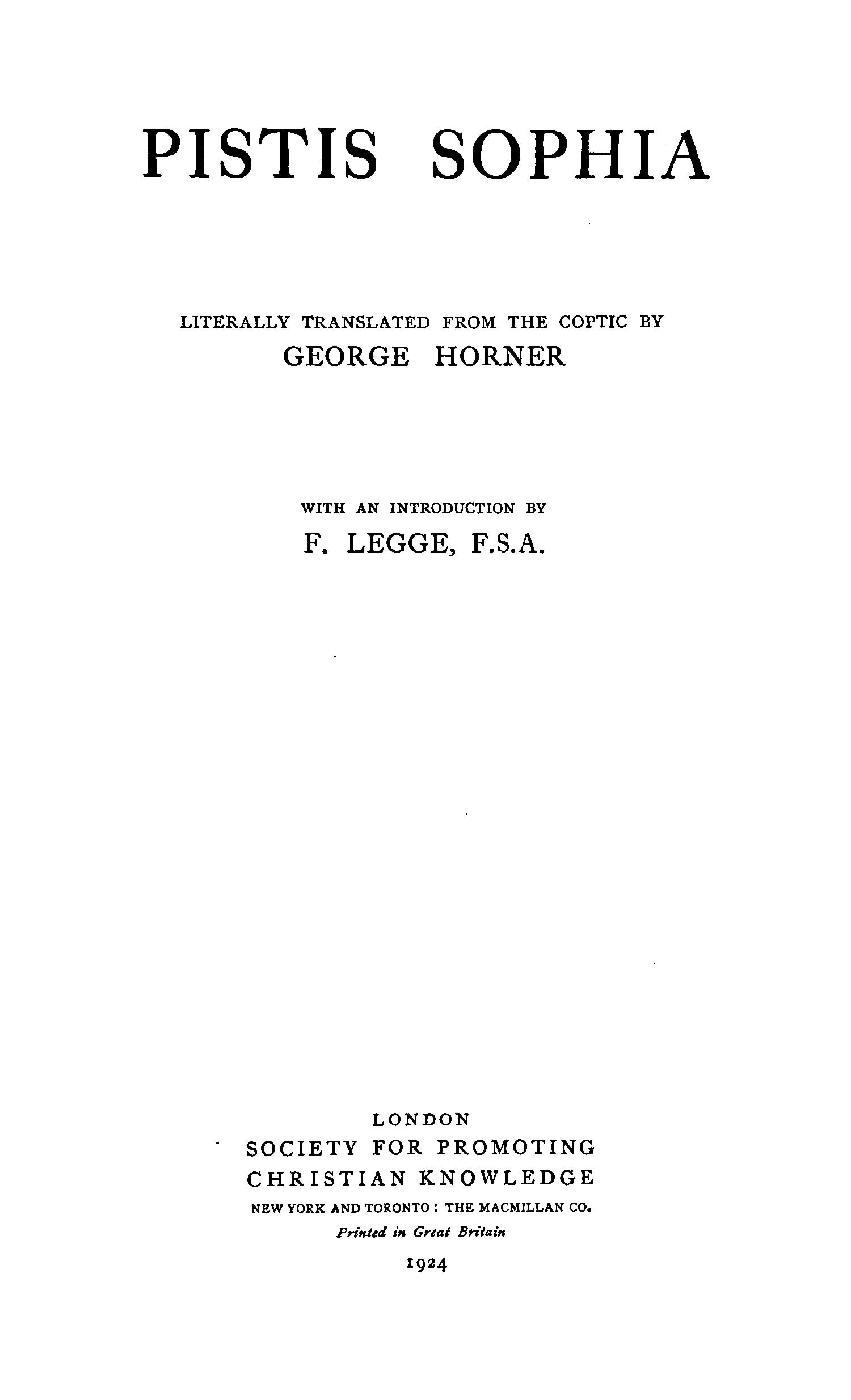
Pistis Sophia
1924
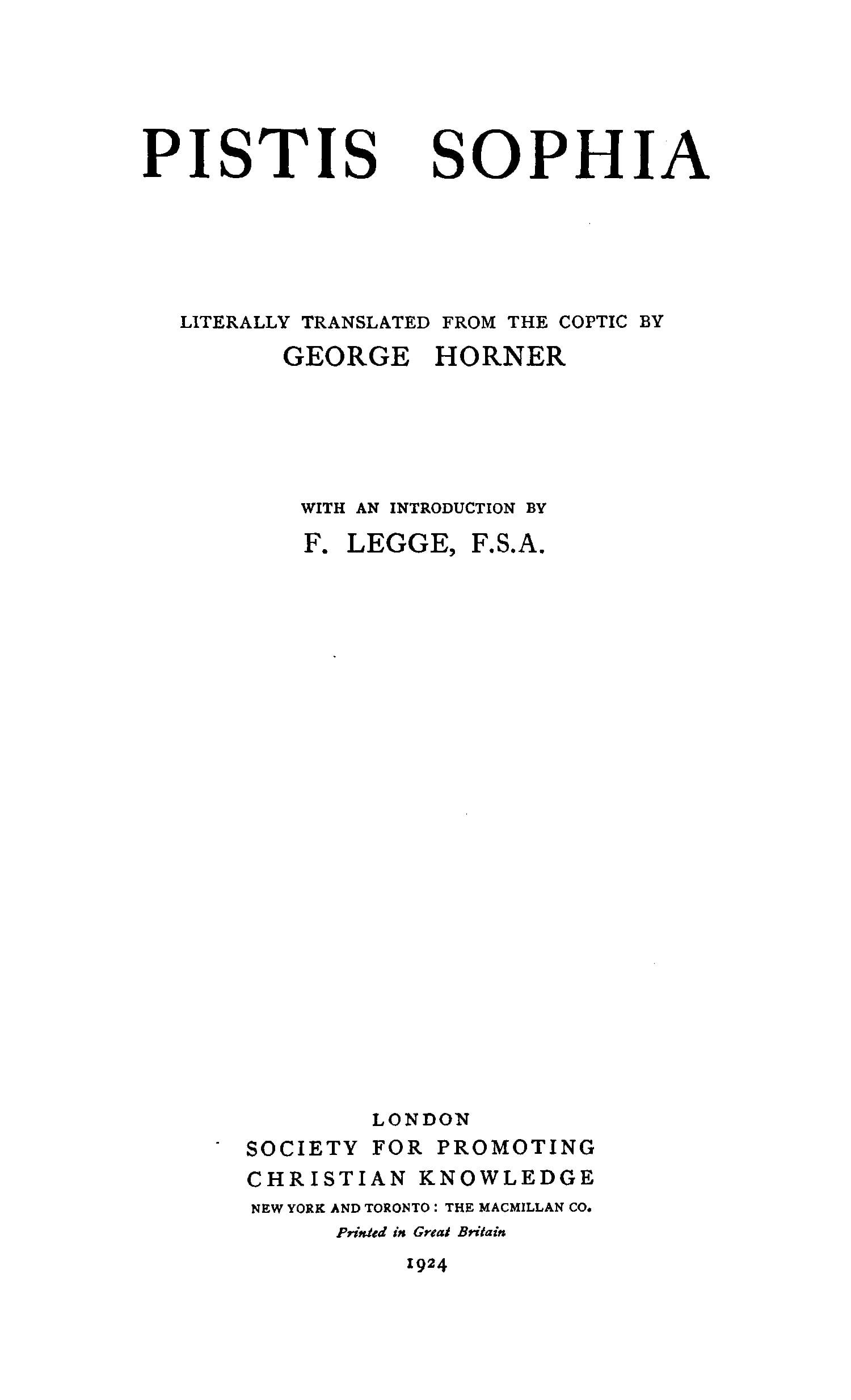
Pistis Sophia
1924
Translated by G. (George) Horner
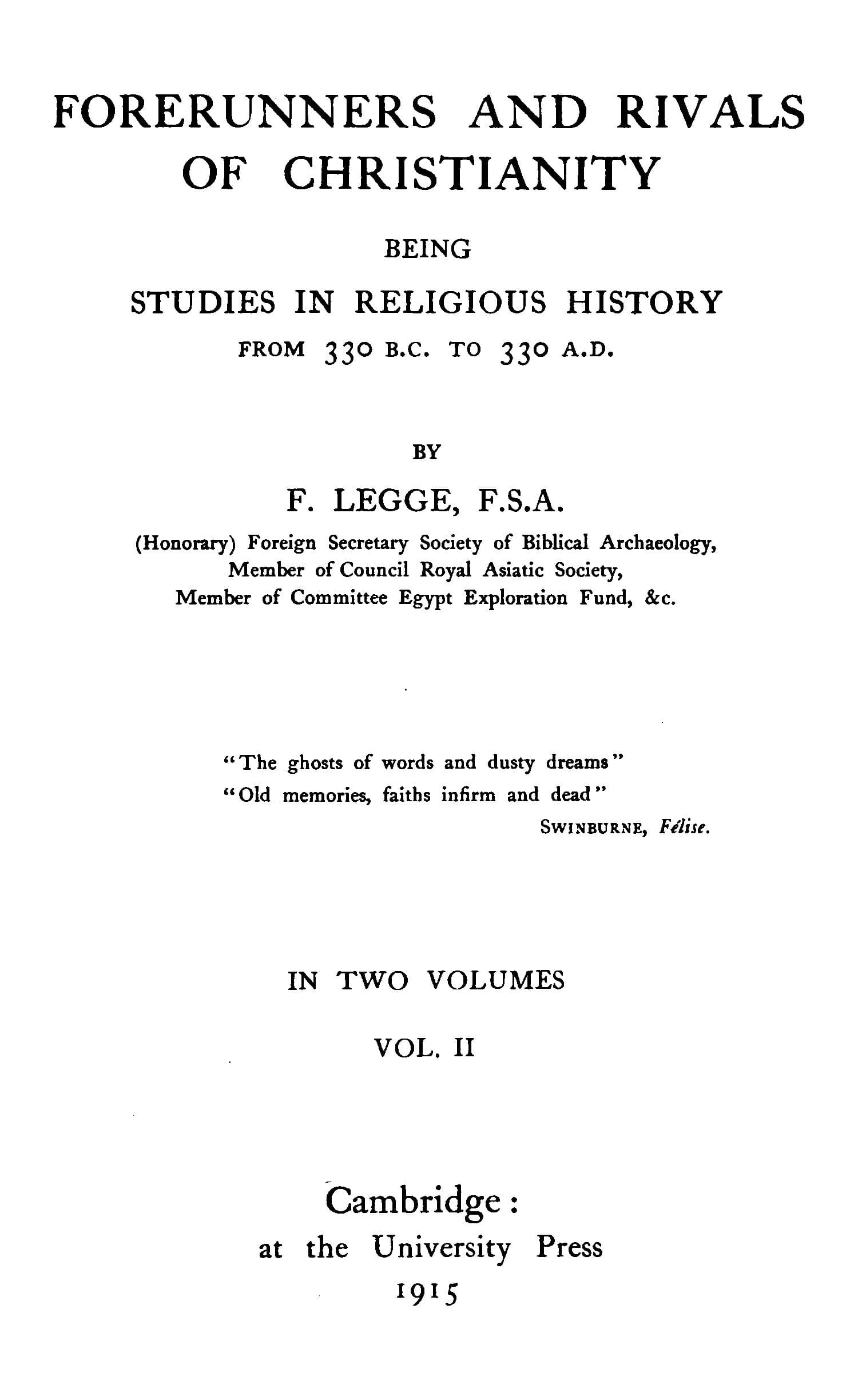
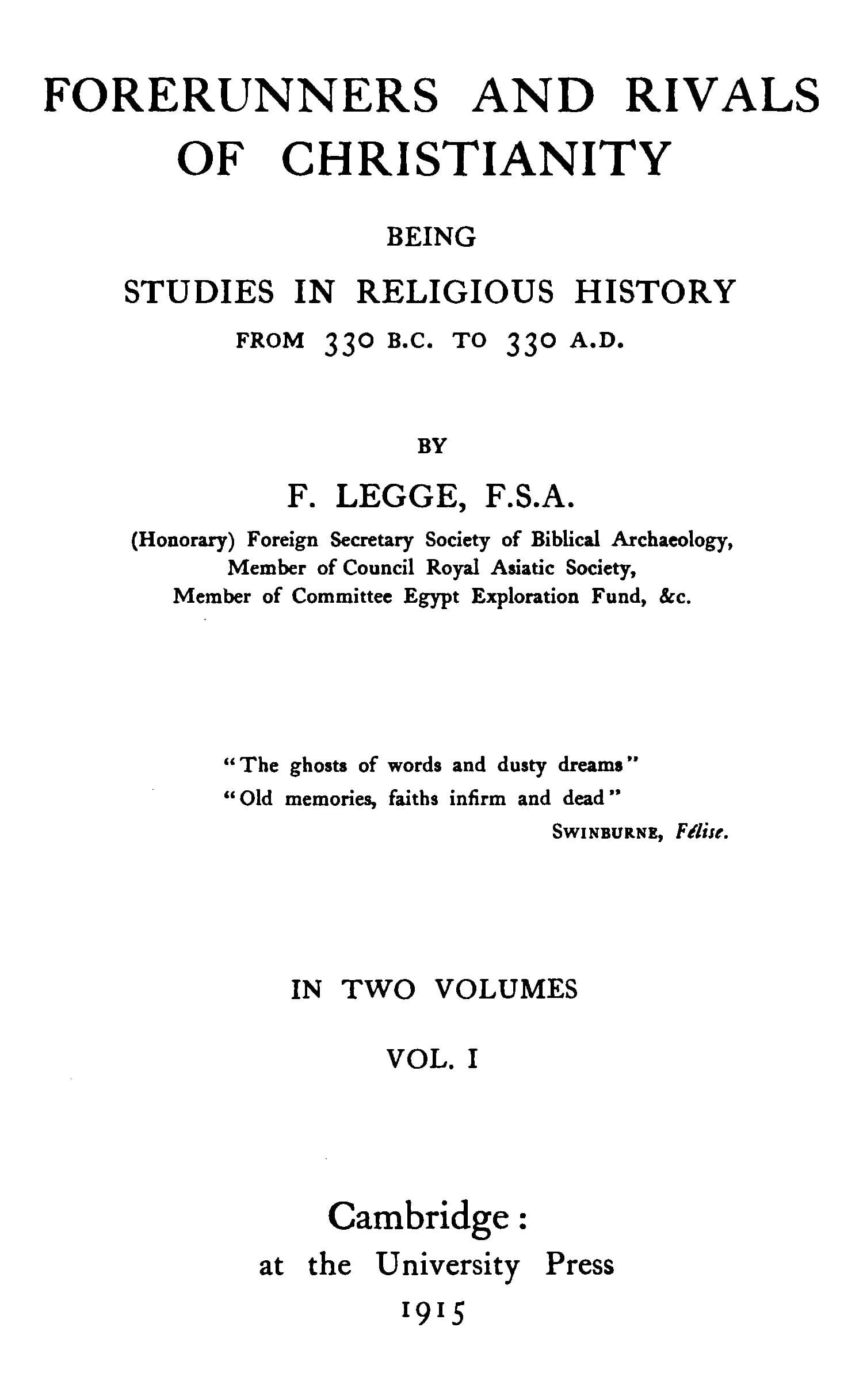
Pistis Sophia is one of the most remarkable surviving documents from the secret teaching of early Gnostic Christianity, a text that reveals a cosmos of cascading aeons, fallen powers, and the agonizing redemption of a divine being named Sophia. The narrative unfolds as the risen Christ, after eleven years of instructing his disciples in only the lower mysteries, finally dons his true garment and reveals the highest truths: the complex mythology of how Pistis Sophia descended from the Light, broke the cosmic law, and through penitence and divine rescue won her return to the thirteenth aeon. This is not theology as later Christianity would know it, but something stranger and more primal: a vision of salvation as cosmic drama, where the soul must traverse graded mysteries and celestial hierarchies to escape the material world and ascend to the Kingdom of Light. Francis Legge's 1924 translation remains a cornerstone of Gnostic scholarship, presenting the complete Coptic text alongside rigorous analysis of its cosmology, ritual systems, and relationship to the Valentinian tradition. For readers drawn to the hidden currents beneath orthodox Christianity, to the great feminine myth of divine failure and redemption, this text offers unparalleled access to a world that was deliberately suppressed and nearly lost.
Editions
Link to this book
Add a free, dofollow link to Lex on your blog, forum, syllabus, or reading list.

<a href="https://lex-books.com/book/pistis-sophia-caacdbde-0251-47bb-86df-269edb2360a1"><img src="https://lex-books.com/badges/read-on-lex.svg" alt="Read Pistis Sophia by Francis Legge free on Lex" width="160" height="40"></a>[](https://lex-books.com/book/pistis-sophia-caacdbde-0251-47bb-86df-269edb2360a1)[url=https://lex-books.com/book/pistis-sophia-caacdbde-0251-47bb-86df-269edb2360a1][img]https://lex-books.com/badges/read-on-lex.svg[/img][/url]Read Pistis Sophia by Francis Legge free on Lex: https://lex-books.com/book/pistis-sophia-caacdbde-0251-47bb-86df-269edb2360a1Cite this book
Reading this edition for a paper or guide? Copy a citation.
Legge, Francis. Pistis Sophia. Lex, lex-books.com/book/pistis-sophia-caacdbde-0251-47bb-86df-269edb2360a1.Legge, F. (1924). Pistis Sophia. Lex. https://lex-books.com/book/pistis-sophia-caacdbde-0251-47bb-86df-269edb2360a1Legge, Francis. Pistis Sophia. Lex. https://lex-books.com/book/pistis-sophia-caacdbde-0251-47bb-86df-269edb2360a1.