Pinocchion Seikkailut: Kertomus Marioneteista
1883
Pinocchion Seikkailut: Kertomus Marioneteista
1883
Translated by Maija Halonen
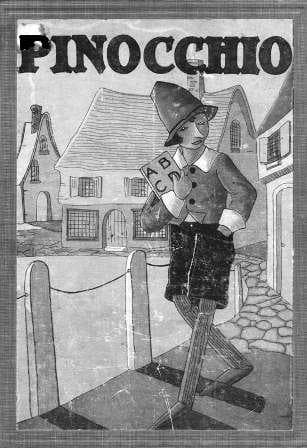
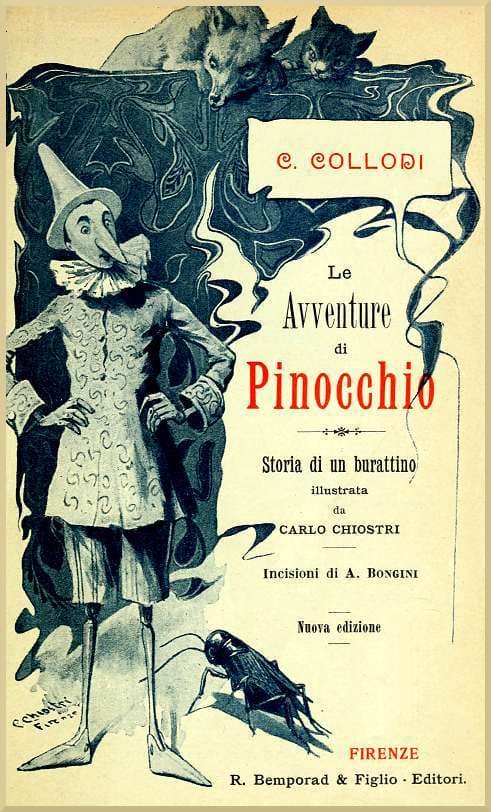
A classic children's novel written in the late 19th century. The narrative tells the whimsical adventures of Pinocchio, a wooden puppet carved by Geppetto, who dreams of becoming a real boy and experiencing the world beyond his creator's workshop. The story explores themes of disobedience, growth, and the consequences of one's actions as Pinocchio embarks on a series of mischief and moral lessons. The opening of this tale introduces us to Master Cherry, the woodcarver, who finds a peculiar piece of wood that laughs and cries like a child. Intrigued, he intends to fashion it into a chair leg but is interrupted by the wood's strange voice. Soon after, Master Cherry gifts the piece of wood to Geppetto, who plans to carve a magical puppet that can dance and perform tricks. As Geppetto begins to carve, the wood begins to exhibit signs of life, setting the stage for the mischievous and unpredictable adventures that Pinocchio will face as he interacts with various characters and navigates his journey toward becoming a real boy.
Editions
X-Ray
“Never trust people who promise to make you rich in a day. They are generally crazy swindlers””
— Carlo Collodi
“A conscience is that still small voice that people won't listen to.””
— Carlo Collodi
“Hunger is the best cook.””
— Carlo Collodi
“Most unfortunately, in the lives of puppets there is always a 'but' that spoils everything.””
— Carlo Collodi
“What matters school? We can go to school to-morrow. Whether we have a lesson more or a lesson less, we shall always remain the same donkeys.””
— Carlo Collodi
“Woe to those who lead idle lives. Idleness is a dreadful illness and must be cured in childhood. If it is not cured then, it can never be cured.””
— Carlo Collodi
“Lies, my dear boy, can easily be recognized. There are two kind of them: those with short legs, and those with long noses. Your kind have long noses.””
— Carlo Collodi
“Would it be possible to find a more ungrateful boy, or one with less heart than I have!””
— Carlo Collodi
“Laziness is a serious illness and one must cure it immediately; yes, even from early childhood. If not, it will kill you in the end.””
— Carlo Collodi
Link to this book
Add a free, dofollow link to Lex on your blog, forum, syllabus, or reading list.

<a href="https://lex-books.com/book/pinocchion-seikkailut-kertomus-marioneteista-1009c7ba-2647-4cea-8f7c-d70ce5a4ae52"><img src="https://lex-books.com/badges/read-on-lex.svg" alt="Read Pinocchion Seikkailut: Kertomus Marioneteista by Carlo Collodi free on Lex" width="160" height="40"></a>[](https://lex-books.com/book/pinocchion-seikkailut-kertomus-marioneteista-1009c7ba-2647-4cea-8f7c-d70ce5a4ae52)[url=https://lex-books.com/book/pinocchion-seikkailut-kertomus-marioneteista-1009c7ba-2647-4cea-8f7c-d70ce5a4ae52][img]https://lex-books.com/badges/read-on-lex.svg[/img][/url]Read Pinocchion Seikkailut: Kertomus Marioneteista by Carlo Collodi free on Lex: https://lex-books.com/book/pinocchion-seikkailut-kertomus-marioneteista-1009c7ba-2647-4cea-8f7c-d70ce5a4ae52Cite this book
Reading this edition for a paper or guide? Copy a citation.
Collodi, Carlo. Pinocchion Seikkailut: Kertomus Marioneteista. Lex, lex-books.com/book/pinocchion-seikkailut-kertomus-marioneteista-1009c7ba-2647-4cea-8f7c-d70ce5a4ae52.Collodi, C. (1883). Pinocchion Seikkailut: Kertomus Marioneteista. Lex. https://lex-books.com/book/pinocchion-seikkailut-kertomus-marioneteista-1009c7ba-2647-4cea-8f7c-d70ce5a4ae52Collodi, Carlo. Pinocchion Seikkailut: Kertomus Marioneteista. Lex. https://lex-books.com/book/pinocchion-seikkailut-kertomus-marioneteista-1009c7ba-2647-4cea-8f7c-d70ce5a4ae52.