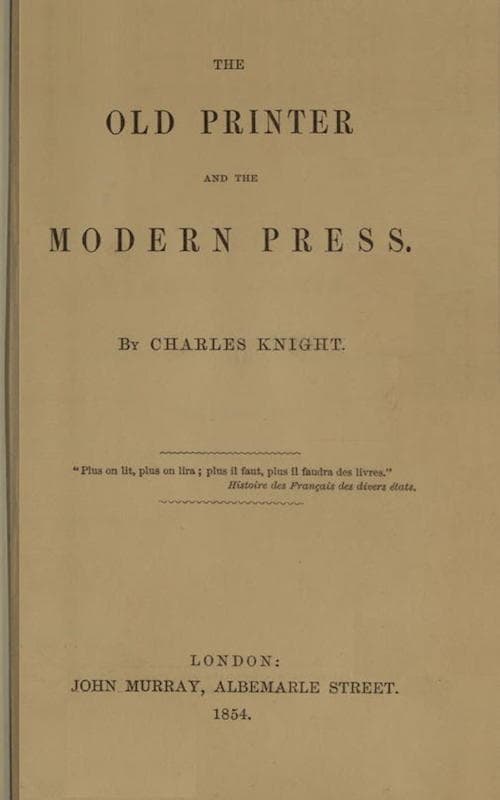
penny magazine of the Society for the Diffusion of Useful Knowledge, issue 7

In 1832, a group of Victorian intellectuals believed they could solve social inequality with a penny magazine. The Society for the Diffusion of Useful Knowledge launched this weekly as a radical experiment: short, accessible essays on science, history, technology, and morality, designed to lift the working classes through self-improvement. The format was revolutionary. Articles on steam engines sat beside moral philosophy; histories of ancient Rome shared pages with explanations of manufacturing processes. The Society genuinely believed that cheap, useful knowledge could prevent revolution and create a more enlightened citizenry. The irony cut deep. Factory workers and shop assistants largely ignored it. The earnest, pedagogical content appealed instead to the middle classes who already had education. It couldn't survive on its intended audience. The magazine folded within a few years, outcompeted by livelier rivals like Chambers's Edinburgh Journal. What remains is a fascinating time capsule of early mass education efforts and the class tensions baked into Victorian attempts at social improvement. For historians of publishing and 19th century culture, it documents both the ambitions and blind spots of paternalistic reform.
Editions

Read by
Group Narration
7 readers
BettyB, Brize C, Larry Wilson, mleigh +3 more
Link to this book
Add a free, dofollow link to Lex on your blog, forum, syllabus, or reading list.

<a href="https://lex-books.com/book/penny-magazine-of-the-society-for-the-diffusion-of-useful-knowledge-issue-7-399426e5-00bf-43c0-b9a6-0afd7fee776f"><img src="https://lex-books.com/badges/read-on-lex.svg" alt="Read penny magazine of the Society for the Diffusion of Useful Knowledge, issue 7 by Charles Knight free on Lex" width="160" height="40"></a>[](https://lex-books.com/book/penny-magazine-of-the-society-for-the-diffusion-of-useful-knowledge-issue-7-399426e5-00bf-43c0-b9a6-0afd7fee776f)[url=https://lex-books.com/book/penny-magazine-of-the-society-for-the-diffusion-of-useful-knowledge-issue-7-399426e5-00bf-43c0-b9a6-0afd7fee776f][img]https://lex-books.com/badges/read-on-lex.svg[/img][/url]Read penny magazine of the Society for the Diffusion of Useful Knowledge, issue 7 by Charles Knight free on Lex: https://lex-books.com/book/penny-magazine-of-the-society-for-the-diffusion-of-useful-knowledge-issue-7-399426e5-00bf-43c0-b9a6-0afd7fee776fCite this book
Reading this edition for a paper or guide? Copy a citation.
Knight, Charles. penny magazine of the Society for the Diffusion of Useful Knowledge, issue 7. Lex, lex-books.com/book/penny-magazine-of-the-society-for-the-diffusion-of-useful-knowledge-issue-7-399426e5-00bf-43c0-b9a6-0afd7fee776f.Knight, C. (n.d.). penny magazine of the Society for the Diffusion of Useful Knowledge, issue 7. Lex. https://lex-books.com/book/penny-magazine-of-the-society-for-the-diffusion-of-useful-knowledge-issue-7-399426e5-00bf-43c0-b9a6-0afd7fee776fKnight, Charles. penny magazine of the Society for the Diffusion of Useful Knowledge, issue 7. Lex. https://lex-books.com/book/penny-magazine-of-the-society-for-the-diffusion-of-useful-knowledge-issue-7-399426e5-00bf-43c0-b9a6-0afd7fee776f.