Passage to India
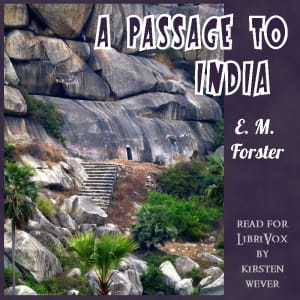
Forster's masterpiece unfolds in the twilight of empire, where British India is beginning to crack. Two Englishwomen, Mrs. Moore and her son's fiancée Adelaide, arrive seeking authentic connection with the subcontinent, but what they find is a landscape of suspicion, unspoken cruelty, and the impossibility of truly seeing another culture when you arrive armed with assumption. Against the vast backdrop of the Marabar Caves, Forster orchestrates an incident that exposes every fault line: between colonizer and colonized, between Hindu and Muslim, between the individual and the machinery of empire. The prose is deceptively quiet, but beneath its surface churns a profound melancholy, the understanding that love and understanding might simply be impossible, that the gap between peoples is too wide to bridge. This is a novel that asks whether genuine human connection can survive the weight of history and power. It endures because it refuses easy answers, because its quiet devastation mirrors the slow unraveling of empires themselves.
Editions

X-Ray
“Most of life is so dull that there is nothing to be said about it, and the books and talk that would describe it as interesting are obliged to exaggerate, in the hope of justifying their own existence. Inside its cocoon of work or social obligation, the human spirit slumbers for the most part, registering the distinction between pleasure and pain, but not nearly as alert as we pretend. There are periods in the most thrilling day during which nothing happens, and though we continue to exclaim 'I do enjoy myself' or 'I am horrified' we are insincere. 'As far as I feel anything, it is enjoyment, horror' - it's no more than that really, and a perfectly adjusted organism would be silent.”
— E. M. Forster
“Life never gives us what we want at the moment that we consider appropriate. Adventures do occur, but not punctually.”
— E. M. Forster
“I believe in teaching people to be individuals, and to understand other individuals.”
— E. M. Forster
Link to this book
Add a free, dofollow link to Lex on your blog, forum, syllabus, or reading list.

<a href="https://lex-books.com/book/passage-to-india-b05ba024-22e1-4ec9-bfa8-c9c5825fab65"><img src="https://lex-books.com/badges/read-on-lex.svg" alt="Read Passage to India by E. M. Forster free on Lex" width="160" height="40"></a>[](https://lex-books.com/book/passage-to-india-b05ba024-22e1-4ec9-bfa8-c9c5825fab65)[url=https://lex-books.com/book/passage-to-india-b05ba024-22e1-4ec9-bfa8-c9c5825fab65][img]https://lex-books.com/badges/read-on-lex.svg[/img][/url]Read Passage to India by E. M. Forster free on Lex: https://lex-books.com/book/passage-to-india-b05ba024-22e1-4ec9-bfa8-c9c5825fab65Cite this book
Reading this edition for a paper or guide? Copy a citation.
Forster, E. M.. Passage to India. Lex, lex-books.com/book/passage-to-india-b05ba024-22e1-4ec9-bfa8-c9c5825fab65.Forster, E. M. (n.d.). Passage to India. Lex. https://lex-books.com/book/passage-to-india-b05ba024-22e1-4ec9-bfa8-c9c5825fab65Forster, E. M.. Passage to India. Lex. https://lex-books.com/book/passage-to-india-b05ba024-22e1-4ec9-bfa8-c9c5825fab65.