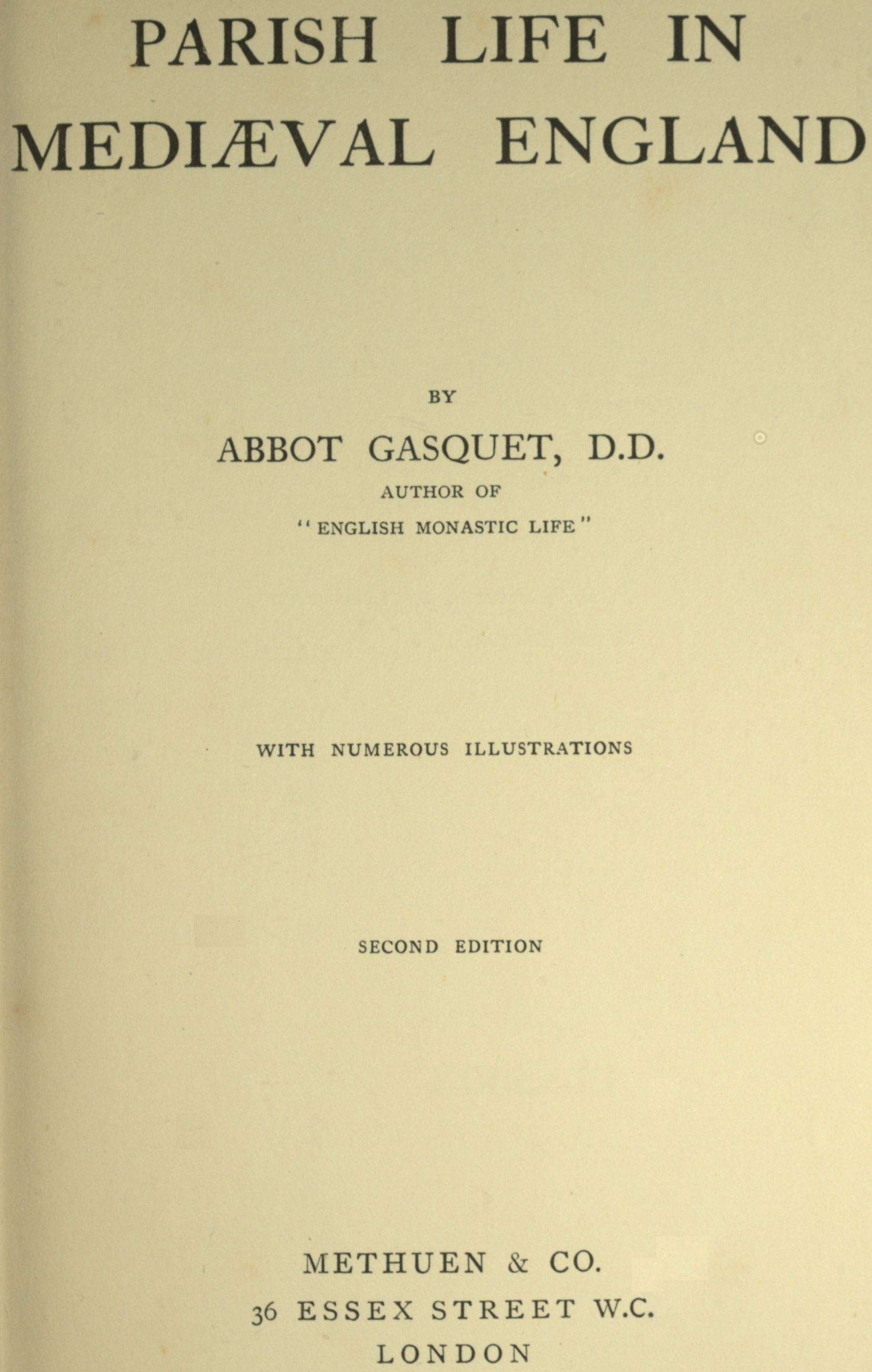
Parish Life in Mediæval England
1907
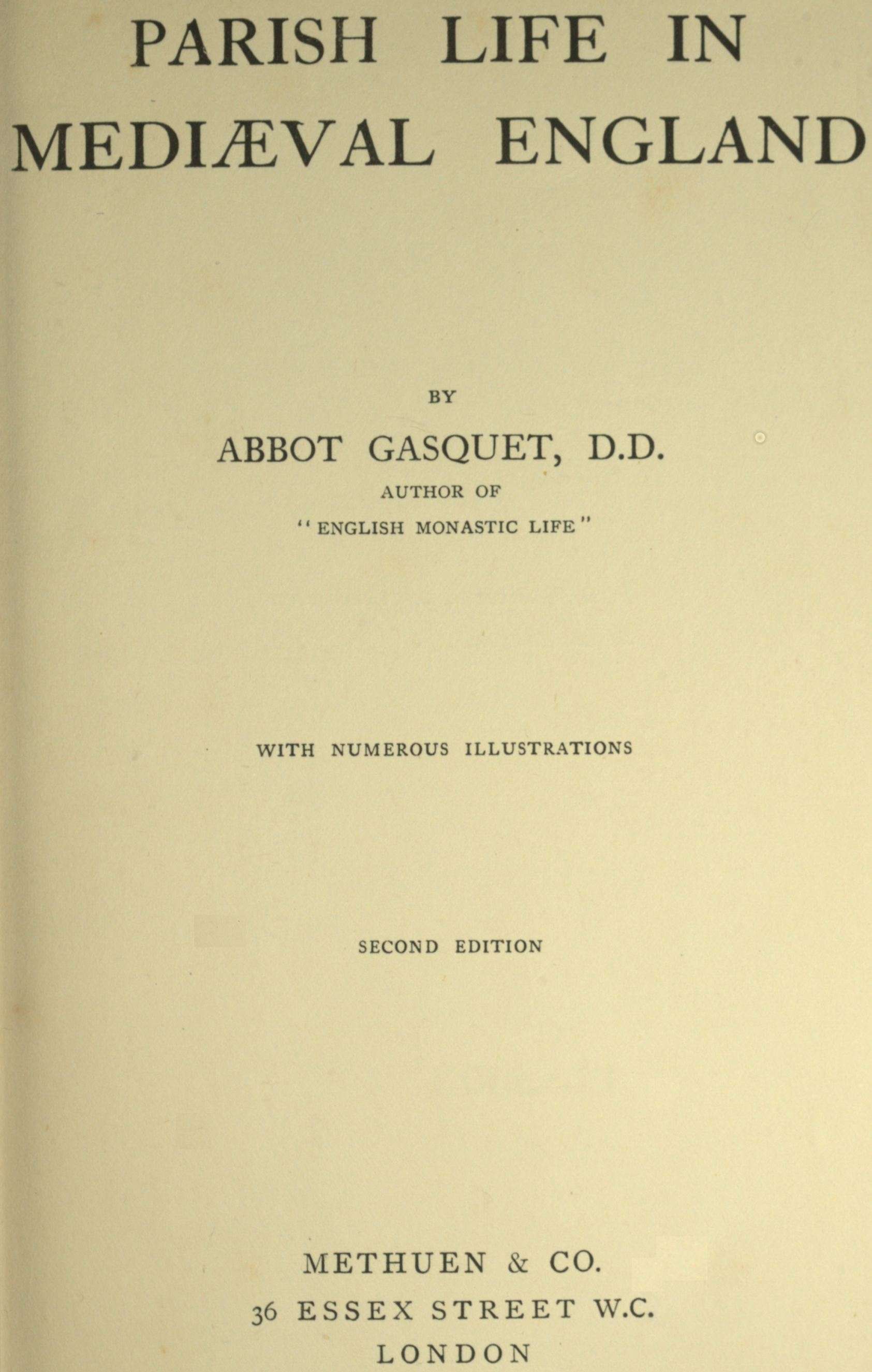
Parish Life in Mediæval England
1907
What did it actually mean to live in a medieval English parish? Gasquet reconstructs the texture of daily existence with remarkable specificity, revealing how the parish church stood at the center of both spiritual and secular life. This is not abstract institutional history but a vivid accounting of how medieval Christians navigated their obligations to God and neighbor within the parish framework. Gasquet examines the parish as a living organism: its origins, its clergy, its rituals, and the economic and social webs that bound parishioners to their church and to each other. The parish priest emerges not merely as a religious functionary but as a crucial figure holding together the fabric of community life. Gasquet is careful to challenge romantic notions, presenting instead a nuanced portrait grounded in documentary evidence. This is a book for anyone who has ever wondered how ordinary medieval people actually lived, prayed, and related to their neighbors through the institution of the parish.
Editions
X-Ray
The author and narrator of this scholarly work on medieval English parish life. A learned Benedictine abbot and historian who meticulously documents the religious and social practices of pre-Reformation England.
The central figure of medieval parish life, responsible for the spiritual care of parishioners and administration of sacraments. Could be either a rector (with full benefice rights) or vicar (deputy in impropriated livings).
Elected representatives of the parishioners who managed the temporal affairs of the church, including finances, building maintenance, and church goods. Usually two in number, chosen annually.
An ecclesiastical official responsible for assisting at services, distributing holy water, teaching children, and various liturgical duties. Originally a cleric but later often a married layman.
About Parish Life in Mediæval England
Chapter Summaries
- 1
- Establishes the fundamental nature of medieval parishes as church-created corporations with democratic governance. Explains the origin of the parochial system, the meaning and administration of tithes, and the relationship between priest and people in parish management.
- 2
- Describes the physical church building and the division of responsibilities between priest (chancel) and people (nave). Documents the extraordinary devotion of parishioners to building and beautifying their churches through voluntary contributions and labor.
- 3
- Continues the architectural tour, focusing on altars, rood screens, fonts, and other church furnishings. Emphasizes how every ornament had a donor's story and how the church served as the community's treasure house and pride.
Key Themes
- Community and Corporate Identity
- Medieval parishes functioned as true corporations where every adult had a voice in governance. The church was genuinely 'theirs' - built, maintained, and managed by the people collectively, creating a strong sense of shared ownership and responsibility.
- Integration of Sacred and Secular
- Religion permeated every aspect of daily life, from morning Mass to evening Angelus. The parish church served not only spiritual needs but also social, educational, and economic functions, making it the true center of community life.
- Social Equality in Spiritual Matters
- Within the church, social distinctions largely disappeared. Rich and poor, lord and serf, all knelt together for services, received the same sacraments, and had equal voices in parish meetings, demonstrating the democratizing effect of medieval Christianity.
Characters
- Francis Aidan Gasquet (Abbot Gasquet)(protagonist)
- The author and narrator of this scholarly work on medieval English parish life. A learned Benedictine abbot and historian who meticulously documents the religious and social practices of pre-Reformation England.
- The Parish Priest/Rector/Vicar(major)
- The central figure of medieval parish life, responsible for the spiritual care of parishioners and administration of sacraments. Could be either a rector (with full benefice rights) or vicar (deputy in impropriated livings).
- The Churchwardens(major)
- Elected representatives of the parishioners who managed the temporal affairs of the church, including finances, building maintenance, and church goods. Usually two in number, chosen annually.
- The Parish Clerk/Holy Water Bearer(major)
- An ecclesiastical official responsible for assisting at services, distributing holy water, teaching children, and various liturgical duties. Originally a cleric but later often a married layman.
- The Parishioners(major)
- The collective body of all residents within the parish boundaries, responsible for maintaining the nave of the church and participating in parish governance. Every adult had a voice in parish meetings.
- The Bishop(major)
- The ecclesiastical superior who ordained priests, confirmed parishioners, consecrated churches, and maintained oversight of parish life through visitations and constitutions.
Link to this book
Add a free, dofollow link to Lex on your blog, forum, syllabus, or reading list.

<a href="https://lex-books.com/book/parish-life-in-medi-val-england-68ec07d1-649b-4c01-8e7d-2df42414378b"><img src="https://lex-books.com/badges/read-on-lex.svg" alt="Read Parish Life in Mediæval England by Francis Aidan Gasquet free on Lex" width="160" height="40"></a>[](https://lex-books.com/book/parish-life-in-medi-val-england-68ec07d1-649b-4c01-8e7d-2df42414378b)[url=https://lex-books.com/book/parish-life-in-medi-val-england-68ec07d1-649b-4c01-8e7d-2df42414378b][img]https://lex-books.com/badges/read-on-lex.svg[/img][/url]Read Parish Life in Mediæval England by Francis Aidan Gasquet free on Lex: https://lex-books.com/book/parish-life-in-medi-val-england-68ec07d1-649b-4c01-8e7d-2df42414378bCite this book
Reading this edition for a paper or guide? Copy a citation.
Gasquet, Francis Aidan. Parish Life in Mediæval England. Lex, lex-books.com/book/parish-life-in-medi-val-england-68ec07d1-649b-4c01-8e7d-2df42414378b.Gasquet, F. A. (1907). Parish Life in Mediæval England. Lex. https://lex-books.com/book/parish-life-in-medi-val-england-68ec07d1-649b-4c01-8e7d-2df42414378bGasquet, Francis Aidan. Parish Life in Mediæval England. Lex. https://lex-books.com/book/parish-life-in-medi-val-england-68ec07d1-649b-4c01-8e7d-2df42414378b.