Modern India
1905
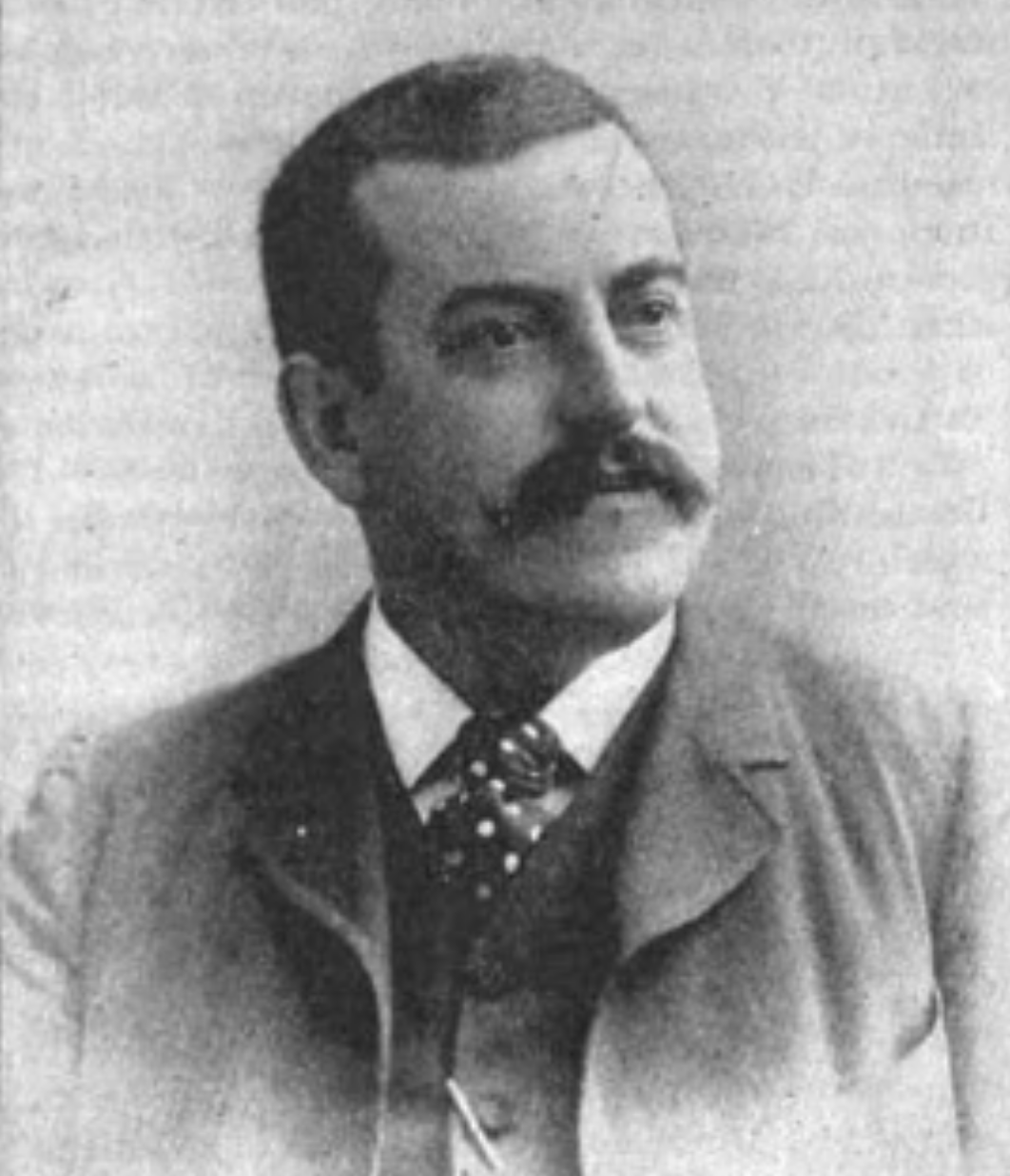
In the winter of 1903, a Chicago journalist named William Eleroy Curtis boarded a steamship bound for the British Raj, and what unfolded became one of the most vivid travel accounts of early twentieth-century India. Presented as a series of letters home, Modern India captures a subcontinent poised between ancient tradition and colonial modernity, observed through the eyes of a writer who knew exactly what to notice: the elaborate social choreography aboard ship, where English aristocracy mingled with Indian natives under the watchful gaze of the famous cricketer Ranjitsinhji; the architectural grandeur of Bombay, which Curtis dubs 'The Eye of India'; the layered complexities of a society where caste, colonial power, and ancient custom collided daily. Curtis writes with remarkable immediacy, sketching portraits of British officials and Indian citizens alike with equal parts curiosity and assumption. The result is a document that functions both as engaging period travel writing and as a fascinating artifact of empire at its height, revealing how one American saw the jewel of the British crown in its final decades of unchallenged dominance.
Editions
X-Ray
“If I were asked under what sky the human mind has most fully developed some of its choicest gifts, has most deeply pondered over the greatest problems of life, and has found solutions of some of them which well deserve the attention even of those who have studied and , I should point to India. And if I were to ask myself from what literature we who have been nurtured almost exclusively on the thoughts of Greeks and Romans, and of the Semitic race, the Jewish, may draw the corrective which is most wanted in order to make our inner life more perfect, more comprehensive, more universal, in fact more truly human a life... again I should point to India.””
— William Eleroy Curtis
“...universities were not meant entirely, or even chiefly, as stepping-stones to an examination, but that there is something else which universities can teach and ought to teach”
— William Eleroy Curtis
“If I were to look over the whole world to find out the country most richly endowed with all the wealth, power, and beauty that nature can bestow”
— William Eleroy Curtis
“The true history of the world must always be the history of the few; and as we measure the Himalaya by the height of Mount Everest, we must take the true measure of India from the poets of the Veda, the sages of the Upanishads, the founders of the Vedanta and Sankhya philosophies, and the authors of the oldest law-books, and not from the millions who are born and die in their villages, and who have never for one moment been roused out of their drowsy dream of life.””
— William Eleroy Curtis
“Truthfulness is a luxury, perhaps the greatest, and let me assure you, the most expensive luxury in our life”
— William Eleroy Curtis
“Whatever sphere of the human mind you may select for your special study, whether it be language, or religion, or mythology, or philosophy, whether it be laws or customs, primitive art or primitive science, everywhere, you have to go to India, whether you like it or not, because some of the most valuable and most instructive materials in the history of man are treasured up in India, and in India only.””
— William Eleroy Curtis
“the true conquerors often those whom the world calls the vanquished.””
— William Eleroy Curtis
“As all have to sleep together laid low in the earth, why do foolish people wish to injure one another?””
— William Eleroy Curtis
“As a man journeying to another village may enjoy a night's rest in the open air, but, after leaving his resting-place, proceeds again on his journey the next day, thus father, mother, wife, and wealth are all but like a night's rest to us”
— William Eleroy Curtis
Link to this book
Add a free, dofollow link to Lex on your blog, forum, syllabus, or reading list.

<a href="https://lex-books.com/book/modern-india-80cf2aa5-3a88-4cd8-94e8-3c178a42d09b"><img src="https://lex-books.com/badges/read-on-lex.svg" alt="Read Modern India by William Eleroy Curtis free on Lex" width="160" height="40"></a>[](https://lex-books.com/book/modern-india-80cf2aa5-3a88-4cd8-94e8-3c178a42d09b)[url=https://lex-books.com/book/modern-india-80cf2aa5-3a88-4cd8-94e8-3c178a42d09b][img]https://lex-books.com/badges/read-on-lex.svg[/img][/url]Read Modern India by William Eleroy Curtis free on Lex: https://lex-books.com/book/modern-india-80cf2aa5-3a88-4cd8-94e8-3c178a42d09bCite this book
Reading this edition for a paper or guide? Copy a citation.
Curtis, William Eleroy. Modern India. Lex, lex-books.com/book/modern-india-80cf2aa5-3a88-4cd8-94e8-3c178a42d09b.Curtis, W. E. (1905). Modern India. Lex. https://lex-books.com/book/modern-india-80cf2aa5-3a88-4cd8-94e8-3c178a42d09bCurtis, William Eleroy. Modern India. Lex. https://lex-books.com/book/modern-india-80cf2aa5-3a88-4cd8-94e8-3c178a42d09b.