Minha Formação
1900
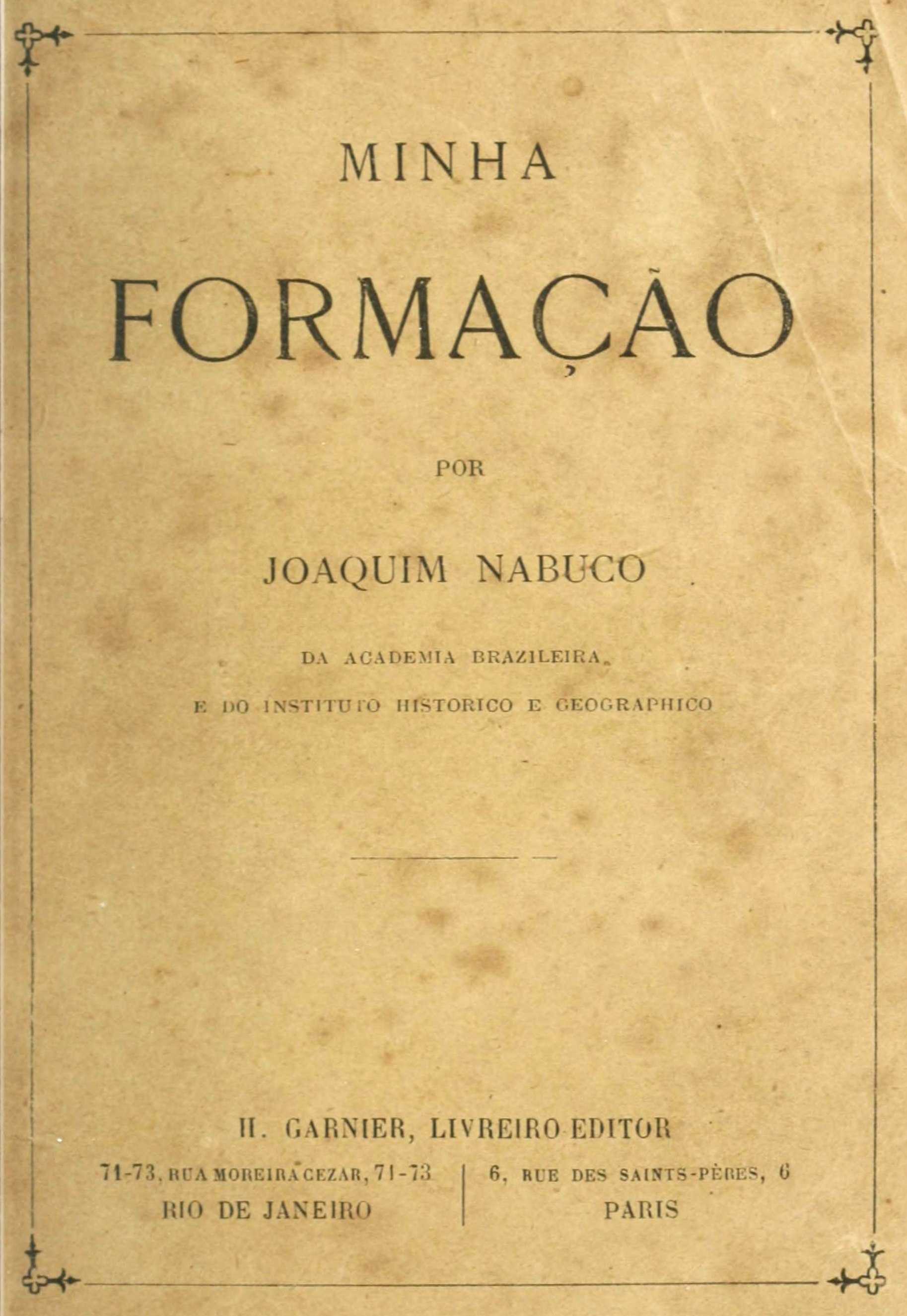
Joaquim Nabuco's "Minha Formação" is less a conventional memoir than a meditation on how a mind comes to know itself. Written at the close of a remarkable life, this autobiography traces the intellectual and moral awakening of the man who would become Brazil's most eloquent abolitionist. Nabuco examines the forces that shaped his consciousness: the liberal principles instilled by his father, the books that altered his understanding of politics and society, and the pivotal encounter with Bagehot's writings on constitutional monarchy that sparked his lifelong obsession with the mechanics of freedom. The narrative moves through Nabuco's encounters with the great minds of his age, conversations with George Sand, exchanges with Ernest Renan, an audience with Pope Leo XIII, while simultaneously charting his evolving political convictions. He chronicles his shifts between liberal, republican, and monarchist sympathies, presenting these not as contradictions but as the natural oscillations of an honest mind wrestling with Brazil's uncertain future. The book reaches its emotional crescendo in his account of the abolitionist cause, the moral crusade that would define his legacy. It remains essential reading for anyone seeking to understand not just one man's life, but the very formation of a Brazilian intellectual identity.
Editions
X-Ray
“Suprimir a monarquia que tínhamos, ficou claro para mim desde então, era uma política a que eu não poderia nunca associar-me; eu poderia tanto banir, deportar o imperador, como atirar ao mar uma criança ou deitar fogo à Santa Casa. Quebrar o laço, talvez providencial, que ligava a história do Brasil à monarquia era-me moralmente tão impossível como me seria no caso de Calabar entregar Pernambuco por minhas próprias mãos ao estrangeiro. Faltar-me-iam forças para uma intervenção dessas no destino do meu país. Seria atrair sobre mim um golpe de paralisia, ferir-me eu mesmo de morte moral. Minha coragem recuava diante da linhagem misteriosa do Inconsciente Nacional. O Brasil tinha tomado a forma monárquica, eu não a alteraria.””
— Joaquim Nabuco
“[...] como no socialismo, no comunismo, no anarquismo há ideal, mas há também inveja, e desta é que parte, quase sempre, o impulso revolucionário.””
— Joaquim Nabuco
Link to this book
Add a free, dofollow link to Lex on your blog, forum, syllabus, or reading list.

<a href="https://lex-books.com/book/minha-forma-o-148b91d3-ae8e-4d1e-b8eb-18136d9c289e"><img src="https://lex-books.com/badges/read-on-lex.svg" alt="Read Minha Formação by Joaquim Nabuco free on Lex" width="160" height="40"></a>[](https://lex-books.com/book/minha-forma-o-148b91d3-ae8e-4d1e-b8eb-18136d9c289e)[url=https://lex-books.com/book/minha-forma-o-148b91d3-ae8e-4d1e-b8eb-18136d9c289e][img]https://lex-books.com/badges/read-on-lex.svg[/img][/url]Read Minha Formação by Joaquim Nabuco free on Lex: https://lex-books.com/book/minha-forma-o-148b91d3-ae8e-4d1e-b8eb-18136d9c289eCite this book
Reading this edition for a paper or guide? Copy a citation.
Nabuco, Joaquim. Minha Formação. Lex, lex-books.com/book/minha-forma-o-148b91d3-ae8e-4d1e-b8eb-18136d9c289e.Nabuco, J. (1900). Minha Formação. Lex. https://lex-books.com/book/minha-forma-o-148b91d3-ae8e-4d1e-b8eb-18136d9c289eNabuco, Joaquim. Minha Formação. Lex. https://lex-books.com/book/minha-forma-o-148b91d3-ae8e-4d1e-b8eb-18136d9c289e.