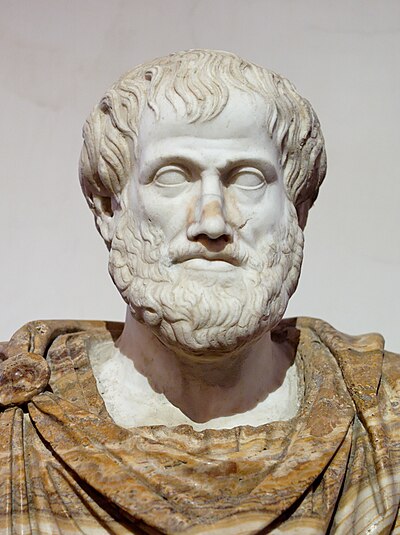
Metaphysics
What remains when you strip away everything physical, everything that changes, everything that can be measured or perceived? This is the question Aristotle pursues in the Metaphysics, a text so foundational it essentially created an entire branch of philosophy. Here, the great systematizer of Greek mind turns toward first principles: What is substance? What does it mean for something to exist? What is the relationship between potentiality and actuality? And what unmoved mover sets all motion in the universe? Aristotle builds a vision of reality as layered, hierarchical, driven by final causes and formal essences. The text disappeared from Western Europe for centuries, preserved only in Arabic translation, before returning to reshape medieval Scholasticism and every philosophy that followed. It demands patience and repetition, but within its dense arguments lies a radical proposition: that being itself is worthy of systematic inquiry, that the most fundamental questions about reality can be approached with rigor.
Editions

Link to this book
Add a free, dofollow link to Lex on your blog, forum, syllabus, or reading list.

<a href="https://lex-books.com/book/metaphysics-497fb4ba-d849-486e-9bb0-4d5421547b34"><img src="https://lex-books.com/badges/read-on-lex.svg" alt="Read Metaphysics by Aristotle free on Lex" width="160" height="40"></a>[](https://lex-books.com/book/metaphysics-497fb4ba-d849-486e-9bb0-4d5421547b34)[url=https://lex-books.com/book/metaphysics-497fb4ba-d849-486e-9bb0-4d5421547b34][img]https://lex-books.com/badges/read-on-lex.svg[/img][/url]Read Metaphysics by Aristotle free on Lex: https://lex-books.com/book/metaphysics-497fb4ba-d849-486e-9bb0-4d5421547b34Cite this book
Reading this edition for a paper or guide? Copy a citation.
Aristotle. Metaphysics. Lex, lex-books.com/book/metaphysics-497fb4ba-d849-486e-9bb0-4d5421547b34.Aristotle (n.d.). Metaphysics. Lex. https://lex-books.com/book/metaphysics-497fb4ba-d849-486e-9bb0-4d5421547b34Aristotle. Metaphysics. Lex. https://lex-books.com/book/metaphysics-497fb4ba-d849-486e-9bb0-4d5421547b34.