Memoirs of Extraordinary Popular Delusions and the Madness of Crowds
1841
Memoirs of Extraordinary Popular Delusions and the Madness of Crowds
1841
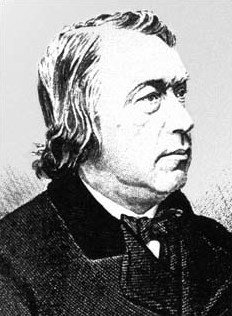
Long before behavioral economists won Nobel Prizes for explaining why humans make irrational financial decisions, Charles Mackay wrote this savage, entertaining anatomy of collective madness. First published in 1841, it remains the definitive account of how smart people do catastrophically stupid things together. Mackay documents three legendary bubbles: John Law's Mississippi Scheme, which turned France briefly mad with paper money; the South Sea Bubble, where British aristocracy lost fortunes in a single afternoon; and Tulipomania, the Dutch obsession that made a single bulb worth more than an Amsterdam house. But the book ranges wider, into alchemy, crusades, haunted houses, and the strange popularity of famous criminals. What unites these disparate episodes is Mackay's clear-eyed insight: humans are not rational actors, never were, and believing otherwise is itself a delusion. For anyone who watched the dot-com crash, the 2008 financial crisis, or the recent crypto frenzy, Mackay offers uncomfortable truths. The wind of popular excitement carries everything before it. Caution and intelligence are no protection against the seduction of the crowd.
Editions
X-Ray
“Men, it has been well said, think in herds; it will be seen that they go mad in herds, while they only recover their senses slowly, one by one.””
— Charles Mackay
“In reading The History of Nations, we find that, like individuals, they have their whims and their peculiarities, their seasons of excitement and recklessness, when they care not what they do. We find that whole communities suddenly fix their minds upon one object and go mad in its pursuit; that millions of people become simultaneously impressed with one delusion, and run after it, till their attention is caught by some new folly more captivating than the first.””
— Charles Mackay
“I never lost money by turning a profit.””
— Charles Mackay
“Let us not, in the pride of our superior knowledge, turn with contempt from the follies of our predecessors. The study of the errors into which great minds have fallen in the pursuit of truth can never be uninstructive. As the man looks back to the days of his childhood and his youth, and recalls to his mind the strange notions and false opinions that swayed his actions at the time, that he may wonder at them; so should society, for its edification, look back to the opinions which governed ages that fled.””
— Charles Mackay
“Many persons grow insensibly attached to that which gives them a great deal of trouble, as a mother often loves her sick and ever-ailing child better than her more healthy offspring.””
— Charles Mackay
“Three causes especially have excited the discontent of mankind; and, by impelling us to seek remedies for the irremediable, have bewildered us in a maze of madness and error. These are death, toil, and the ignorance of the future..””
— Charles Mackay
“We find that whole communities suddenly fix their minds upon one object, and go mad in its pursuit; that millions of people become simultaneously impressed with one delusion, and run after it, till their attention is caught by some new folly more captivating than the first.””
— Charles Mackay
“Nations, like individuals, cannot become desperate gamblers with impunity. Punishment is sure to overtake them sooner or later.””
— Charles Mackay
“An enthusiastic philosopher, of whose name we are not informed, had constructed a very satisfactory theory on some subject or other, and was not a little proud of it. "But the facts, my dear fellow," said his friend, "the facts do not agree with your theory."”
— Charles Mackay
Link to this book
Add a free, dofollow link to Lex on your blog, forum, syllabus, or reading list.

<a href="https://lex-books.com/book/memoirs-of-extraordinary-popular-delusions-and-the-madness-of-crowds-1e9d5b8c-cc14-4a6e-b09e-205c221fe112"><img src="https://lex-books.com/badges/read-on-lex.svg" alt="Read Memoirs of Extraordinary Popular Delusions and the Madness of Crowds by Charles Mackay free on Lex" width="160" height="40"></a>[](https://lex-books.com/book/memoirs-of-extraordinary-popular-delusions-and-the-madness-of-crowds-1e9d5b8c-cc14-4a6e-b09e-205c221fe112)[url=https://lex-books.com/book/memoirs-of-extraordinary-popular-delusions-and-the-madness-of-crowds-1e9d5b8c-cc14-4a6e-b09e-205c221fe112][img]https://lex-books.com/badges/read-on-lex.svg[/img][/url]Read Memoirs of Extraordinary Popular Delusions and the Madness of Crowds by Charles Mackay free on Lex: https://lex-books.com/book/memoirs-of-extraordinary-popular-delusions-and-the-madness-of-crowds-1e9d5b8c-cc14-4a6e-b09e-205c221fe112Cite this book
Reading this edition for a paper or guide? Copy a citation.
Mackay, Charles. Memoirs of Extraordinary Popular Delusions and the Madness of Crowds. Lex, lex-books.com/book/memoirs-of-extraordinary-popular-delusions-and-the-madness-of-crowds-1e9d5b8c-cc14-4a6e-b09e-205c221fe112.Mackay, C. (1841). Memoirs of Extraordinary Popular Delusions and the Madness of Crowds. Lex. https://lex-books.com/book/memoirs-of-extraordinary-popular-delusions-and-the-madness-of-crowds-1e9d5b8c-cc14-4a6e-b09e-205c221fe112Mackay, Charles. Memoirs of Extraordinary Popular Delusions and the Madness of Crowds. Lex. https://lex-books.com/book/memoirs-of-extraordinary-popular-delusions-and-the-madness-of-crowds-1e9d5b8c-cc14-4a6e-b09e-205c221fe112.