Locke
1881
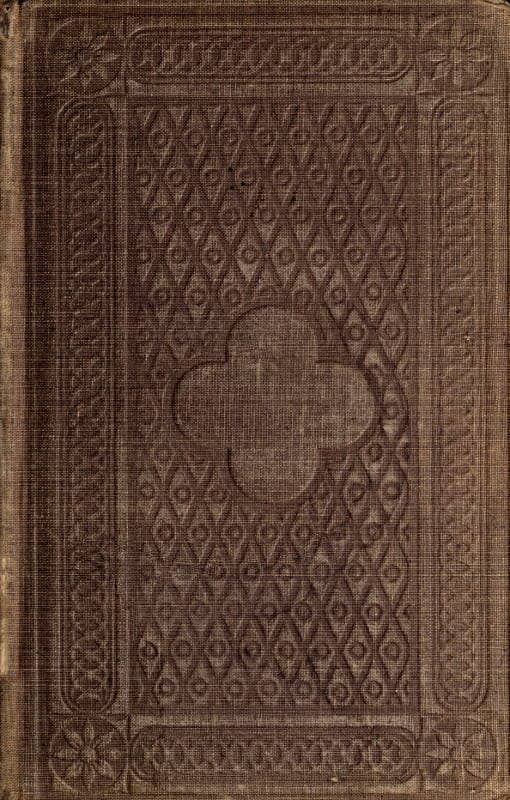
John Locke shaped the modern world more than almost any other philosopher. His theory of mind, still cited in psychology, coined the phrase "tabula rasa" - the understanding that we are born blank slates, shaped entirely by experience. His political writings provided the intellectual foundation for constitutional government, influencing everyone from the American revolutionaries to contemporary democratic theory. This Victorian-era biography traces Locke's intellectual and personal development from his childhood in Wrington, through his years at Westminster and Christ Church, into his exile during the turbulent 1680s. Fowler illuminates how Locke's philosophy emerged not in isolation but in response to the English Civil Wars, the Restoration, and the politics of religious persecution. The work also examines Locke's unfinished meditation on the ethics of belief - the radical notion that every person must regulate their convictions by evidence alone, a principle easier to declare than to live by. For anyone seeking to understand the philosophical roots of modern liberty, this remains a valuable portrait of the man whose ideas became the bedrock of liberal democracy.
Editions
X-Ray
“Every man carries about him a touchstone, if he will make use of it, to distinguish substantial gold from superficial glitterings, truth from appearances. And indeed the use and benefit of this touchstone, which is natural reason, is spoiled and lost only by assumed prejudices, overweening presumption, and narrowing our minds.””
— Thomas Fowler
“This is that which I think great readers are apt to be mistaken in. Those who have read of every thing are thought to understand every thing too; but it is not always so. Reading furnishes the mind only with materials of knowledge; it is thinking makes what we read ours. We are of the ruminating kind, and it is not enough to cram ourselves with a great load of collections; unless we chew them over again, they will not give us strength and nourishment.””
— Thomas Fowler
“We are born to be, if we please, rational creatures, but it is use and exercise only that makes us so, and we are indeed so no farther than industry and application has carried us.””
— Thomas Fowler
“Truths are not the better nor the worse for their obviousness or difficulty, but their value is to be measured by their usefulness and tendency.””
— Thomas Fowler
“It is only practice that improves our minds as well as bodies, and we must expect nothing from our understandings any farther than they are perfected by habits.””
— Thomas Fowler
“The faculties of our souls are improved and made useful to us just after the same manner as our bodies are. Would you have a man write or paint, dance or fence well, orperform any other manual operation dexterously and with ease, let him have ever so much vigour and activity, suppleness and address naturally, yet no body expects this from him unless he has been used to it, and has employed time and pains in fashioning and forming his hand or outward parts to these motions. Just so it is in the mind; would you have a man reason well, you must use him to it betimes, exercise his mind in observing the connection of ideas and following them in train.””
— Thomas Fowler
“In many cases it is not one series of consequences will serve the turn, but many different and opposite deductions must be examined and laid together, before a man can come to make a right judgment of the point in question. What then can be expected from men that neither see the want of any such kind of reasoning as this, nor, if they do, know they how to set about it, or could perform it?””
— Thomas Fowler
“It is hard to know what other way men can come at truth, to lay hold of it, if they do not dig and search for it as for gold and hid treasure; but he thatdoes so must have much earth and rubbish before he gets the pure metal; sand, and pebbles, and dross usually lie blended with it, but the gold is nevertheless gold, and will enrich the man that employs his pains to seek and separate it.””
— Thomas Fowler
“Let not men think there is no truth but in the sciences that they study, or the books that they read. To prejudge other men's notions before we have looked into them is not to shew their darkness, but to put out our own eyes.””
— Thomas Fowler
Link to this book
Add a free, dofollow link to Lex on your blog, forum, syllabus, or reading list.

<a href="https://lex-books.com/book/locke-35257a4a-6163-4908-841f-4a54863c927c"><img src="https://lex-books.com/badges/read-on-lex.svg" alt="Read Locke by Thomas Fowler free on Lex" width="160" height="40"></a>[](https://lex-books.com/book/locke-35257a4a-6163-4908-841f-4a54863c927c)[url=https://lex-books.com/book/locke-35257a4a-6163-4908-841f-4a54863c927c][img]https://lex-books.com/badges/read-on-lex.svg[/img][/url]Read Locke by Thomas Fowler free on Lex: https://lex-books.com/book/locke-35257a4a-6163-4908-841f-4a54863c927cCite this book
Reading this edition for a paper or guide? Copy a citation.
Fowler, Thomas. Locke. Lex, lex-books.com/book/locke-35257a4a-6163-4908-841f-4a54863c927c.Fowler, T. (1881). Locke. Lex. https://lex-books.com/book/locke-35257a4a-6163-4908-841f-4a54863c927cFowler, Thomas. Locke. Lex. https://lex-books.com/book/locke-35257a4a-6163-4908-841f-4a54863c927c.