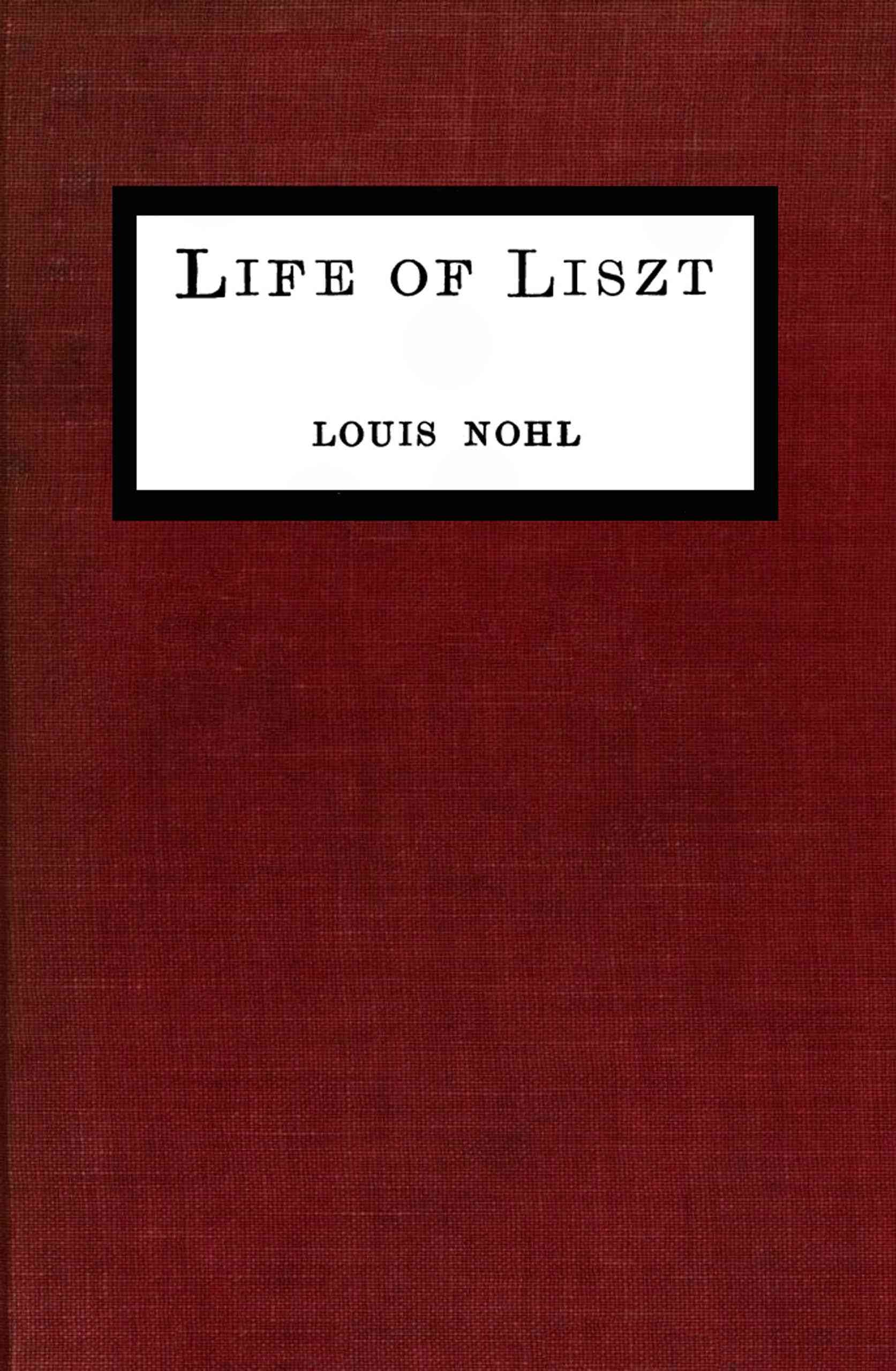
Life of Liszt
1880
Franz Liszt was the first true superstar of classical music. In his own era, he commanded crowds the way rock stars would later command stadiums, and Ludwig Nohl's 1880 biography captures this volcanic talent at the height of his myth. Written just six years after Liszt's death, this account draws on witnesses who actually heard the master play, who saw him bend piano lids backwards with his power, who watched audiences weep and faint at his performances. Nohl paints Liszt's childhood in rural Hungary, the ambitious father who recognizing his son's genius and sacrificed everything to nurture it, and the young prodigy's legendary encounter with Beethoven. But this is more than a chronicle of virtuosity. It captures how gypsy folk music from the Hungarian plains seeped into Liszt's soul, how he transformed the piano into an orchestra unto itself, and how his revolutionary approach to performance and composition changed music forever. For anyone curious about where modern musical celebrity began, or what it meant to begenuinely transcendent in the nineteenth century, Nohl's portrait remains remarkably vivid.
Editions
Link to this book
Add a free, dofollow link to Lex on your blog, forum, syllabus, or reading list.

<a href="https://lex-books.com/book/life-of-liszt-35cab50d-1bd0-4daa-9475-d69c88d78db9"><img src="https://lex-books.com/badges/read-on-lex.svg" alt="Read Life of Liszt by Ludwig Nohl free on Lex" width="160" height="40"></a>[](https://lex-books.com/book/life-of-liszt-35cab50d-1bd0-4daa-9475-d69c88d78db9)[url=https://lex-books.com/book/life-of-liszt-35cab50d-1bd0-4daa-9475-d69c88d78db9][img]https://lex-books.com/badges/read-on-lex.svg[/img][/url]Read Life of Liszt by Ludwig Nohl free on Lex: https://lex-books.com/book/life-of-liszt-35cab50d-1bd0-4daa-9475-d69c88d78db9Cite this book
Reading this edition for a paper or guide? Copy a citation.
Nohl, Ludwig. Life of Liszt. Lex, lex-books.com/book/life-of-liszt-35cab50d-1bd0-4daa-9475-d69c88d78db9.Nohl, L. (1880). Life of Liszt. Lex. https://lex-books.com/book/life-of-liszt-35cab50d-1bd0-4daa-9475-d69c88d78db9Nohl, Ludwig. Life of Liszt. Lex. https://lex-books.com/book/life-of-liszt-35cab50d-1bd0-4daa-9475-d69c88d78db9.