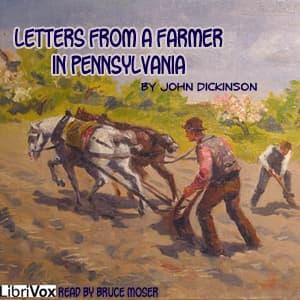
Letters from a Farmer in Pennsylvania, to the Inhabitants of the British Colonies
1768
Letters from a Farmer in Pennsylvania, to the Inhabitants of the British Colonies
1768
In the sweltering summer of 1767, a Pennsylvania lawyer and farmer sat down to write a series of letters that would help forge a nation's conscience. John Dickinson's brilliant conceit was to adopt the voice of a plain farmer rather than a political theorist, making sophisticated arguments about liberty and law accessible to ordinary colonists who had never read Locke or Montesquieu. The result is a work that reads less like a pamphlet and more like a passionate conversation with a neighbor who has studied the law and doesn't like what he sees. Dickinson systematically dismantles the British Parliament's claim to tax the colonies without representation, warning that the Stamp Act, the Townshend duties, and the suspension of New York's assembly are not isolated grievances but connected threads in a dangerous pattern of tyranny. What elevates the letters beyond mere polemic is Dickinson's insistence on reasoned, peaceful resistance: he urges unity among the colonies and counsels firm but measured protest over violent rebellion. These letters circulated wildly through the colonies, were read aloud in taverns and assemblies, and helped plant the seeds of revolution in minds that would later sign the Declaration. For anyone seeking to understand how colonial anger transformed from frustration into ideology, this is the essential starting point.
Editions
X-Ray
“The cause of liberty is a cause of too much dignity to be sullied by turbulence and tumult. It ought to be maintained in a manner suitable to her nature. Those who engage in it, should breathe a sedate, yet fervent spirit, animating them to actions of prudence, justice, modesty, bravery, humanity and magnanimity.””
— John Dickinson
“We cannot act with too much caution in our disputes. Anger produces anger; and differences, that might be accommodated by kind and respectful behavior, may, by imprudence, be enlarged to an incurable rage. In quarrels between countries, as well as in those between individuals, when they have risen to a certain height, the first cause of dissension is no longer remembered, the minds of the parties being wholly engaged in recollecting and resenting the mutual expressions of their dislike. When feuds have reached that fatal point, all considerations of reason and equity vanish; and a blind fury governs, or rather confounds all things. A people no longer regards their interest, but the gratification of their wrath.””
— John Dickinson
“I will now tell the gentlemen, what is “the meaning of these letters.” The meaning of them is, to convince the people of these colonies that they are at this moment exposed to the most imminent dangers; and to persuade them immediately, vigorously, and unanimously, to exert themselves in the most firm, but most peaceable manner, for obtaining relief.””
— John Dickinson
“I am no further concerned in anything affecting America, than any one of you; and when liberty leaves it, I can quit it much more conveniently than most of you: But while Divine Providence, that gave me existence in a land of freedom, permits my head to think, my lips to speak, and my hand to move, I shall so highly and gratefully value the blessing received as to take care that my silence and inactivity shall not give my implied assent to any act, degrading my brethren and myself from the birthright, wherewith heaven itself “hath made us free.””
— John Dickinson
“To divide, and thus to destroy, is the first political maxim in attacking those, who are powerful by their union. He certainly is not a wise man, who folds his arms, and reposes himself at home, viewing, with unconcern, the flames that have invaded his neighbor’s house, without using any endeavors to extinguish them.””
— John Dickinson
“Benevolence toward mankind, excites wishes for their welfare, and such wishes endear the means of fulfilling them. These can be found in liberty only, and therefore her sacred cause ought to be espoused by every man on every occasion, to the utmost of his power.””
— John Dickinson
Link to this book
Add a free, dofollow link to Lex on your blog, forum, syllabus, or reading list.

<a href="https://lex-books.com/book/letters-from-a-farmer-in-pennsylvania-to-the-inhabitants-of-the-british-colonies-9c973fc3-bea2-4b62-8a56-b0b7bd770560"><img src="https://lex-books.com/badges/read-on-lex.svg" alt="Read Letters from a Farmer in Pennsylvania, to the Inhabitants of the British Colonies by John Dickinson free on Lex" width="160" height="40"></a>[](https://lex-books.com/book/letters-from-a-farmer-in-pennsylvania-to-the-inhabitants-of-the-british-colonies-9c973fc3-bea2-4b62-8a56-b0b7bd770560)[url=https://lex-books.com/book/letters-from-a-farmer-in-pennsylvania-to-the-inhabitants-of-the-british-colonies-9c973fc3-bea2-4b62-8a56-b0b7bd770560][img]https://lex-books.com/badges/read-on-lex.svg[/img][/url]Read Letters from a Farmer in Pennsylvania, to the Inhabitants of the British Colonies by John Dickinson free on Lex: https://lex-books.com/book/letters-from-a-farmer-in-pennsylvania-to-the-inhabitants-of-the-british-colonies-9c973fc3-bea2-4b62-8a56-b0b7bd770560Cite this book
Reading this edition for a paper or guide? Copy a citation.
Dickinson, John. Letters from a Farmer in Pennsylvania, to the Inhabitants of the British Colonies. Lex, lex-books.com/book/letters-from-a-farmer-in-pennsylvania-to-the-inhabitants-of-the-british-colonies-9c973fc3-bea2-4b62-8a56-b0b7bd770560.Dickinson, J. (1768). Letters from a Farmer in Pennsylvania, to the Inhabitants of the British Colonies. Lex. https://lex-books.com/book/letters-from-a-farmer-in-pennsylvania-to-the-inhabitants-of-the-british-colonies-9c973fc3-bea2-4b62-8a56-b0b7bd770560Dickinson, John. Letters from a Farmer in Pennsylvania, to the Inhabitants of the British Colonies. Lex. https://lex-books.com/book/letters-from-a-farmer-in-pennsylvania-to-the-inhabitants-of-the-british-colonies-9c973fc3-bea2-4b62-8a56-b0b7bd770560.