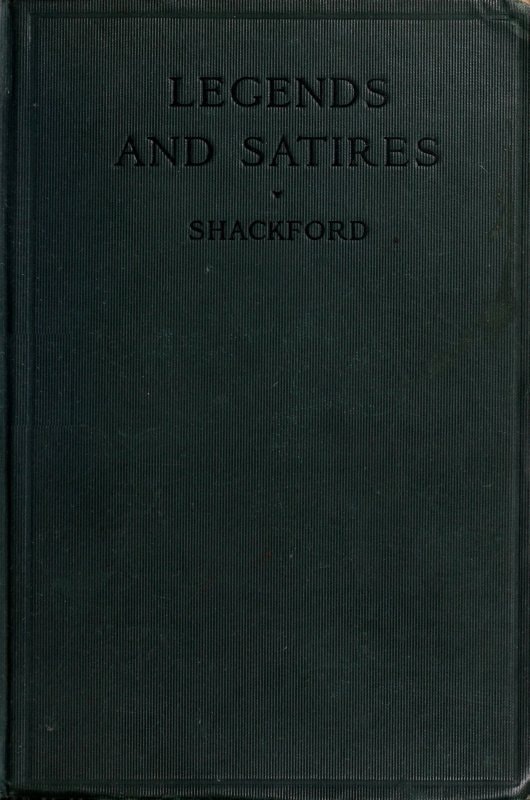
Legends and Satires from Mediæval Literature
1913
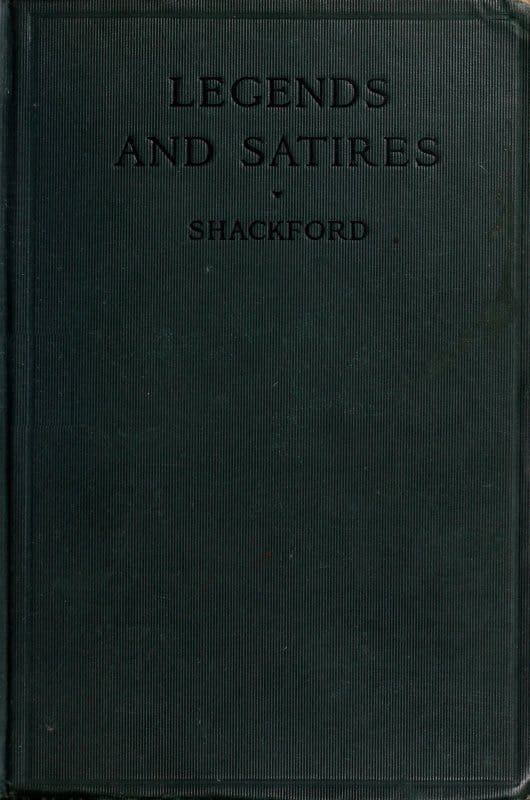
These are voices from the 14th century, speaking to us still. This collection gathers the strangest and most captivating works of medieval English literature: allegorical debates between body and soul, visionary dreams of heaven and hell, saints' lives told with brutal beauty, and satiric tales that skewer the pompous and hypocritical. Some pieces make you laugh at their crude humor; others stop your breath with their earnest wrestling over sin, salvation, and what it means to be human. Translated for modern readers but stripped of nothing essential, these pieces preserve the wild imagination of medieval poets. You'll find wolves that argue theology, lovers who trade insults disguised as compliments, and death itself appearing to issue summons. The literature of Chaucer's era was not quaint or merely historical. It was alive with argument, wit, and fierce spiritual anxiety. This is medieval literature without the dust. It is for anyone curious about where English literature came from and what people believed, feared, and mocked when the world seemed younger and the stakes of eternity felt genuinely real.
Editions
X-Ray
Irish saint who established the purgatory entrance to convert the Irish people. He receives divine visions and builds an abbey around the sacred hole.
Knight from Northumberland who undertakes penance by entering Saint Patrick's Purgatory. He experiences the torments of hell and joys of paradise.
Noble maiden who loves a soldier and debates with Flora about whether soldiers or scholars make better lovers. She represents the martial ideal.
Noble maiden who loves a scholar and argues for the superiority of learned men over warriors in matters of love.
About Legends and Satires from Mediæval Literature
Chapter Summaries
- Preface
- The translator explains this collection is designed for college students studying 14th-century English poetry. The translations aim to complement major works like Piers Plowman and Chaucer while making medieval literature more accessible.
- Introduction
- Discusses the importance of understanding medieval thought and belief to truly comprehend the literature. Emphasizes that medieval life was fundamentally Catholic and deeply concerned with the supernatural and spiritual mysteries.
- Proem
- Describes the creation of Adam from four elements and explains how man's body reflects the cosmos. The soul is made in God's image with three powers corresponding to the Trinity.
Key Themes
- Spiritual Journey and Redemption
- Multiple narratives depict characters undertaking physical and spiritual journeys toward salvation. Saint Patrick's Purgatory, Saint Brandon's voyage, and Sir Orfeo's quest all represent the soul's progress through trials toward divine grace.
- Love and Devotion
- The collection examines various forms of love - divine love in saints' lives, courtly love in the debates, and marital devotion in Sir Orfeo. Each form demands sacrifice and demonstrates love's transformative power.
- Nature and Symbolism
- Natural elements carry deep symbolic meaning throughout the texts. Flowers represent virtues and qualities, animals embody moral lessons, and precious stones possess spiritual significance, reflecting medieval belief in the divine order of creation.
Characters
- Saint Patrick(major)
- Irish saint who established the purgatory entrance to convert the Irish people. He receives divine visions and builds an abbey around the sacred hole.
- Owain(protagonist)
- Knight from Northumberland who undertakes penance by entering Saint Patrick's Purgatory. He experiences the torments of hell and joys of paradise.
- Phillis(protagonist)
- Noble maiden who loves a soldier and debates with Flora about whether soldiers or scholars make better lovers. She represents the martial ideal.
- Flora(protagonist)
- Noble maiden who loves a scholar and argues for the superiority of learned men over warriors in matters of love.
- Saint Brandon(protagonist)
- Irish monk and abbot who undertakes a seven-year sea voyage to find the Land of Behest (earthly paradise). He leads a thousand monks.
- Saint Margaret(protagonist)
- Fifteen-year-old Christian virgin who suffers martyrdom rather than renounce her faith. She overcomes devils and converts many through her steadfastness.
Link to this book
Add a free, dofollow link to Lex on your blog, forum, syllabus, or reading list.

<a href="https://lex-books.com/book/legends-and-satires-from-medi-val-literature-1286e070-01b1-44e4-8a84-cf63e70b2fe5"><img src="https://lex-books.com/badges/read-on-lex.svg" alt="Read Legends and Satires from Mediæval Literature by Unknown free on Lex" width="160" height="40"></a>[](https://lex-books.com/book/legends-and-satires-from-medi-val-literature-1286e070-01b1-44e4-8a84-cf63e70b2fe5)[url=https://lex-books.com/book/legends-and-satires-from-medi-val-literature-1286e070-01b1-44e4-8a84-cf63e70b2fe5][img]https://lex-books.com/badges/read-on-lex.svg[/img][/url]Read Legends and Satires from Mediæval Literature by Unknown free on Lex: https://lex-books.com/book/legends-and-satires-from-medi-val-literature-1286e070-01b1-44e4-8a84-cf63e70b2fe5Cite this book
Reading this edition for a paper or guide? Copy a citation.
Unknown. Legends and Satires from Mediæval Literature. Lex, lex-books.com/book/legends-and-satires-from-medi-val-literature-1286e070-01b1-44e4-8a84-cf63e70b2fe5.Unknown (1913). Legends and Satires from Mediæval Literature. Lex. https://lex-books.com/book/legends-and-satires-from-medi-val-literature-1286e070-01b1-44e4-8a84-cf63e70b2fe5Unknown. Legends and Satires from Mediæval Literature. Lex. https://lex-books.com/book/legends-and-satires-from-medi-val-literature-1286e070-01b1-44e4-8a84-cf63e70b2fe5.