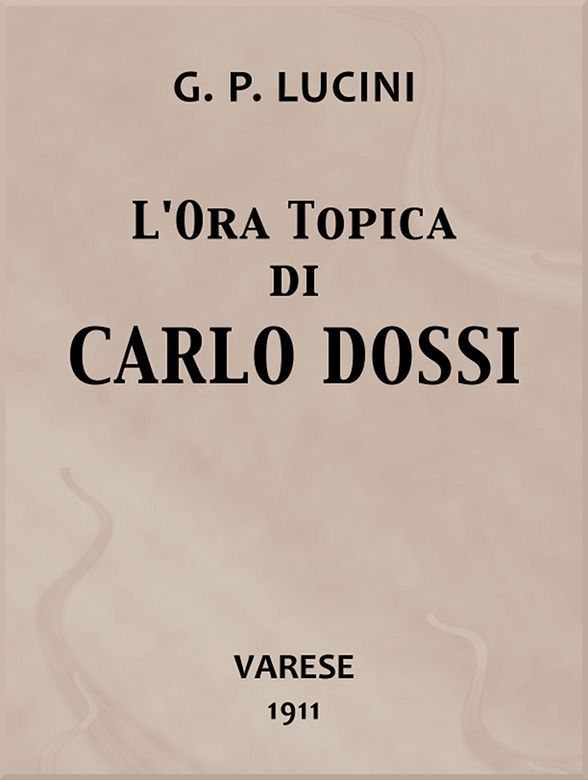
L'ora Topica Di Carlo Dossi
1911
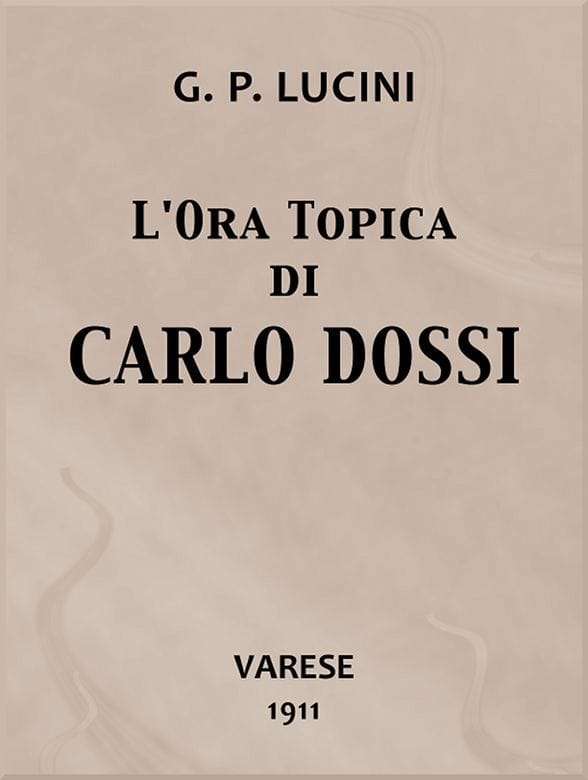
Gian Pietro Lucini's 1911 essay is a passionate act of literary archaeology, digging up the reputation of Carlo Dossi, an Italian writer who deliberately stepped out of the light. Dossi was a paradox: connected to the major figures of his era yet famously withdrawn, producing work so singular it eluded the categories his contemporaries inhabited. Lucini writes not as a distant scholar but as an advocate, determined to illuminate a literary journey marked by brilliant highs and puzzling obscurity. The essay becomes a window into Italian letters during a transformative period, tracing the strange fate of a writer too idiosyncratic to fit neatly into any school or movement. What emerges is both a critical portrait and a meditation on how literary reputations are made and lost, on what it means to create work that resists easy appreciation. For readers curious about the hidden corners of Italian literature, or anyone drawn to stories of artistic solitude and the critics who eventually champion the forgotten, this is a document of genuine devotion.
Editions
Link to this book
Add a free, dofollow link to Lex on your blog, forum, syllabus, or reading list.

<a href="https://lex-books.com/book/l-ora-topica-di-carlo-dossi-08ec258c-46a5-4e15-a4cd-608e7c7a56b7"><img src="https://lex-books.com/badges/read-on-lex.svg" alt="Read L'ora Topica Di Carlo Dossi by Gian Pietro Lucini free on Lex" width="160" height="40"></a>[](https://lex-books.com/book/l-ora-topica-di-carlo-dossi-08ec258c-46a5-4e15-a4cd-608e7c7a56b7)[url=https://lex-books.com/book/l-ora-topica-di-carlo-dossi-08ec258c-46a5-4e15-a4cd-608e7c7a56b7][img]https://lex-books.com/badges/read-on-lex.svg[/img][/url]Read L'ora Topica Di Carlo Dossi by Gian Pietro Lucini free on Lex: https://lex-books.com/book/l-ora-topica-di-carlo-dossi-08ec258c-46a5-4e15-a4cd-608e7c7a56b7Cite this book
Reading this edition for a paper or guide? Copy a citation.
Lucini, Gian Pietro. L'ora Topica Di Carlo Dossi. Lex, lex-books.com/book/l-ora-topica-di-carlo-dossi-08ec258c-46a5-4e15-a4cd-608e7c7a56b7.Lucini, G. P. (1911). L'ora Topica Di Carlo Dossi. Lex. https://lex-books.com/book/l-ora-topica-di-carlo-dossi-08ec258c-46a5-4e15-a4cd-608e7c7a56b7Lucini, Gian Pietro. L'ora Topica Di Carlo Dossi. Lex. https://lex-books.com/book/l-ora-topica-di-carlo-dossi-08ec258c-46a5-4e15-a4cd-608e7c7a56b7.