L'inquisition Médiévale
1928
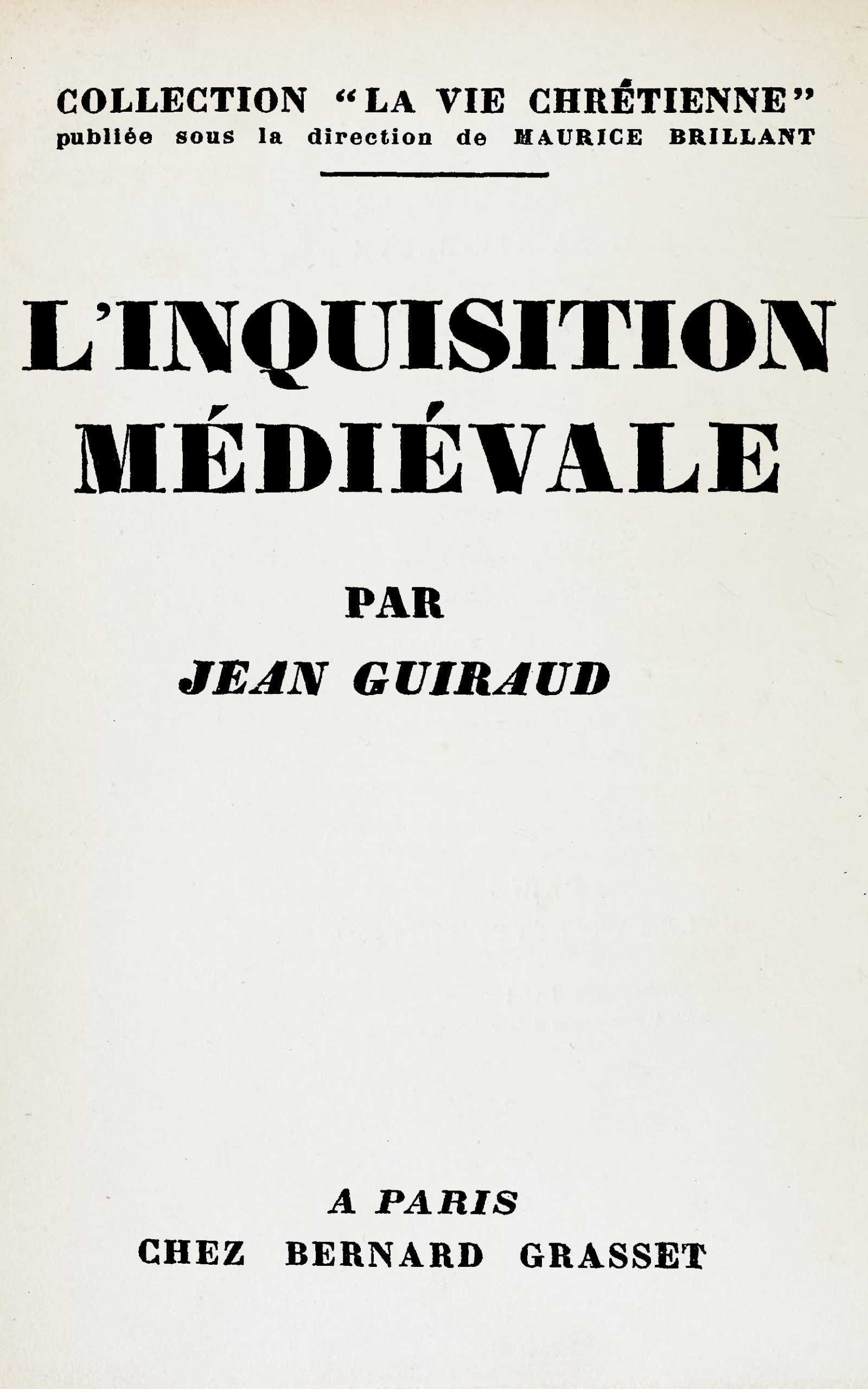
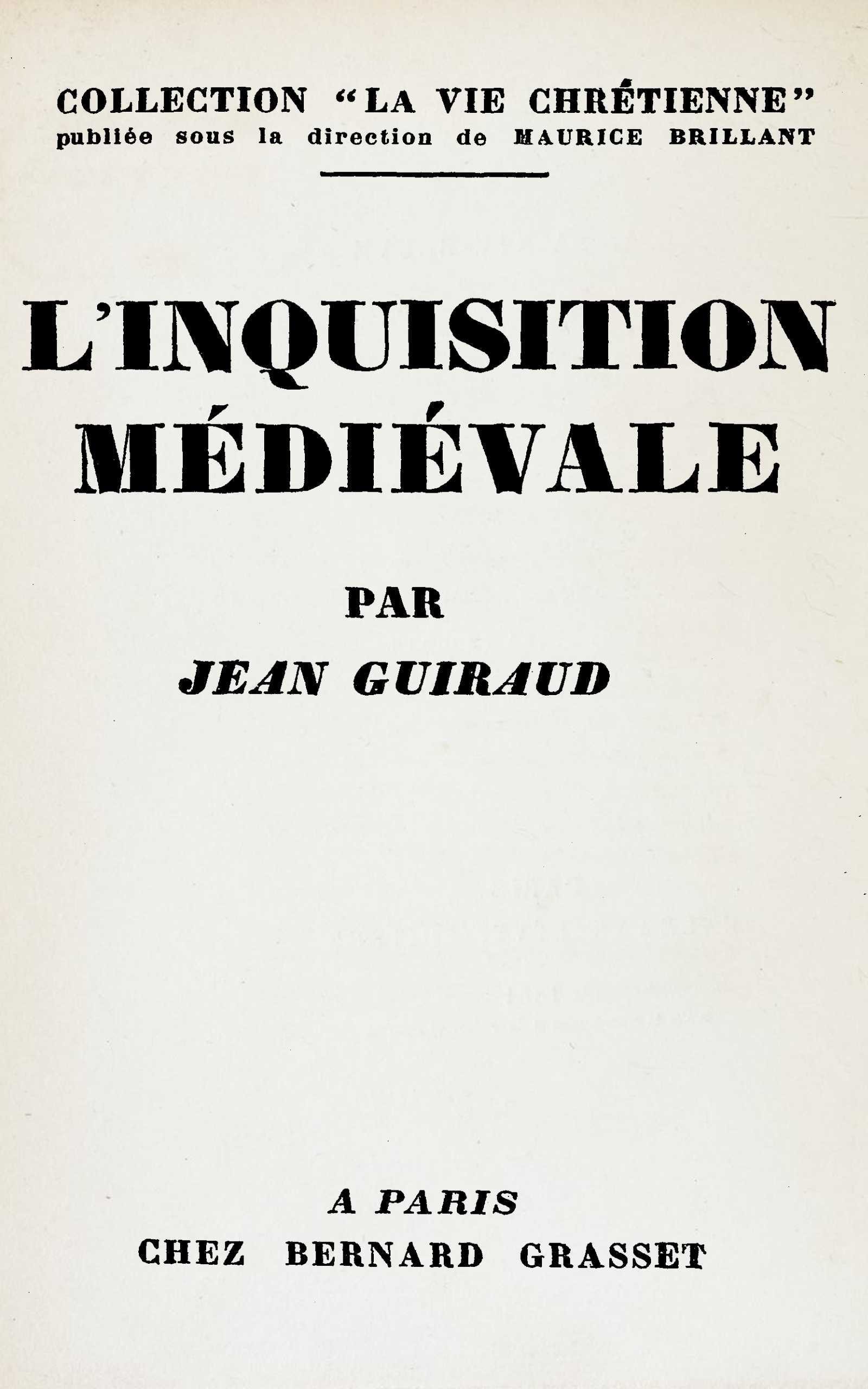
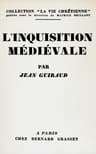
L'inquisition Médiévale, written by Jean Guiraud and first published in 1928, offers a detailed historical analysis of the Inquisition during the Middle Ages, focusing on its interactions with heretical movements like Catharism. Guiraud presents a balanced perspective, challenging biases found in previous accounts and emphasizing the need for a rigorous examination of the Inquisition's legal framework and its socio-political context. The work aims to shed light on the complexities of the Inquisition's operations and its impact on society, making it a significant contribution to Church history.
Editions
X-Ray
The author and historian who presents this scholarly examination of the medieval Inquisition. He strives for objectivity and historical accuracy in analyzing this controversial institution.
Spanish priest who founded the Dominican order and played a crucial role in combating Cathar heresy through preaching and establishing procedures later used by the Inquisition.
Papal legate and Cistercian monk who led missions against Cathar heretics in southern France. His assassination in 1208 triggered the Albigensian Crusade.
Count of Toulouse who maintained ambiguous relations with Cathar heretics, leading to conflicts with the Church and eventual excommunication.
About L'inquisition Médiévale
Chapter Summaries
- Introduction
- Guiraud explains his methodology for studying the Inquisition objectively, using newly available Vatican archives. He argues for examining both the institution and the heresies it combated, distinguishing between legal theory and actual practice.
- 1
- Detailed examination of Cathar dualist theology, their rejection of the material world, denial of the Incarnation, and anarchistic social doctrines. Shows how Catharism dominated southern France with its organization of Parfaits and Croyants, while the Catholic Church was weakened and demoralized.
- 2
- Chronicles the failed Cistercian missions, Saint Dominique's preaching efforts, and the events leading to the Albigensian Crusade. Traces the legal foundations of the Inquisition from earlier imperial and papal legislation through the Council of Toulouse and the assignment of Dominican and Franciscan inquisitors.
Key Themes
- Religious Orthodoxy vs. Heresy
- The fundamental conflict between established Catholic doctrine and various heretical movements, particularly Catharism, that challenged core Christian beliefs about creation, incarnation, and salvation.
- Church and State Relations
- The complex interplay between ecclesiastical and secular authority in combating heresy, showing how the Inquisition evolved from a purely religious institution to one increasingly influenced by political power.
- Historical Objectivity
- Guiraud's methodological approach emphasizing the need to examine historical institutions through primary sources rather than partisan interpretations, seeking truth beyond apologetics or condemnation.
Characters
- Jean Guiraud(protagonist)
- The author and historian who presents this scholarly examination of the medieval Inquisition. He strives for objectivity and historical accuracy in analyzing this controversial institution.
- Saint Dominique (Dominic de Guzmán)(major)
- Spanish priest who founded the Dominican order and played a crucial role in combating Cathar heresy through preaching and establishing procedures later used by the Inquisition.
- Pierre de Castelnau(major)
- Papal legate and Cistercian monk who led missions against Cathar heretics in southern France. His assassination in 1208 triggered the Albigensian Crusade.
- Raymond VI of Toulouse(major)
- Count of Toulouse who maintained ambiguous relations with Cathar heretics, leading to conflicts with the Church and eventual excommunication.
- Bernard Gui(major)
- Dominican inquisitor (1261-1331) who wrote the influential 'Practica Inquisitionis' manual and served as inquisitor in Toulouse from 1307-1324.
- Innocent III(major)
- Pope who authorized the Albigensian Crusade and established many of the legal foundations for the medieval Inquisition.
Link to this book
Add a free, dofollow link to Lex on your blog, forum, syllabus, or reading list.

<a href="https://lex-books.com/book/l-inquisition-m-di-vale-9232caaf-509e-4ebe-9312-b191c54310da"><img src="https://lex-books.com/badges/read-on-lex.svg" alt="Read L'inquisition Médiévale by Jean Guiraud free on Lex" width="160" height="40"></a>[](https://lex-books.com/book/l-inquisition-m-di-vale-9232caaf-509e-4ebe-9312-b191c54310da)[url=https://lex-books.com/book/l-inquisition-m-di-vale-9232caaf-509e-4ebe-9312-b191c54310da][img]https://lex-books.com/badges/read-on-lex.svg[/img][/url]Read L'inquisition Médiévale by Jean Guiraud free on Lex: https://lex-books.com/book/l-inquisition-m-di-vale-9232caaf-509e-4ebe-9312-b191c54310daCite this book
Reading this edition for a paper or guide? Copy a citation.
Guiraud, Jean. L'inquisition Médiévale. Lex, lex-books.com/book/l-inquisition-m-di-vale-9232caaf-509e-4ebe-9312-b191c54310da.Guiraud, J. (1928). L'inquisition Médiévale. Lex. https://lex-books.com/book/l-inquisition-m-di-vale-9232caaf-509e-4ebe-9312-b191c54310daGuiraud, Jean. L'inquisition Médiévale. Lex. https://lex-books.com/book/l-inquisition-m-di-vale-9232caaf-509e-4ebe-9312-b191c54310da.