Journey of Alvar Núñez Cabeza de Vaca
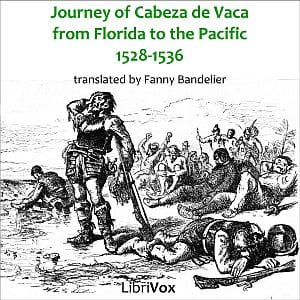
What begins as a Spanish expedition to colonize Florida becomes one of the most extraordinary tales of human endurance ever recorded. In 1528, Alvar Núñez Cabeza de Vaca washes ashore near present-day Tampa Bay with three companions, two Spaniards and Estévanico, an enslaved African. Within a year, he is stripped of everything: his language, his freedom, his identity. Forced to dig roots with his bare hands, he is a slave. But something unexpected happens. He learns. He adapts. He becomes a trader, moving between coastal and inland tribes, carrying shells and cockles for hides and ochre. He becomes a healer, earning the name "the great one" among peoples whose names he will never learn to pronounce. And then, in 1536, he walks. Two thousand miles across the plains and deserts to reach Mexico. Three of his four companions are dead. The man who arrives is not the man who left. Written with strange gentleness and startling empathy for the peoples who kept him alive, this 1542 account is the earliest surviving first-person narrative of North American exploration, and perhaps the most honest.
Editions

Link to this book
Add a free, dofollow link to Lex on your blog, forum, syllabus, or reading list.

<a href="https://lex-books.com/book/journey-of-alvar-n-ez-cabeza-de-vaca-44329b1c-4a67-4d11-8048-5e8adfebd662"><img src="https://lex-books.com/badges/read-on-lex.svg" alt="Read Journey of Alvar Núñez Cabeza de Vaca by Alvar Núñez Cabeza de Vaca free on Lex" width="160" height="40"></a>[](https://lex-books.com/book/journey-of-alvar-n-ez-cabeza-de-vaca-44329b1c-4a67-4d11-8048-5e8adfebd662)[url=https://lex-books.com/book/journey-of-alvar-n-ez-cabeza-de-vaca-44329b1c-4a67-4d11-8048-5e8adfebd662][img]https://lex-books.com/badges/read-on-lex.svg[/img][/url]Read Journey of Alvar Núñez Cabeza de Vaca by Alvar Núñez Cabeza de Vaca free on Lex: https://lex-books.com/book/journey-of-alvar-n-ez-cabeza-de-vaca-44329b1c-4a67-4d11-8048-5e8adfebd662Cite this book
Reading this edition for a paper or guide? Copy a citation.
Vaca, Alvar Núñez Cabeza de. Journey of Alvar Núñez Cabeza de Vaca. Lex, lex-books.com/book/journey-of-alvar-n-ez-cabeza-de-vaca-44329b1c-4a67-4d11-8048-5e8adfebd662.Vaca, A. N. C. D. (n.d.). Journey of Alvar Núñez Cabeza de Vaca. Lex. https://lex-books.com/book/journey-of-alvar-n-ez-cabeza-de-vaca-44329b1c-4a67-4d11-8048-5e8adfebd662Vaca, Alvar Núñez Cabeza de. Journey of Alvar Núñez Cabeza de Vaca. Lex. https://lex-books.com/book/journey-of-alvar-n-ez-cabeza-de-vaca-44329b1c-4a67-4d11-8048-5e8adfebd662.


