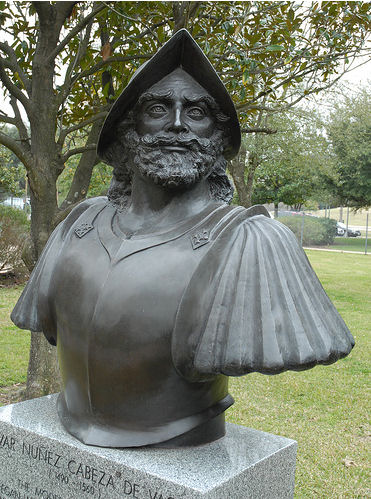
Alvar Núñez Cabeza de Vaca
Alvar Núñez Cabeza de Vaca was a Spanish explorer and writer who is best known for his remarkable journey across the Americas in the early 16th century. Born into a noble family in Spain, he embarked on an expedition to the New World in 1527, which ultimately led to a harrowing experience of shipwreck and survival. Stranded on the Gulf Coast, Cabeza de Vaca and his companions faced numerous challenges, including encounters with indigenous tribes, starvation, and the harsh realities of life in an unfamiliar land. His remarkable resilience and adaptability allowed him to survive for nearly a decade, during which he traversed present-day Texas, Mexico, and beyond, ultimately reaching Spanish settlements in Mexico City. Cabeza de Vaca's most significant contribution to literature is his account of these experiences, "La Relación" (The Account), published in 1542. This narrative not only serves as one of the earliest European accounts of the North American interior but also offers a unique perspective on the indigenous cultures he encountered. His writings challenged contemporary views of Native Americans, portraying them as complex societies rather than mere savages. This perspective contributed to a broader understanding of the New World and its peoples, influencing future explorers and writers. Cabeza de Vaca's legacy endures as a pioneering figure in both exploration and literature, bridging the gap between European and indigenous narratives of the Americas.
Books from the author

Link to this page
Add a free, dofollow link to Lex on your blog, forum, syllabus, or reading list.

<a href="https://lex-books.com/author/alvar-nez-cabeza-de-vaca"><img src="https://lex-books.com/badges/read-on-lex.svg" alt="Alvar Núñez Cabeza de Vaca on Lex" width="160" height="40"></a>[](https://lex-books.com/author/alvar-nez-cabeza-de-vaca)[url=https://lex-books.com/author/alvar-nez-cabeza-de-vaca][img]https://lex-books.com/badges/read-on-lex.svg[/img][/url]Alvar Núñez Cabeza de Vaca on Lex: https://lex-books.com/author/alvar-nez-cabeza-de-vaca