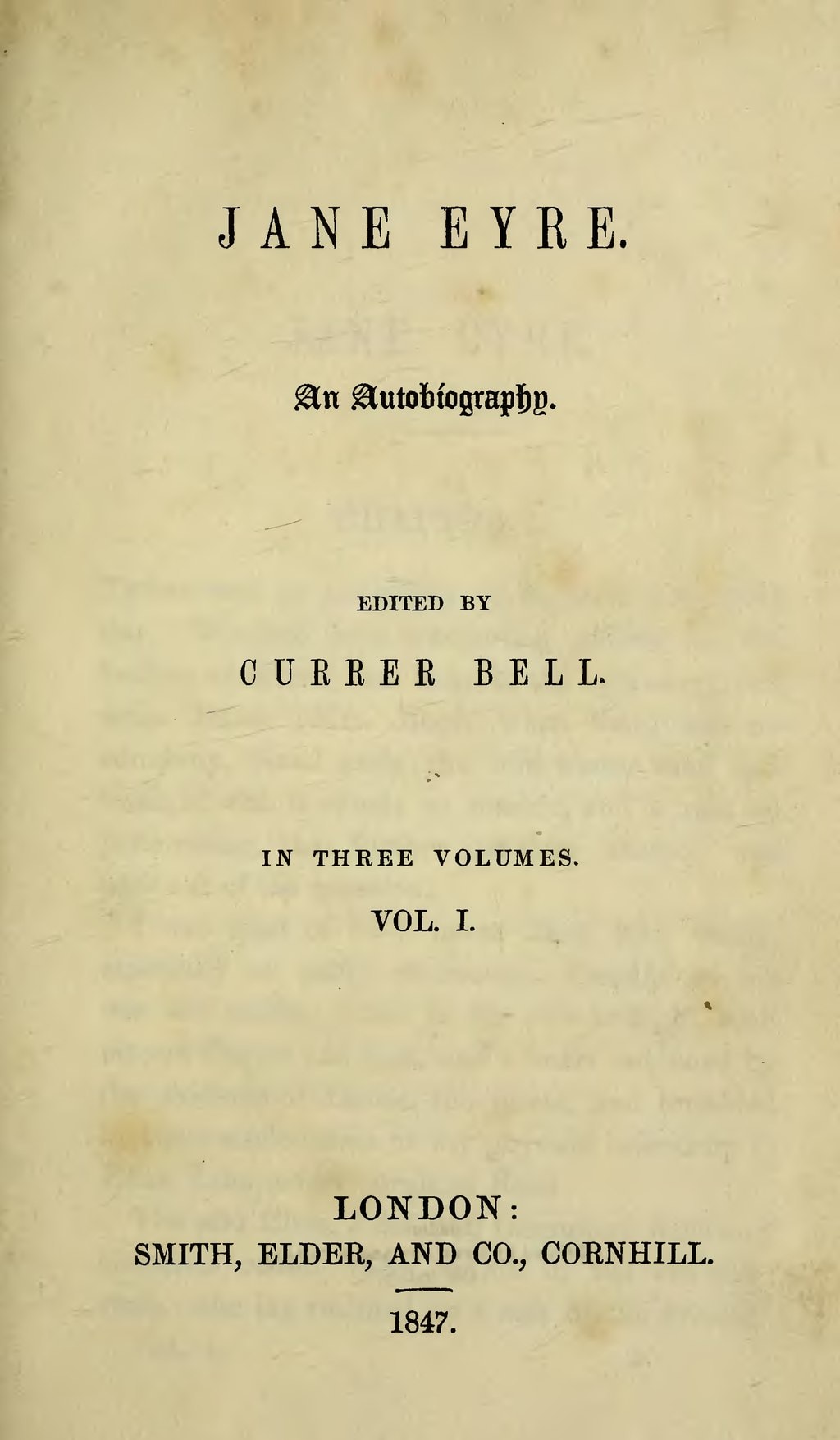
Jane Eyre

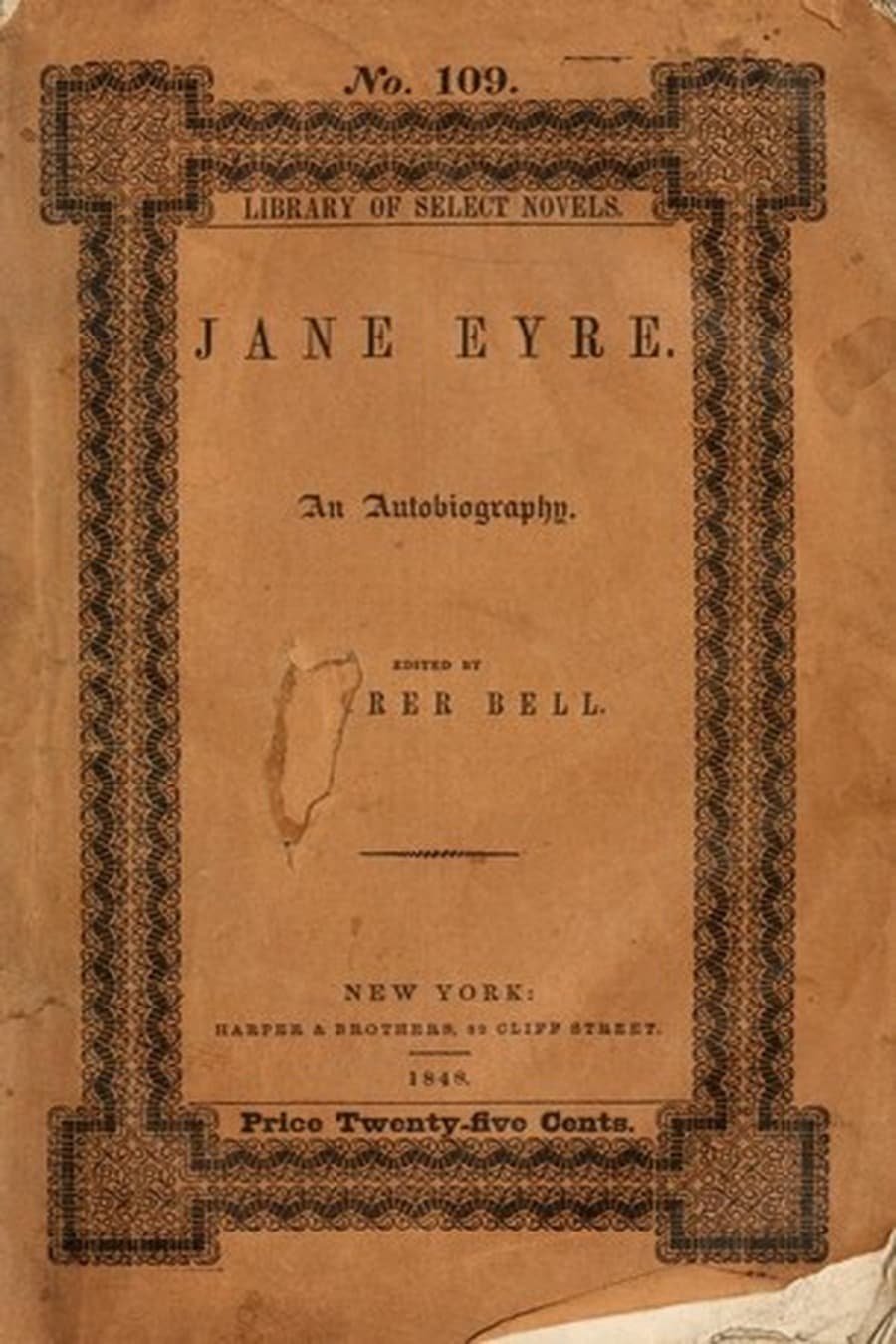
Jane Eyre is plain, poor, and orphaned. She is also the most rebellious heroine in Victorian literature. Working as a governess at Thornfield Hall, she falls deeply into something impossible with her employer, the dark and magnetic Mr. Rochester. But Jane refuses to be owned. When she discovers the truth about his past, she walks away from the only man she has ever loved, choosing starvation and solitude over compromise. This is a novel that insists, with fierce conviction, that love cannot exist without equality. Brontë wrote in disguise as a man, and her protagonist demands to be seen as a full human being in a world determined to see her as less. The gothic mystery of Thornfield Hall, the heat of the moorlands, and Jane's own thundering heart make this a book that reads like passion made language. More than a romance, it is a reckoning with what women owe themselves.
Editions

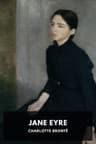
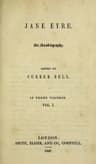

X-Ray
“They spoke almost as loud as Feeling: and that clamoured wildly. "Oh, comply!" it said. "Think of his misery; think of his danger — look at his state when left alone; remember his headlong nature; consider the recklessness following on despair — soothe him; save him; love him; tell him you love him and will be his. Who in the world cares for you? or who will be injured by what you do?"Still indomitable was the reply — "I care for myself. The more solitary, the more friendless, the more unsustained I am, the more I will respect myself. I will keep the law given by God; sanctioned by man. I will hold to the principles received by me when I was sane, and not mad — as I am now. Laws and principles are not for the times when there is no temptation: they are for such moments as this, when body and soul rise in mutiny against their rigour; stringent are they; inviolate they shall be. If at my individual convenience I might break them, what would be their worth? They have a worth — so I have always believed; and if I cannot believe it now, it is because I am quite insane — quite insane: with my veins running fire, and my heart beating faster than I can count its throbs. Preconceived opinions, foregone determinations, are all I have this hour to stand by: there I plant my foot.”
— Charlotte Brontë
“Jane, my little darling (so I will call you, for so you are), you don't know what you are talking about; you misjudge me again: it is not because she is mad I hate her. If you were mad, do you think I should hate you?""I do indeed, sir.""Then you are mistaken, and you know nothing about me, and nothing about the sort of love of which I am capable. Every atom of your flesh is as dear to me as my own: in pain and sickness it would still be dear. Your mind is my treasure, and if it were broken, it would be my treasure still: if you raved, my arms should confine you, and not a strait waistcoat--your grasp, even in fury, would have a charm for me: if you flew at me as wildly as that woman did this morning, I should receive you in an embrace, at least as fond as it would be restrictive. I should not shrink from you with disgust as I did from her: in your quiet moments you should have no watcher and no nurse but me; and I could hang over you with untiring tenderness, though you gave me no smile in return; and never weary of gazing into your eyes, though they had no longer a ray of recognition for me.”
— Charlotte Brontë
“It is in vain to say human beings ought to be satisfied with tranquillity: they must have action; and they will make it if they cannot find it. Millions are condemned to a stiller doom than mine, and millions are in silent revolt against their lot. Nobody knows how many rebellions besides political rebellions ferment in the masses of life which people earth. Women are supposed to be very calm generally: but women feel just as men feel; they need exercise for their faculties, and a field for their efforts, as much as their brothers do; they suffer from too rigid a restraint, to absolute a stagnation, precisely as men would suffer; and it is narrow-minded in their more privileged fellow-creatures to say that they ought to confine themselves to making puddings and knitting stockings, to playing on the piano and embroidering bags. It is thoughtless to condemn them, or laugh at them, if they seek to do more or learn more than custom has pronounced necessary for their sex.”
— Charlotte Brontë
“I have now been married ten years. I know what it is to live entirely for and with what I love best on earth. I hold myself supremely blest - blest beyond what language can express; because I am my husband's life as fully as he is mine. No woman was ever nearer to her mate than I am: ever more absolutely bone of his bone and flesh of his flesh. I know no weariness of my Edward's society: he knows none of mine, any more than we each do the pulsation of the heart that beats in our separate bosoms; consequently, we are ever together. To be together is for us to be at once free as in solitude, as gay as in company. We talk, I believe, all day long: to talk to each other is but more animated and an audible thinking. All my confidence is bestowed on him, all his confidence is devoted to me; we are precisely suited in character - perfect concord is the result.”
— Charlotte Brontë
“It is a long way to Ireland, Janet, and I am sorry to send my little friend on such weary travels: but if I can't do better, how is it to be helped? Are you anything akin to me, do you think, Jane?"I could risk no sort of answer by this time: my heart was still. "Because, he said, "I sometimes have a queer feeling with regard to you - especially when you are near me, as now: it is as if I had a string somewhere under my left ribs, tightly and inextricably knotted to a similar string situated in the corresponding quarter of your little frame. And if that boisterous channel, and two hundred miles or so of land some broad between us, I am afraid that cord of communion will be snapt; and then I've a nervous notion I should take to bleeding inwardly. As for you, - you'd forget me.”
— Charlotte Brontë
“Do you think I am an automaton? — a machine without feelings? and can bear to have my morsel of bread snatched from my lips, and my drop of living water dashed from my cup? Do you think, because I am poor, obscure, plain, and little, I am soulless and heartless? You think wrong! — I have as much soul as you — and full as much heart! And if God had gifted me with some beauty and much wealth, I should have made it as hard for you to leave me, as it is now for me to leave you. I am not talking to you now through the medium of custom, conventionalities, nor even of mortal flesh: it is my spirit that addresses your spirit; just as if both had passed through the grave, and we stood at God's feet, equal — as we are!”
— Charlotte Brontë
“Conventionality is not morality. Self-righteousness is not religion. To attack the first is not to assail the last. To pluck the mask from the face of the Pharisee, is not to lift an impious hand to the Crown of Thorns.These things and deeds are diametrically opposed: they are as distinct as is vice from virtue. Men too often confound them: they should not be confounded: appearance should not be mistaken for truth; narrow human doctrines, that only tend to elate and magnify a few, should not be substituted for the world-redeeming creed of Christ. There is – I repeat it – a difference; and it is a good, and not a bad action to mark broadly and clearly the line of separation between them.”
— Charlotte Brontë
“Most true is it that 'beauty is in the eye of the gazer.' My master’s colourless, olive face, square, massive brow, broad and jetty eyebrows, deep eyes, strong features, firm, grim mouth, — all energy, decision, will, — were not beautiful, according to rule; but they were more than beautiful to me; they were full of an interest, an influence that quite mastered me, — that took my feelings from my own power and fettered them in his. I had not intended to love him; the reader knows I had wrought hard to extirpate from my soul the germs of love there detected; and now, at the first renewed view of him, they spontaneously arrived, green and strong! He made me love him without looking at me.”
— Charlotte Brontë
“No sight so sad as that of a naughty child," he began, "especially a naughty little girl. Do you know where the wicked go after death?""They go to hell," was my ready and orthodox answer."And what is hell? Can you tell me that?""A pit full of fire.""And should you like to fall into that pit, and to be burning there for ever?""No, sir.""What must you do to avoid it?"I deliberated a moment: my answer, when it did come was objectionable: "I must keep in good health and not die.”
— Charlotte Brontë
Link to this book
Add a free, dofollow link to Lex on your blog, forum, syllabus, or reading list.

<a href="https://lex-books.com/book/jane-eyre-3b6562c4-26eb-4582-8629-7393e7bca7ef"><img src="https://lex-books.com/badges/read-on-lex.svg" alt="Read Jane Eyre by Charlotte Brontë free on Lex" width="160" height="40"></a>[](https://lex-books.com/book/jane-eyre-3b6562c4-26eb-4582-8629-7393e7bca7ef)[url=https://lex-books.com/book/jane-eyre-3b6562c4-26eb-4582-8629-7393e7bca7ef][img]https://lex-books.com/badges/read-on-lex.svg[/img][/url]Read Jane Eyre by Charlotte Brontë free on Lex: https://lex-books.com/book/jane-eyre-3b6562c4-26eb-4582-8629-7393e7bca7efCite this book
Reading this edition for a paper or guide? Copy a citation.
Brontë, Charlotte. Jane Eyre. Lex, lex-books.com/book/jane-eyre-3b6562c4-26eb-4582-8629-7393e7bca7ef.Brontë, C. (n.d.). Jane Eyre. Lex. https://lex-books.com/book/jane-eyre-3b6562c4-26eb-4582-8629-7393e7bca7efBrontë, Charlotte. Jane Eyre. Lex. https://lex-books.com/book/jane-eyre-3b6562c4-26eb-4582-8629-7393e7bca7ef.