Isola; Or, The Disinherited: A Revolt for Woman and All the Disinherited
1903
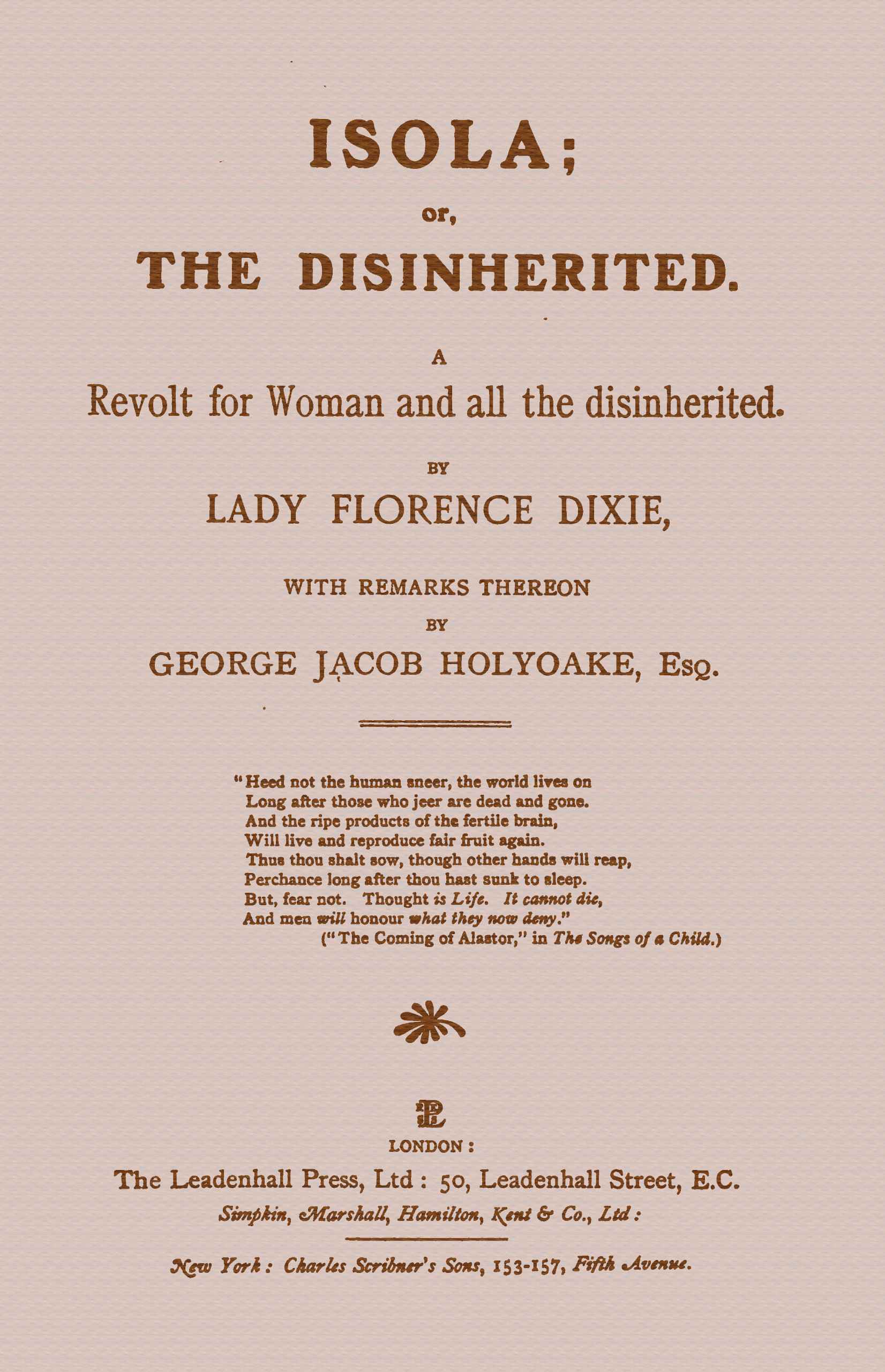
Isola; Or, The Disinherited: A Revolt for Woman and All the Disinherited
1903
In a kingdom where queens are property and grief is a weakness, Isola refuses to perform either role. Forced into marriage with King Hector after the murder of her beloved Escanior, she stands before her new husband and declares war on the very architecture of oppression: not just for herself, but for every woman and soul ever told to bow. This is no passive tragedy of a wronged princess. This is a revolt, written in dialogue that crackles with philosophical fury as Isola interrogates memory, truth, and the violence of silenced voices. Lady Dixie, writing at the turn of the twentieth century, crafted a drama that feels startlingly contemporary in its refusal to soften Isola's anger or offer easy redemption. The play argues, with raw emotion and intellectual ferocity, that to be disinherited is a political condition, not a personal fate, and that rebellion is not only justified but necessary. For readers who crave feminist literature that refuses to negotiate with the systems that cage it, Isola burns.
Editions

Link to this book
Add a free, dofollow link to Lex on your blog, forum, syllabus, or reading list.

<a href="https://lex-books.com/book/isola-or-the-disinherited-a-revolt-for-woman-and-all-the-disinherited-6c974fd7-f471-4e8a-b3c5-5c3118fae00f"><img src="https://lex-books.com/badges/read-on-lex.svg" alt="Read Isola; Or, The Disinherited: A Revolt for Woman and All the Disinherited by Florence, Lady Dixie free on Lex" width="160" height="40"></a>[](https://lex-books.com/book/isola-or-the-disinherited-a-revolt-for-woman-and-all-the-disinherited-6c974fd7-f471-4e8a-b3c5-5c3118fae00f)[url=https://lex-books.com/book/isola-or-the-disinherited-a-revolt-for-woman-and-all-the-disinherited-6c974fd7-f471-4e8a-b3c5-5c3118fae00f][img]https://lex-books.com/badges/read-on-lex.svg[/img][/url]Read Isola; Or, The Disinherited: A Revolt for Woman and All the Disinherited by Florence, Lady Dixie free on Lex: https://lex-books.com/book/isola-or-the-disinherited-a-revolt-for-woman-and-all-the-disinherited-6c974fd7-f471-4e8a-b3c5-5c3118fae00fCite this book
Reading this edition for a paper or guide? Copy a citation.
Florence, Lady Dixie. Isola; Or, The Disinherited: A Revolt for Woman and All the Disinherited. Lex, lex-books.com/book/isola-or-the-disinherited-a-revolt-for-woman-and-all-the-disinherited-6c974fd7-f471-4e8a-b3c5-5c3118fae00f.Florence, L. D. (1903). Isola; Or, The Disinherited: A Revolt for Woman and All the Disinherited. Lex. https://lex-books.com/book/isola-or-the-disinherited-a-revolt-for-woman-and-all-the-disinherited-6c974fd7-f471-4e8a-b3c5-5c3118fae00fFlorence, Lady Dixie. Isola; Or, The Disinherited: A Revolt for Woman and All the Disinherited. Lex. https://lex-books.com/book/isola-or-the-disinherited-a-revolt-for-woman-and-all-the-disinherited-6c974fd7-f471-4e8a-b3c5-5c3118fae00f.