Isle of Wight
1908
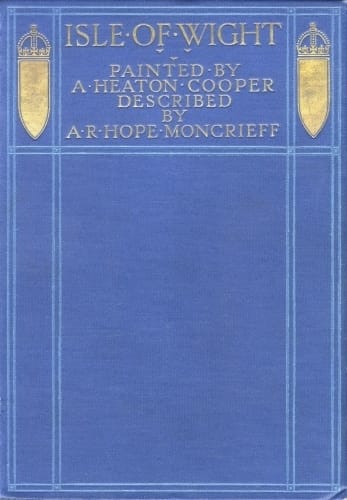
Stepping into these pages means stepping back to an Edwardian summer, when the Isle of Wight reigned as England's most fashionable retreat. Moncrieff guides you through an island of mild climates and dramatic chines, where Queen Victoria still cast her shadow at Osborne House and Tennyson's ghost wandered the Needles. This isn't a modern travel guide with its anxious itineraries and restaurant reviews. It's something rarer: a love letter to a place frozen in time, written when the world still moved slowly enough to notice the shape of cliffs and the stories carved into them. The book moves from the island's geological foundations, those ancient rocks that tell of prehistoric seas and long-vanished creatures, through its human history: Bronze Age settlements, Roman occupiers, the Spanish Armada's shadow, the martial grind of centuries. Then it arrives at what matters most: the Victorian flowering that made this strip of chalk and sandstone into the destination of the age. Moncrieff walks you through Ryde and Shanklin, through Newport's quiet lanes and the western cliffs where the island reaches its dramatic end. Each location carries its own story, its own weight of years. For readers who crave what modern tourism has mostly destroyed - the particular quality of attention, the unhurried appreciation, the sense that a place can be known rather than just visited - this book is a small treasure. It understands that the best journeys are sometimes the ones that ended a century ago.
Editions

Link to this book
Add a free, dofollow link to Lex on your blog, forum, syllabus, or reading list.

<a href="https://lex-books.com/book/isle-of-wight-470ecc82-7f14-41d8-bda4-bed02a1ab106"><img src="https://lex-books.com/badges/read-on-lex.svg" alt="Read Isle of Wight by A. R. Hope Moncrieff free on Lex" width="160" height="40"></a>[](https://lex-books.com/book/isle-of-wight-470ecc82-7f14-41d8-bda4-bed02a1ab106)[url=https://lex-books.com/book/isle-of-wight-470ecc82-7f14-41d8-bda4-bed02a1ab106][img]https://lex-books.com/badges/read-on-lex.svg[/img][/url]Read Isle of Wight by A. R. Hope Moncrieff free on Lex: https://lex-books.com/book/isle-of-wight-470ecc82-7f14-41d8-bda4-bed02a1ab106Cite this book
Reading this edition for a paper or guide? Copy a citation.
Moncrieff, A. R. Hope. Isle of Wight. Lex, lex-books.com/book/isle-of-wight-470ecc82-7f14-41d8-bda4-bed02a1ab106.Moncrieff, A. R. H. (1908). Isle of Wight. Lex. https://lex-books.com/book/isle-of-wight-470ecc82-7f14-41d8-bda4-bed02a1ab106Moncrieff, A. R. Hope. Isle of Wight. Lex. https://lex-books.com/book/isle-of-wight-470ecc82-7f14-41d8-bda4-bed02a1ab106.