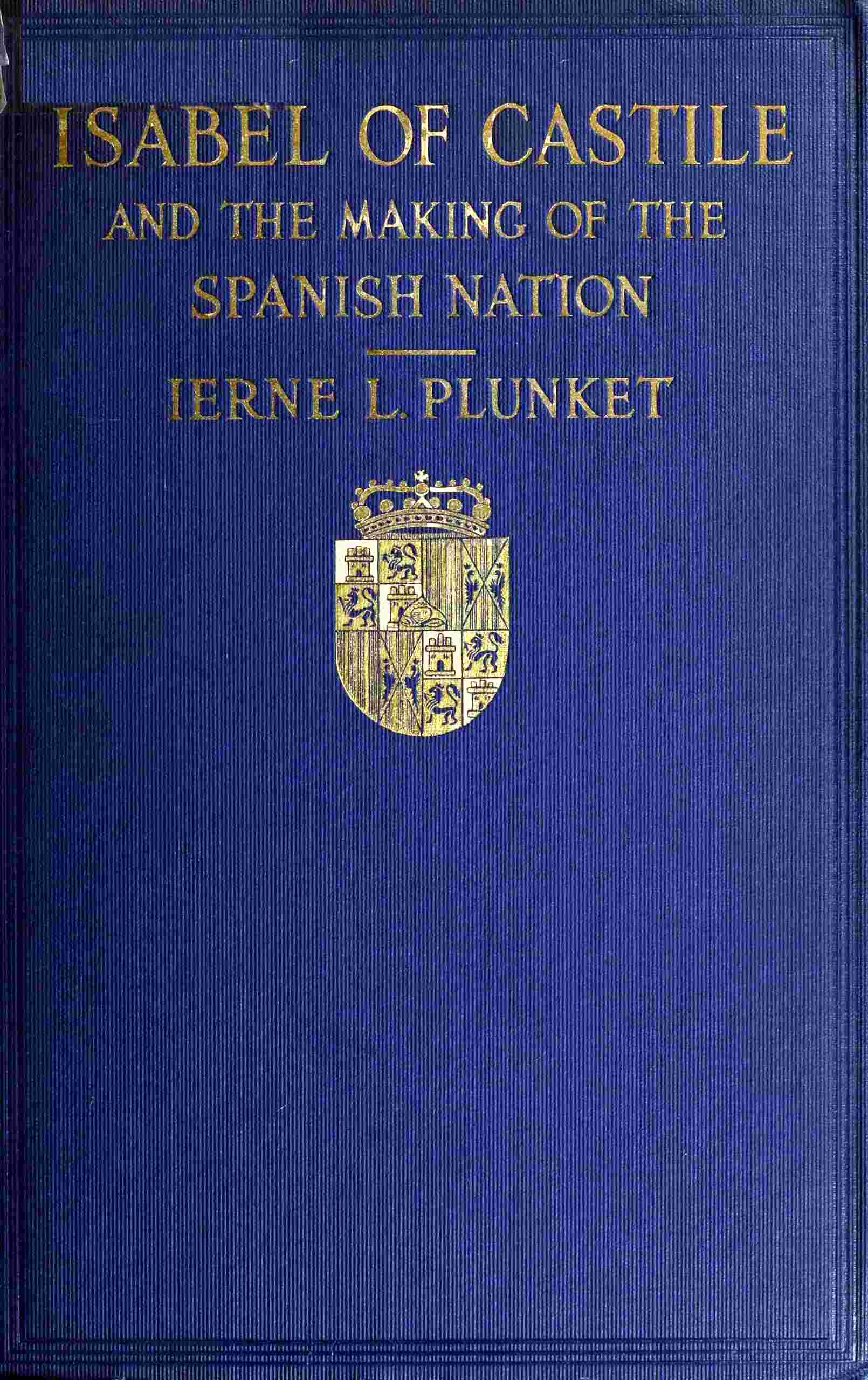
Isabel of Castile and the Making of the Spanish Nation, 1451-1504
1915

Isabel of Castile and the Making of the Spanish Nation, 1451-1504
1915
In the autumn of her childhood in the rough hill towns of Castile, no one could have predicted that a girl born to a secondary line of the royal family would become one of the most consequential rulers in European history. Yet Isabel of Castile did precisely that, and this early twentieth-century account captures the full drama of her ascent: the political machinations, the dynastic marriages, the patient consolidation of power across the Iberian peninsula. Plunket examines her partnership with Ferdinand of Aragon as more than a marriage of convenience. It was the forging of a unified Spain from the chaotic scraps of medieval Christendom. The narrative reveals how their joint rule transformed a fractured collection of kingdoms into a nation capable of projecting power across the Atlantic. Yet the book refuses to soften the harder edges of Isabel's legacy. Her unwavering commitment to Catholic orthodoxy, manifested through the Spanish Inquisition, stands as a stark reminder that the drive for religious uniformity often came at terrible human cost. The same fierce determination that unified Spain also burned its heretics. Written in 1915, this account offers a window into how an earlier generation of historians grappled with the contradictions of a queen who remade Europe.
Editions
X-Ray
Queen of Castile (1451-1504), the central figure who unified Spain and sponsored Columbus. Known for her strong will, religious devotion, and administrative genius.
King of Aragon and husband to Isabel, known as a shrewd politician and military leader. Together they were called 'Los Reyes Católicos' (The Catholic Kings).
Weak and ineffective King of Castile, Isabel's half-brother. His reign was marked by civil war and misgovernment.
Genoese explorer who discovered the New World under Spanish patronage. A visionary navigator whose persistence won Isabel's support.
About Isabel of Castile and the Making of the Spanish Nation, 1451-1504
Chapter Summaries
- 1
- Introduces the chaotic state of 15th-century Castile, with weak royal authority, powerful nobles, and a fragmented society. Sets the stage for Isabel's later reforms by describing the feudal anarchy she inherited.
- 2
- Chronicles Henry IV's weak rule, his failed marriages, and the rise of powerful favorites like Juan Pacheco. Shows the growing chaos that would eventually lead to civil war.
- 3
- Describes the civil wars that tore Castile apart, including the mock dethronement of Henry IV and the rise of Alfonso as rival king. Ends with Henry's death and the succession crisis.
Key Themes
- Religious Unity and Orthodoxy
- The book emphasizes Isabel's determination to create a unified Catholic Spain through the Inquisition, expulsion of Jews, and forced conversion of Muslims. This religious fanaticism is presented as both a source of strength and a moral failing.
- Political Centralization vs. Feudal Autonomy
- A major theme is Isabel's systematic dismantling of feudal power structures, replacing noble autonomy with royal authority through institutions like the Santa Hermandad and royal corregidores.
- The Clash of Civilizations
- The book portrays the final conflict between Christian and Islamic Spain, showing how centuries of coexistence ended in conquest and cultural destruction during the Granada War.
Characters
- Isabel of Castile(protagonist)
- Queen of Castile (1451-1504), the central figure who unified Spain and sponsored Columbus. Known for her strong will, religious devotion, and administrative genius.
- Ferdinand of Aragon(major)
- King of Aragon and husband to Isabel, known as a shrewd politician and military leader. Together they were called 'Los Reyes Católicos' (The Catholic Kings).
- Henry IV of Castile(major)
- Weak and ineffective King of Castile, Isabel's half-brother. His reign was marked by civil war and misgovernment.
- Christopher Columbus(major)
- Genoese explorer who discovered the New World under Spanish patronage. A visionary navigator whose persistence won Isabel's support.
- Cardinal Pedro Gonsález de Mendoza(major)
- Known as 'the Third King,' he was Isabel's chief advisor and a powerful churchman who helped shape policy.
- Ximenes de Cisneros(major)
- Franciscan friar who became Archbishop of Toledo and Isabel's confessor. A reformer who promoted religious orthodoxy and the Inquisition.
Link to this book
Add a free, dofollow link to Lex on your blog, forum, syllabus, or reading list.

<a href="https://lex-books.com/book/isabel-of-castile-and-the-making-of-the-spanish-nation-1451-1504-29bba228-9287-42f5-8518-c364467380c5"><img src="https://lex-books.com/badges/read-on-lex.svg" alt="Read Isabel of Castile and the Making of the Spanish Nation, 1451-1504 by Ierne L. Plunket free on Lex" width="160" height="40"></a>[](https://lex-books.com/book/isabel-of-castile-and-the-making-of-the-spanish-nation-1451-1504-29bba228-9287-42f5-8518-c364467380c5)[url=https://lex-books.com/book/isabel-of-castile-and-the-making-of-the-spanish-nation-1451-1504-29bba228-9287-42f5-8518-c364467380c5][img]https://lex-books.com/badges/read-on-lex.svg[/img][/url]Read Isabel of Castile and the Making of the Spanish Nation, 1451-1504 by Ierne L. Plunket free on Lex: https://lex-books.com/book/isabel-of-castile-and-the-making-of-the-spanish-nation-1451-1504-29bba228-9287-42f5-8518-c364467380c5Cite this book
Reading this edition for a paper or guide? Copy a citation.
Plunket, Ierne L.. Isabel of Castile and the Making of the Spanish Nation, 1451-1504. Lex, lex-books.com/book/isabel-of-castile-and-the-making-of-the-spanish-nation-1451-1504-29bba228-9287-42f5-8518-c364467380c5.Plunket, I. L. (1915). Isabel of Castile and the Making of the Spanish Nation, 1451-1504. Lex. https://lex-books.com/book/isabel-of-castile-and-the-making-of-the-spanish-nation-1451-1504-29bba228-9287-42f5-8518-c364467380c5Plunket, Ierne L.. Isabel of Castile and the Making of the Spanish Nation, 1451-1504. Lex. https://lex-books.com/book/isabel-of-castile-and-the-making-of-the-spanish-nation-1451-1504-29bba228-9287-42f5-8518-c364467380c5.