in our time
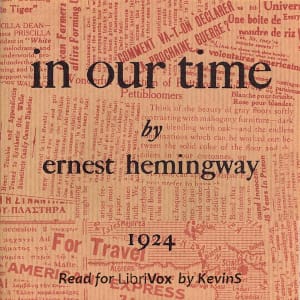
These eighteen vignettes cracked American prose open like a fist through glass. Published in Paris in 1924, Hemingway's debut announces a voice so radical it made everything before feel bloated. A soldier watches a man die in the woods. A bullfighter prepares for death. Two fishermen drift on a river that cannot be named. Nothing is explained. The violence simmers beneath surface calm; the grief never names itself. This is the book that taught writers how to say more by saying less. Hemingway's famous iceberg theory in embryonic form: seven-eighths of the emotion submerged, invisible, but massive enough to sink you. The sentences hit like gunshots in a quiet room. Nick Adams returning from the war, unable to speak about what he saw, became the template for how American literature would handle trauma for the next century.
Editions

Link to this book
Add a free, dofollow link to Lex on your blog, forum, syllabus, or reading list.

<a href="https://lex-books.com/book/in-our-time-075033f1-a1da-46f0-894a-b4d71b3a67d7"><img src="https://lex-books.com/badges/read-on-lex.svg" alt="Read in our time by Ernest Hemingway free on Lex" width="160" height="40"></a>[](https://lex-books.com/book/in-our-time-075033f1-a1da-46f0-894a-b4d71b3a67d7)[url=https://lex-books.com/book/in-our-time-075033f1-a1da-46f0-894a-b4d71b3a67d7][img]https://lex-books.com/badges/read-on-lex.svg[/img][/url]Read in our time by Ernest Hemingway free on Lex: https://lex-books.com/book/in-our-time-075033f1-a1da-46f0-894a-b4d71b3a67d7Cite this book
Reading this edition for a paper or guide? Copy a citation.
Hemingway, Ernest. in our time. Lex, lex-books.com/book/in-our-time-075033f1-a1da-46f0-894a-b4d71b3a67d7.Hemingway, E. (n.d.). in our time. Lex. https://lex-books.com/book/in-our-time-075033f1-a1da-46f0-894a-b4d71b3a67d7Hemingway, Ernest. in our time. Lex. https://lex-books.com/book/in-our-time-075033f1-a1da-46f0-894a-b4d71b3a67d7.