What would you like to read?Search books, authors, genres, shelves, users...
Search books, authors, genres, shelves, users...Search books, authors, genres, shelves, users...

What would you like to read?Search books, authors, genres, shelves, users...
Search books, authors, genres, shelves, users...Search books, authors, genres, shelves, users...
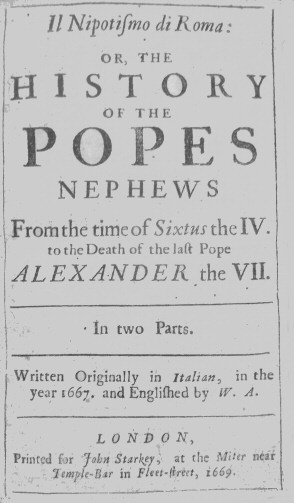
1667
Translated by William Aglionby
A historical account written in the mid-17th century. The book delves into the nepotism evident in the Roman Catholic Church, particularly focusing on how Popes used their authority to advance the fortunes of their relatives, known as ''nephews.'' Through a critical lens, it aims to illuminate the dynamics and intrigues of the papal court, scrutinizing the moral implications of the relationships between the Popes and their kin. The opening of the book serves as an introduction to the subject of nepotism in the Vatican, emphasizing the paradigm shift that occurred with Popes who favored their relatives in governance and wealth distribution. Leti presents the historical context leading to an era where popes shifted from pious leaders to ambitious rulers, using their position to enrich their families. The text highlights notable figures from papal history, including Sixtus IV, who was the first to openly promote nepotism within the Church, and sets the stage for a detailed exploration of the ensuing dynamics that contributed to corruption and moral decline in the Church, drawing the reader into a vivid and provocative narrative.