How I Found Livingstone: Travels, Adventures, and Discoveres in Central Africa, Including an Account of Four Months' Residence with Dr. Livingstone
1872
How I Found Livingstone: Travels, Adventures, and Discoveres in Central Africa, Including an Account of Four Months' Residence with Dr. Livingstone
1872
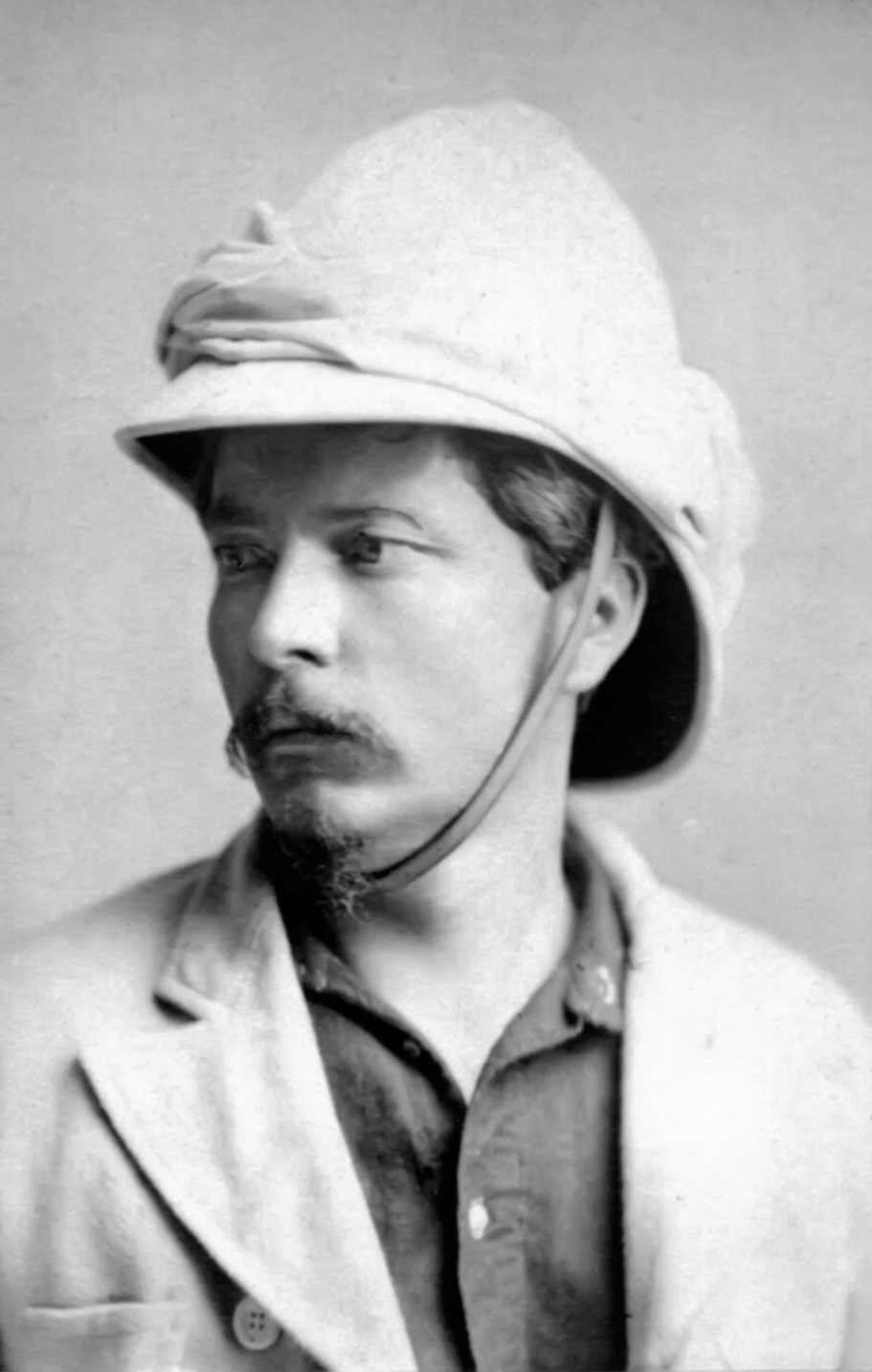
In 1869, a young journalist named Henry Morton Stanley received an assignment that would make him famous: find Dr. David Livingstone, the legendary Scottish explorer who had vanished somewhere in the unmapped heart of Africa. Armed with little more than determination and funding from the New York Herald's eccentric owner, Stanley embarked on a grueling expedition through disease-ridden jungles, across crocodile-infested rivers, and into territories where no white man had ventured. This is the vivid, often harrowing account of that quest, culminating in the famous encounter on the shores of Lake Tanganyika when Stanley reportedly greeted the reclusive explorer with the immortal words "Dr. Livingstone, I presume?" Beyond the adventure, the book offers a remarkable window onto mid-nineteenth-century Africa, documenting tribal customs, local economies, and the complex realities of life along the Congo and Great Lakes regions. Stanley's prose crackles with the urgency of a man fighting against time, nature, and doubt. The result is both a ripping adventure story and a historical document that captures the last great age of European exploration.
Editions
X-Ray
“Granted that I know little of my real self, still, I am the best evidence for myself. And though, when I have quitted this world, it will matter nothing to me what people say of me, up to the moment of death we should strive to leave behind us something which can either Comfort, Amuse, Instruct, or Benefit the living; and though I cannot do either, execpt in a small degree, even that little should be given.””
— Henry M. Stanley
“The study of Dr. Livingstone would not be complete if we did not take the religious side of his character into consideration. His religion is not of the theoretical kind, but it is a constant, earnest, sincere practice. It is neither demonstrative nor loud, but manifests itself in a quiet, practical way, and is always at work. It is not aggressive, which sometimes is troublesome, if not impertinent.””
— Henry M. Stanley
“Bread was baked, a canteen was filled with cold tea, and a leg of a kid was roasted for his sustenance while on the road.””
— Henry M. Stanley
“If there is love between us, inconceivably delicious, and profitable will our intercourse be; if not, your time is lost, and you will only annoy me. I shall seem to you stupid, and the reputation I have false. All my good is magnetic, and I educate not by lessons, but by going about my business."”
— Henry M. Stanley
“I would have run to him, only I was a coward in the presence ofsuch a mob”
— Henry M. Stanley
“Late at night some more particulars arrived of this tragic scene. I was told by people who saw the bodies, that the body of Khamis bin Abdullah, who was a fine noble, brave, portly man, was found with the skin of his forehead, the beard and skin of the lower part of his face, the fore part of the nose, the fat over the stomach and abdomen, and, lastly, a bit from each heel, cut off, by the savage allies of Mirambo. And in the same condition were found the bodies of his adopted son and fallen friends. The flesh and skin thus taken from the bodies was taken, of course, by the waganga or medicine men, to make what they deem to be the most powerful potion of all to enable men to be strong against their enemies. This potion is mixed up with their ugali and rice, and is taken in this manner with the most perfect confidence in its efficacy, as an invulnerable protection against bullets and missiles of all descriptions.””
— Henry M. Stanley
“Reminiscences of yet a young life's battles and hard struggles came surging into the mind in quick succession: events of boyhood, of youth, and manhood; perils, travels, scenes, joys, and sorrows; loves and hates; friendships and indifferences. My mind followed the various and rapid transition of my life's passages; it drew the lengthy, erratic, sinuous lines of travel my footsteps had passed over. If I had drawn them on the sandy floor, what enigmatical problems they had been to those around me, and what plain, readable, intelligent histories they had been to me! The loveliest feature of all to me was the form of a noble, and true man, who called me son. Of my life in the great pine forests of Arkansas, and in Missouri, I retained the most vivid impressions. The dreaming days I passed under the sighing pines on the Ouachita's shores; the new clearing, the block-house, our faithful black servant, the forest deer, and the exuberant life I led, were all well remembered. And I remembered how one day, after we had come to live near the Mississipi, I floated down, down, hundreds of miles, with a wild fraternity of knurly giants, the boatmen of the Mississipi, and how a dear old man welcomed me back, as if from the grave. I remembered also my travels on foot through sunny Spain, and France, with numberless adventures in Asia Minor, among Kurdish nomads. I remembered the battle-fields of America and the stormy scenes of rampant war. I remembered gold mines, and broad prairies, Indian councils, and much experience in the new western lands. I remembered the shock it gave me to hear after my return from a barbarous country of the calamity that had overtaken the fond man whom I called father, and the hot fitful life that followed it. Stop!””
— Henry M. Stanley
“Among other experiments which I was about to try in Africa was that of a good watch-dog on any unmannerly people who would insist upon coming into my tent at untimely hours and endangering valuables. Especially did I wish to try the effect of its bark on the mighty Wagogo, who, I was told by certain Arabs, would lift the door of the tent and enter whether you wished them or not; who would chuckle at the fear they inspired, and say to you, "Hi, hi, white man, I never saw the like of you before; are there many more like you? where do you come from?" Also would they take hold of your watch and ask you with a cheerful curiosity, "What is this for, white man?" to which you of course would reply that it was to tell you the hour and minute. But the Mgogo, proud of his prowess, and more unmannerly than a brute, would answer you with a snort of insult. I thought of a watch-dog, and procured a good one at Bombay not only as a faithful companion, but to threaten the heels of just such gentry.””
— Henry M. Stanley
“The settlement of Kikoka is a collection of straw huts; not built after any architectural style, but after a bastard form, invented by indolent settlers from the Mrima and Zanzibar for the purpose of excluding as much sunshine as possible from the eaves and interior. A sluice and some wells provide them with water, which though sweet is not particularly wholesome or appetizing, owing to the large quantities of decayed matter which is washed into it by the rains, and is then left to corrupt in it.””
— Henry M. Stanley
Link to this book
Add a free, dofollow link to Lex on your blog, forum, syllabus, or reading list.

<a href="https://lex-books.com/book/how-i-found-livingstone-travels-adventures-and-discoveres-in-central-africa-incl-e2c69958-bc2c-4600-aaf2-e7a9ca964210"><img src="https://lex-books.com/badges/read-on-lex.svg" alt="Read How I Found Livingstone: Travels, Adventures, and Discoveres in Central Africa, Including an Account of Four Months' Residence with Dr. Livingstone by Henry M. Stanley free on Lex" width="160" height="40"></a>[](https://lex-books.com/book/how-i-found-livingstone-travels-adventures-and-discoveres-in-central-africa-incl-e2c69958-bc2c-4600-aaf2-e7a9ca964210)[url=https://lex-books.com/book/how-i-found-livingstone-travels-adventures-and-discoveres-in-central-africa-incl-e2c69958-bc2c-4600-aaf2-e7a9ca964210][img]https://lex-books.com/badges/read-on-lex.svg[/img][/url]Read How I Found Livingstone: Travels, Adventures, and Discoveres in Central Africa, Including an Account of Four Months' Residence with Dr. Livingstone by Henry M. Stanley free on Lex: https://lex-books.com/book/how-i-found-livingstone-travels-adventures-and-discoveres-in-central-africa-incl-e2c69958-bc2c-4600-aaf2-e7a9ca964210Cite this book
Reading this edition for a paper or guide? Copy a citation.
Stanley, Henry M.. How I Found Livingstone: Travels, Adventures, and Discoveres in Central Africa, Including an Account of Four Months' Residence with Dr. Livingstone. Lex, lex-books.com/book/how-i-found-livingstone-travels-adventures-and-discoveres-in-central-africa-incl-e2c69958-bc2c-4600-aaf2-e7a9ca964210.Stanley, H. M. (1872). How I Found Livingstone: Travels, Adventures, and Discoveres in Central Africa, Including an Account of Four Months' Residence with Dr. Livingstone. Lex. https://lex-books.com/book/how-i-found-livingstone-travels-adventures-and-discoveres-in-central-africa-incl-e2c69958-bc2c-4600-aaf2-e7a9ca964210Stanley, Henry M.. How I Found Livingstone: Travels, Adventures, and Discoveres in Central Africa, Including an Account of Four Months' Residence with Dr. Livingstone. Lex. https://lex-books.com/book/how-i-found-livingstone-travels-adventures-and-discoveres-in-central-africa-incl-e2c69958-bc2c-4600-aaf2-e7a9ca964210.