How France Built Her Cathedrals: A Study in the Twelfth and Thirteenth Centuries
How France Built Her Cathedrals: A Study in the Twelfth and Thirteenth Centuries
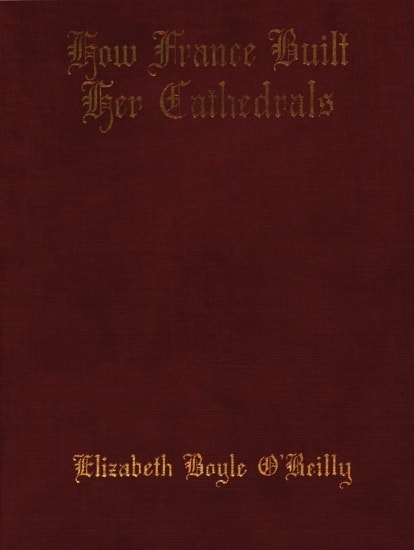
The Gothic cathedrals of France remain among humanity's most staggering achievements, and this early 20th-century study reveals why. Elizabeth Boyle O'Reilly traces the remarkable transformation from Romanesque heaviness to the soaring lightness of Gothic architecture, showing how stone became theology. These cathedrals were never merely churches: they were declarations of civic pride, expressions of medieval humanity's desperate ambition to build toward heaven, and testaments to what whole communities could achieve when bishops, kings, masons, and peasants united behind a single vision. O'Reilly treats architecture as historical evidence, reading the cathedrals as windows into the soul of 12th and 13th century France. She examines the technical innovations that made ribbed vaults and flying buttresses possible, but also the human story: the guilds of masons, the patronage of bishops, the devotion of ordinary people who gave their labor and their pennies to raise these monuments. For anyone who has stood beneath a Gothic nave and felt the sudden hush of transcendence, this book explains why.
Editions

X-Ray
The author and narrator of this architectural study. An honorary member of the Société Française d'Archéologie who guides readers through the history and construction of French Gothic cathedrals.
The visionary abbot of St. Denis (1122-1151) who initiated Gothic architecture and built the first truly Gothic monument. A statesman, reformer, and architectural innovator who served as regent of France.
The great Cistercian reformer (d. 1153) who spiritually influenced the cathedral builders. Though he advocated church simplicity, his spiritual leadership inspired the Gothic movement.
The saint-king of France (1226-1270) who illuminated his kingdom with fair churches. Builder of the Sainte-Chapelle and patron of Gothic architecture during its golden age.
About How France Built Her Cathedrals: A Study in the Twelfth and Thirteenth Centuries
Chapter Summaries
- Introduction
- O'Reilly establishes architecture as the living voice of the past and argues for the importance of understanding Gothic cathedrals as historical documents. She emphasizes how these monuments link us to our ancestors and warns against the destruction of cultural heritage.
- 1
- Defines Gothic architecture as the logical fulfillment of Romanesque, based on the principle of thrust and counterthrust using diagonal ribs and flying buttresses. Traces the origins of the style in the Île-de-France and refutes theories that it was a lay revolt against monastic art.
- 2
- Chronicles the revolutionary work of Abbot Suger at St. Denis (1140-1144), the first truly Gothic monument. Details Suger's life as statesman and builder, his spiritual conversion by St. Bernard, and the later reconstruction of St. Denis by St. Louis.
Key Themes
- Architectural Evolution
- The book traces the logical development from Romanesque to Gothic architecture, showing how structural innovations like diagonal ribs and flying buttresses revolutionized church building. This evolution reflects broader cultural and spiritual changes in medieval France.
- Faith and Art
- Gothic cathedrals embody the spiritual aspirations of medieval Christianity, with their soaring heights and luminous windows serving as prayers in stone. The book demonstrates how religious devotion inspired architectural innovation and artistic excellence.
- National Identity
- The cathedrals represent the emergence of French national consciousness, built during the reigns of Philippe-Auguste and St. Louis when France was becoming unified. Gothic architecture became France's gift to European civilization.
Characters
- Elizabeth Boyle O'Reilly(protagonist)
- The author and narrator of this architectural study. An honorary member of the Société Française d'Archéologie who guides readers through the history and construction of French Gothic cathedrals.
- Abbot Suger(major)
- The visionary abbot of St. Denis (1122-1151) who initiated Gothic architecture and built the first truly Gothic monument. A statesman, reformer, and architectural innovator who served as regent of France.
- St. Bernard of Clairvaux(major)
- The great Cistercian reformer (d. 1153) who spiritually influenced the cathedral builders. Though he advocated church simplicity, his spiritual leadership inspired the Gothic movement.
- St. Louis (Louis IX)(major)
- The saint-king of France (1226-1270) who illuminated his kingdom with fair churches. Builder of the Sainte-Chapelle and patron of Gothic architecture during its golden age.
- Joinville(major)
- Jean, sire de Joinville, seneschal of Champagne and biographer of St. Louis. His memoir provides intimate portraits of the saint-king and the crusading era.
- Bishop Maurice de Sully(major)
- Bishop of Paris (1160-1196) who began Notre Dame Cathedral. Born of humble origins, he became a noted scholastic and devoted his revenues to building his cathedral.
Link to this book
Add a free, dofollow link to Lex on your blog, forum, syllabus, or reading list.

<a href="https://lex-books.com/book/how-france-built-her-cathedrals-a-study-in-the-twelfth-and-thirteenth-centuries-24637f55-3bb8-4500-84d3-44b8f94121cd"><img src="https://lex-books.com/badges/read-on-lex.svg" alt="Read How France Built Her Cathedrals: A Study in the Twelfth and Thirteenth Centuries by Elizabeth Boyle O'Reilly free on Lex" width="160" height="40"></a>[](https://lex-books.com/book/how-france-built-her-cathedrals-a-study-in-the-twelfth-and-thirteenth-centuries-24637f55-3bb8-4500-84d3-44b8f94121cd)[url=https://lex-books.com/book/how-france-built-her-cathedrals-a-study-in-the-twelfth-and-thirteenth-centuries-24637f55-3bb8-4500-84d3-44b8f94121cd][img]https://lex-books.com/badges/read-on-lex.svg[/img][/url]Read How France Built Her Cathedrals: A Study in the Twelfth and Thirteenth Centuries by Elizabeth Boyle O'Reilly free on Lex: https://lex-books.com/book/how-france-built-her-cathedrals-a-study-in-the-twelfth-and-thirteenth-centuries-24637f55-3bb8-4500-84d3-44b8f94121cdCite this book
Reading this edition for a paper or guide? Copy a citation.
O'Reilly, Elizabeth Boyle. How France Built Her Cathedrals: A Study in the Twelfth and Thirteenth Centuries. Lex, lex-books.com/book/how-france-built-her-cathedrals-a-study-in-the-twelfth-and-thirteenth-centuries-24637f55-3bb8-4500-84d3-44b8f94121cd.O'Reilly, E. B. (n.d.). How France Built Her Cathedrals: A Study in the Twelfth and Thirteenth Centuries. Lex. https://lex-books.com/book/how-france-built-her-cathedrals-a-study-in-the-twelfth-and-thirteenth-centuries-24637f55-3bb8-4500-84d3-44b8f94121cdO'Reilly, Elizabeth Boyle. How France Built Her Cathedrals: A Study in the Twelfth and Thirteenth Centuries. Lex. https://lex-books.com/book/how-france-built-her-cathedrals-a-study-in-the-twelfth-and-thirteenth-centuries-24637f55-3bb8-4500-84d3-44b8f94121cd.