Homogenic Love and Its Place in a Free Society
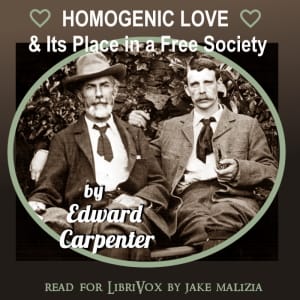
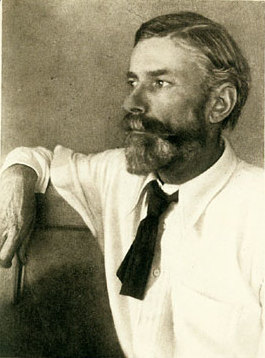
This pamphlet represents a quiet act of extraordinary courage. Written in the shadow of the Oscar Wilde trials of 1895, when homosexuality had become synonymous with scandal and ruin in the public imagination, Edward Carpenter dared to publish a reasoned, philosophical defense of what he called "homogenic love" - arguing not merely for tolerance, but for understanding. Carpenter, a respected socialist philosopher and poet, presents his case with characteristic utopian hope: homosexuality is innate, he argues, not a vice or deviation; it is more widespread than society acknowledges; and indeed, he suggests, degrees of bisexuality may be universal in human nature. The work was originally intended as part of his collection "Love's Coming of Age" but was stripped from the manuscript as the Wilde case inflamed public hysteria. It circulated privately among sympathetic readers, a samizdat of early sexual liberation. More than a historical artifact, this brief text announces themes Carpenter would develop for decades: that freedom of the body is inseparable from freedom of the spirit, and that a truly liberated society must make room for the full spectrum of human love.
Editions

Link to this book
Add a free, dofollow link to Lex on your blog, forum, syllabus, or reading list.

<a href="https://lex-books.com/book/homogenic-love-and-its-place-in-a-free-society-2a450140-9ca7-4681-87a9-eab2013c3926"><img src="https://lex-books.com/badges/read-on-lex.svg" alt="Read Homogenic Love and Its Place in a Free Society by Edward Carpenter free on Lex" width="160" height="40"></a>[](https://lex-books.com/book/homogenic-love-and-its-place-in-a-free-society-2a450140-9ca7-4681-87a9-eab2013c3926)[url=https://lex-books.com/book/homogenic-love-and-its-place-in-a-free-society-2a450140-9ca7-4681-87a9-eab2013c3926][img]https://lex-books.com/badges/read-on-lex.svg[/img][/url]Read Homogenic Love and Its Place in a Free Society by Edward Carpenter free on Lex: https://lex-books.com/book/homogenic-love-and-its-place-in-a-free-society-2a450140-9ca7-4681-87a9-eab2013c3926Cite this book
Reading this edition for a paper or guide? Copy a citation.
Carpenter, Edward. Homogenic Love and Its Place in a Free Society. Lex, lex-books.com/book/homogenic-love-and-its-place-in-a-free-society-2a450140-9ca7-4681-87a9-eab2013c3926.Carpenter, E. (n.d.). Homogenic Love and Its Place in a Free Society. Lex. https://lex-books.com/book/homogenic-love-and-its-place-in-a-free-society-2a450140-9ca7-4681-87a9-eab2013c3926Carpenter, Edward. Homogenic Love and Its Place in a Free Society. Lex. https://lex-books.com/book/homogenic-love-and-its-place-in-a-free-society-2a450140-9ca7-4681-87a9-eab2013c3926.