Holland, V. 1 (of 2)
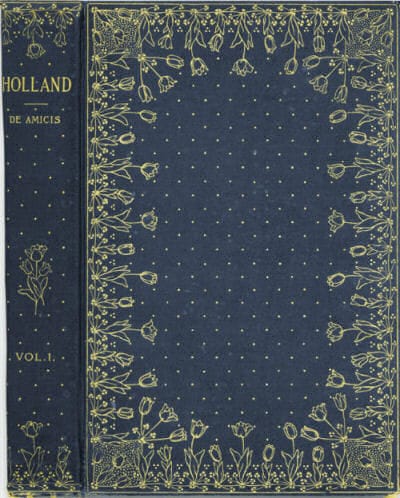
In this luminous travelogue from the late 19th century, Italian writer Edmondo De Amicis approaches the Netherlands as a country of genuine marvel: a land that exists only because humans refused to accept nature's verdict. He enters Holland by train and boat, immediately struck by the paradox of a nation built on water, where lakes are actually sea wounds and polders sit like flatboats on submerged ground. De Amicis renders the Dutch landscape with the fresh eyes of a visitor encountering the impossible: endless canals, windmills lifting water toward heaven, cities that float between earth and sky. But this is no mere scenic catalogue. He turns his attention to the people's singular relationship with their environment, chronicling centuries of backbreaking labor as the Dutch claimed territory from the sea through dikes, draining, and relentless engineering. He finds a nation shaped by this eternal struggle, where the sea is both enemy and lifeline, where every inch of soil represents generations of sacrifice. The narrative pulses with admiration for Dutch perseverance while capturing a world on the cusp of modernization, where ancient water customs still govern daily life. For readers who crave immersive travel writing that treats place as character, who want to understand how a people transformed impossibility into homeland, De Amicis offers an indelible portrait of stubbornness made geography.
Editions

Link to this book
Add a free, dofollow link to Lex on your blog, forum, syllabus, or reading list.

<a href="https://lex-books.com/book/holland-v-1-of-2-67ea5c3e-821e-4e10-bad1-44259aef94bc"><img src="https://lex-books.com/badges/read-on-lex.svg" alt="Read Holland, V. 1 (of 2) by Edmondo De Amicis free on Lex" width="160" height="40"></a>[](https://lex-books.com/book/holland-v-1-of-2-67ea5c3e-821e-4e10-bad1-44259aef94bc)[url=https://lex-books.com/book/holland-v-1-of-2-67ea5c3e-821e-4e10-bad1-44259aef94bc][img]https://lex-books.com/badges/read-on-lex.svg[/img][/url]Read Holland, V. 1 (of 2) by Edmondo De Amicis free on Lex: https://lex-books.com/book/holland-v-1-of-2-67ea5c3e-821e-4e10-bad1-44259aef94bcCite this book
Reading this edition for a paper or guide? Copy a citation.
Amicis, Edmondo De. Holland, V. 1 (of 2). Lex, lex-books.com/book/holland-v-1-of-2-67ea5c3e-821e-4e10-bad1-44259aef94bc.Amicis, E. D. (n.d.). Holland, V. 1 (of 2). Lex. https://lex-books.com/book/holland-v-1-of-2-67ea5c3e-821e-4e10-bad1-44259aef94bcAmicis, Edmondo De. Holland, V. 1 (of 2). Lex. https://lex-books.com/book/holland-v-1-of-2-67ea5c3e-821e-4e10-bad1-44259aef94bc.